Coccygectomy is surgical removal of the coccyx (tailbone), typically recommended only after 6–12 months of failed conservative treatment. Success rates are 80–90% in carefully selected patients.
Medically Reviewed by: Dr. Michael Chen, MD, Orthopedic Surgeon & Dr. Sarah Mitchell, MD | Updated: March 10, 2026
Coccygectomy—the surgical removal of the coccyx (tailbone)—represents the final treatment option for patients with severe, chronic coccydynia that has failed all conservative therapies. While this procedure can provide dramatic relief for carefully selected patients, it carries significant risks and requires substantial recovery time.
This comprehensive guide examines everything you need to know about coccyx removal surgery: from patient selection criteria and surgical techniques to recovery expectations, costs, and long-term outcomes based on the latest medical evidence.
📊 Key Statistics at a Glance
Success Rate: 50-90% (highly variable based on patient selection)
Average Cost: $15,000 - $50,000 (US healthcare system)
Recovery Time: 2-6 months for full recovery
Hospital Stay: 1-3 days (outpatient possible in some cases)
Complication Rate: 15-30%
Patients Requiring Surgery: Only 5-10% of chronic coccydynia cases
What Is a Coccygectomy?
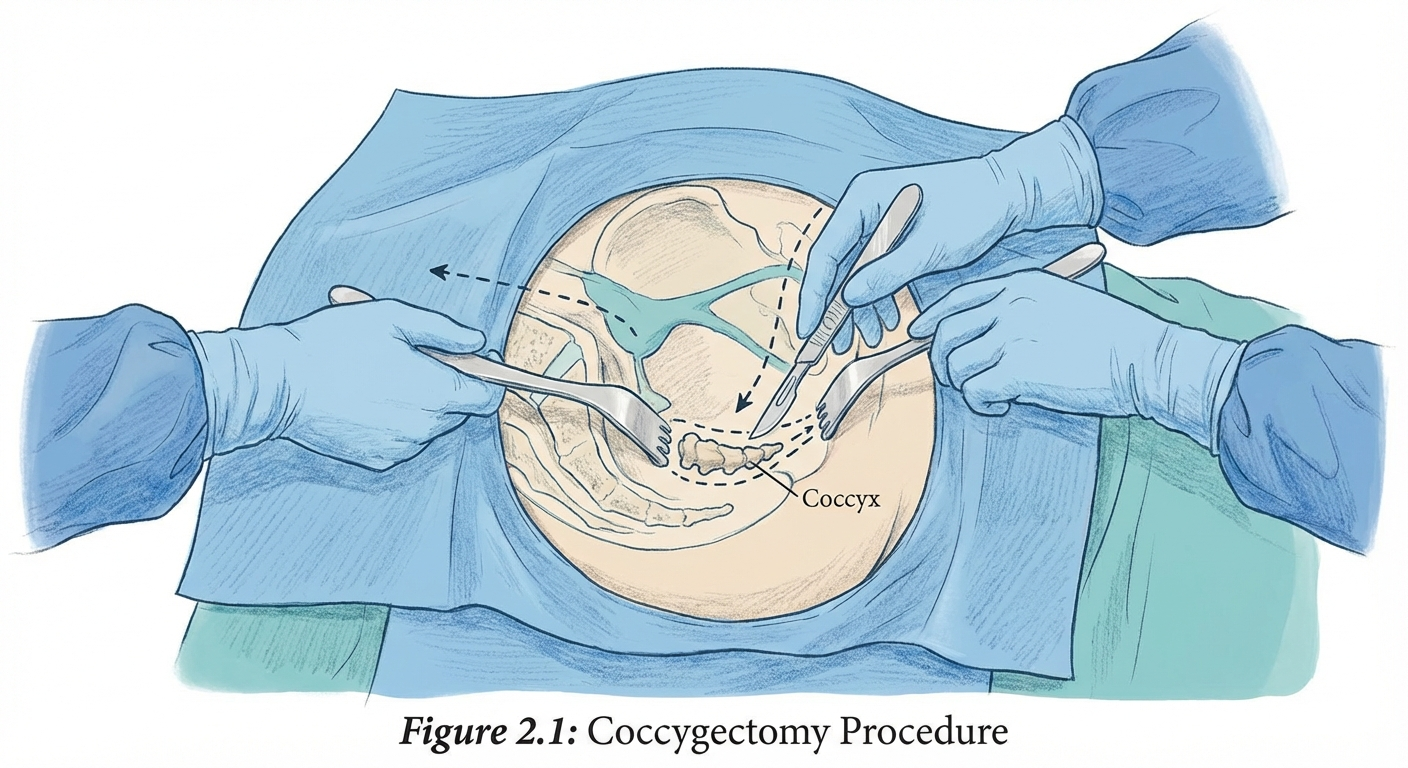
Coccygectomy involves careful removal of the tailbone to eliminate the source of chronic coccydynia.
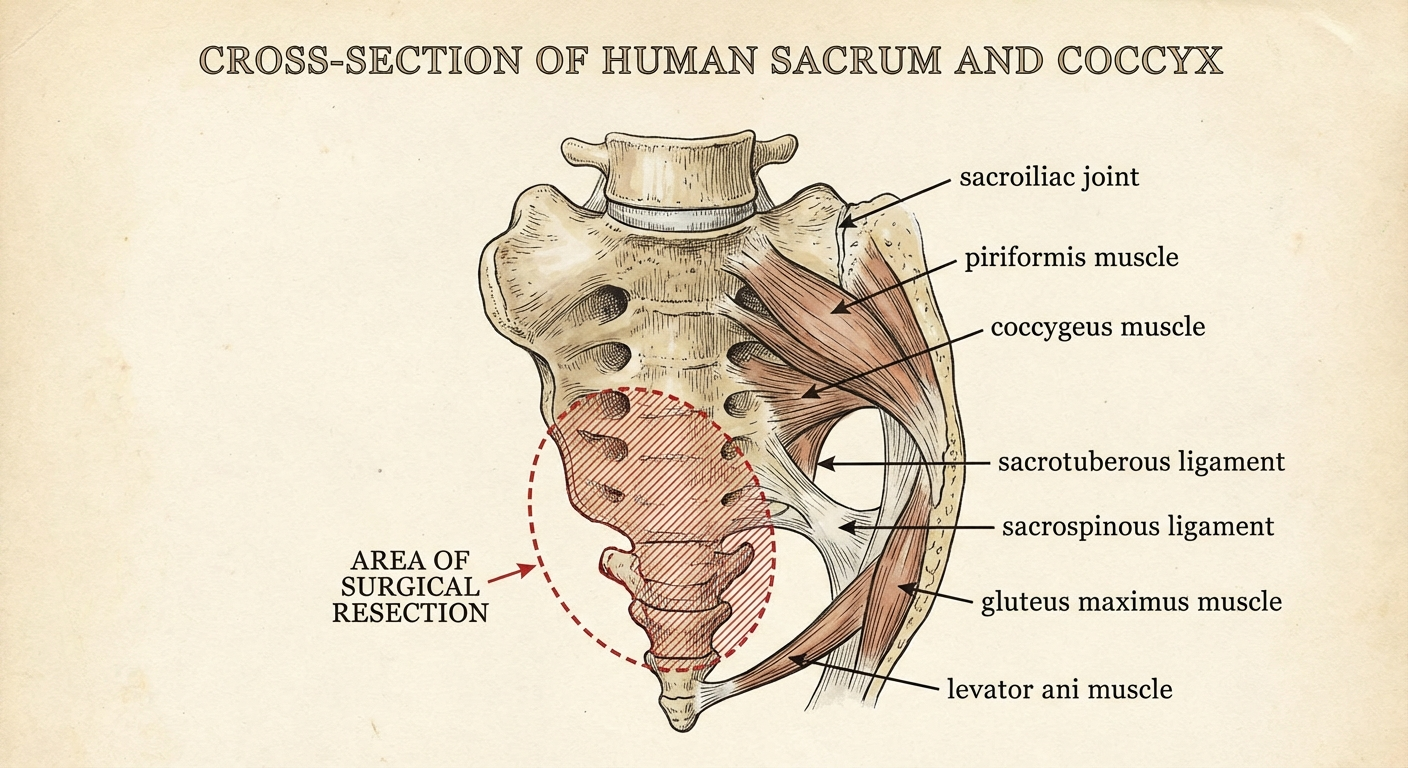
A coccygectomy is the surgical excision (removal) of the coccyx, commonly known as the tailbone. This small triangular bone at the base of the spine consists of 3-5 fused vertebrae and serves as an attachment point for pelvic floor muscles, gluteal muscles, and several important ligaments.
Why Remove the Coccyx?
The coccyx is not essential for normal function. While it provides some support for pelvic floor muscles and serves as a weight-bearing structure when sitting, humans can function normally without it. The primary indication for removal is intractable pain that severely impacts quality of life.
Historical Context
Coccygectomy was first performed in the 18th century but remained controversial due to high complication rates. Modern surgical techniques, improved anesthesia, and better patient selection have significantly improved outcomes since the 1990s.
Who Is a Candidate for Coccygectomy?
Coccygectomy Surgery Explained: What to Expect
A clear walkthrough of the coccygectomy procedure, recovery stages, and what to expect post-surgery.
The distal portion of the coccyx is removed in most cases, preserving the sacrococcygeal joint where possible.
Proper patient selection is the most critical factor for success. Ideal candidates meet ALL of the following criteria:
Essential Criteria
Duration: Chronic coccyx pain lasting more than 6 months
Failed conservative treatment: Comprehensive trial including physical therapy, injections, medications, and lifestyle modifications
Clear diagnosis: Confirmed coccydynia with identifiable structural cause OR well-documented idiopathic coccydynia
Severe impact: Pain significantly impairs daily activities, work, or quality of life
Realistic expectations: Understanding that surgery is not guaranteed to resolve pain
Favorable Prognostic Factors
Patients with these characteristics have better surgical outcomes:
Traumatic origin: Pain began after specific injury (fall, childbirth)
Localized pain: Pain clearly isolated to coccyx, not diffuse
Temporary relief from injections: Positive response to diagnostic blocks
Normal body weight: BMI under 30 (obesity increases complication risk)
No psychological comorbidities: Depression and anxiety predict poorer outcomes
Younger age: Generally better healing under 60
Contraindications
Surgery should NOT be performed when:
Pain has atypical features suggesting referred pain from other sources
Patient has unrealistic expectations or significant psychological issues
Active infection present
Severe obesity (relative contraindication)
Patient unable or unwilling to comply with postoperative restrictions
Insufficient trial of conservative treatments
Preoperative Evaluation
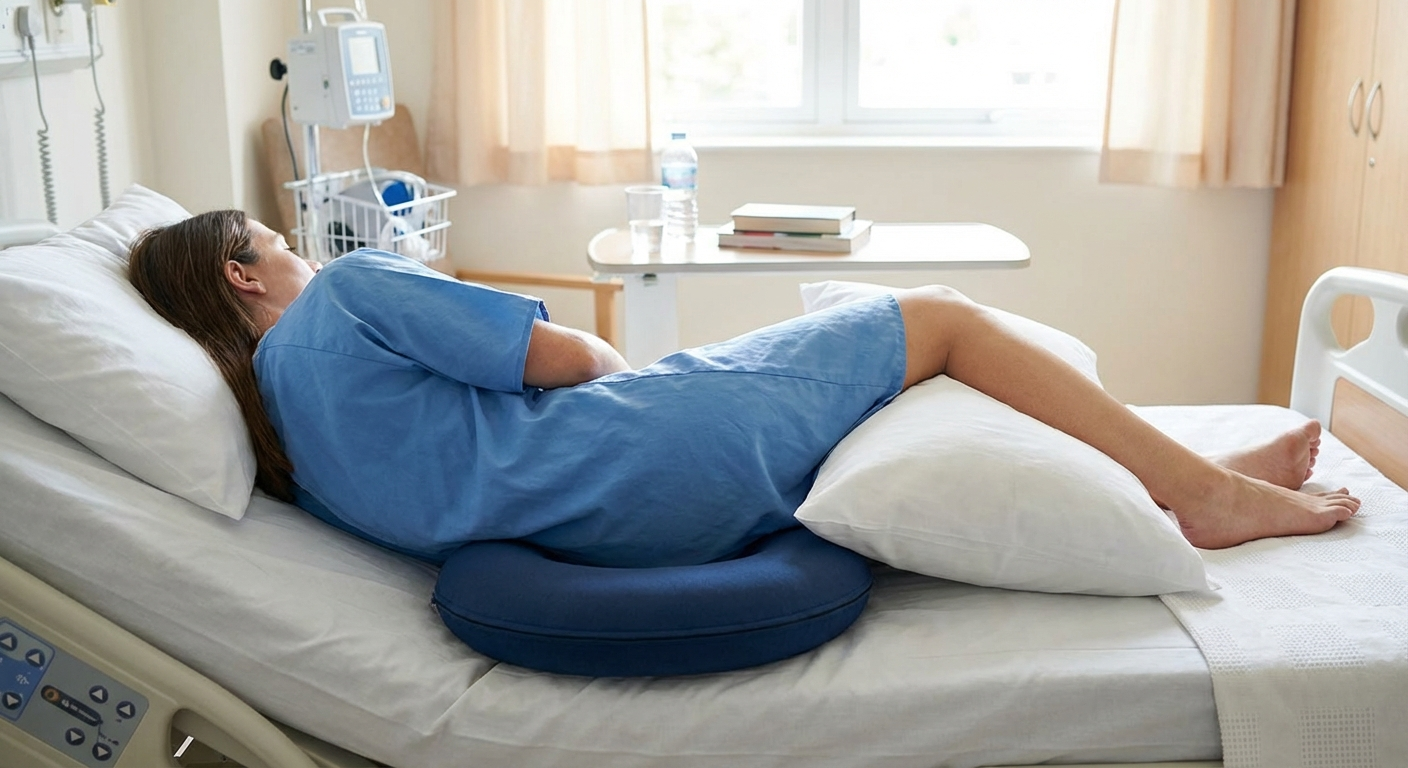
Correct positioning post-surgery reduces pressure on the surgical site and speeds healing.
Comprehensive Assessment
Before surgery, your surgeon will conduct:
1. Detailed History
Pain onset and progression
Previous treatments and responses
Impact on daily functioning
Psychological screening
Expectations and goals
2. Physical Examination
External palpation of coccyx
Assessment of surrounding structures
Evaluation of sitting tolerance
Dynamic testing (pain with movement)
3. Imaging Studies
X-rays: Identify fractures, dislocations, spurs, or arthritis
Dynamic X-rays: Sitting and standing views to assess coccyx mobility
MRI: Evaluate soft tissues, bone marrow edema, rule out tumors
CT scan: Detailed bony anatomy if complex deformity suspected
4. Diagnostic Injections
Injection of local anesthetic around the coccyx or ganglion impar serves two purposes:
Diagnostic: Temporary relief confirms coccyx as pain source
Predictive: Good response to injection predicts surgical success
5. Psychological Evaluation
Many surgeons require psychological screening to identify:
Unrealistic expectations
Depression or anxiety that may affect outcomes
Secondary gain issues
Ability to cope with potential surgical failure
The Surgical Procedure
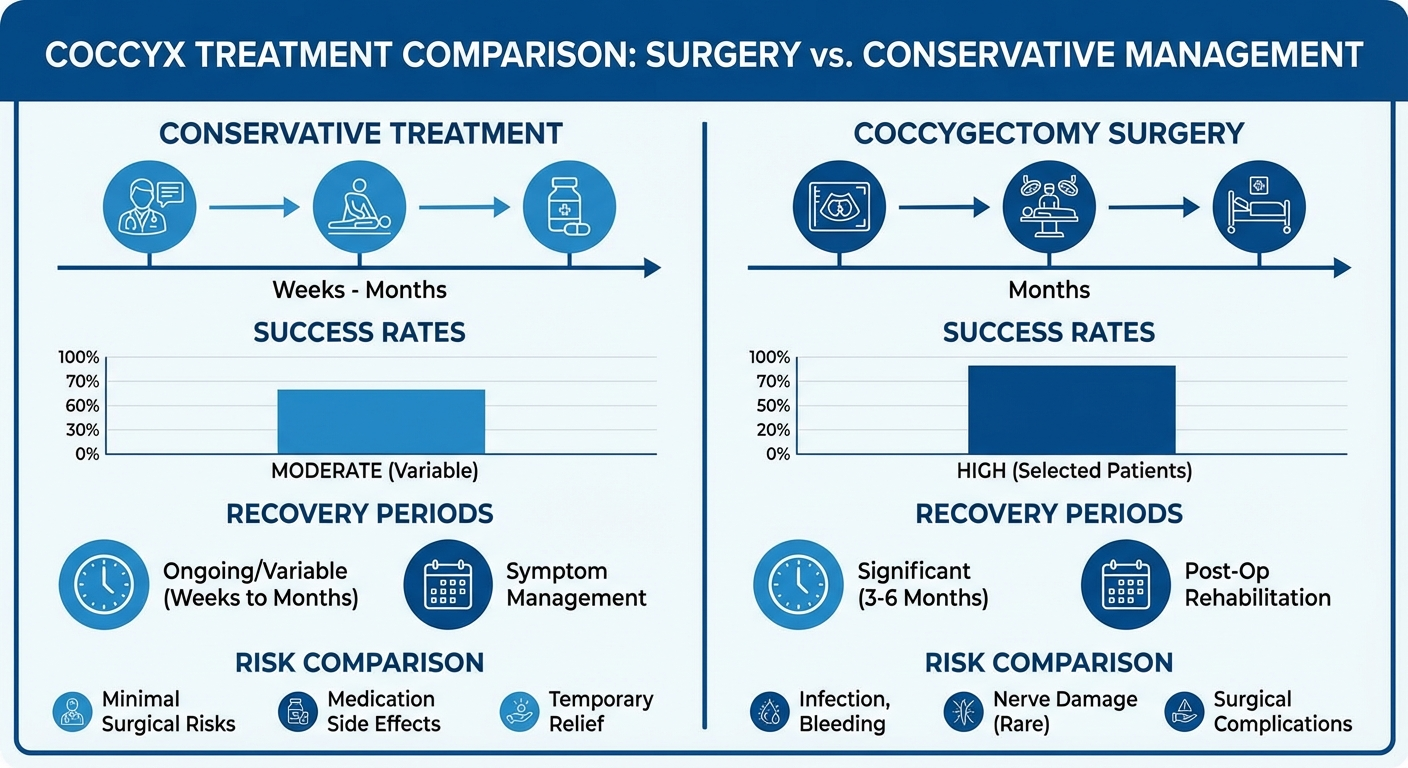
Surgery is reserved for cases where 6+ months of conservative care has failed to provide adequate relief.
Preoperative Preparation
Bowel preparation (enema) to clear rectum
Antibiotics to prevent infection
General anesthesia (patient completely asleep)
Positioning: Prone (face down) or lateral (side) position
Surgical Technique
Step 1: Incision
A small incision (3-5 cm) is made over the coccyx, typically vertically along the midline.
Step 2: Dissection
The surgeon carefully dissects through subcutaneous tissue, identifying and preserving important structures:
Posterior sacrococcygeal ligament
Anococcygeal ligament
Levator ani muscle attachments
Gluteus maximus attachments
Step 3: Coccyx Removal
The coccyx is detached from the sacrum at the sacrococcygeal joint. The surgeon may remove:
Partial coccygectomy: Only the mobile/distal segments
Total coccygectomy: Entire coccyx including sacrococcygeal joint
Most surgeons prefer total removal to prevent continued pain from remaining segments.
Step 4: Closure
The wound is closed in layers:
Deep layer: Absorbable sutures to muscle/fascia
Subcutaneous layer: Sutures to fat layer
Skin: Stitches or staples
A drain may be placed temporarily to prevent fluid accumulation.
Duration
The procedure typically takes 45-90 minutes depending on complexity.
Recovery Timeline
Days 1-3: Immediate Postoperative Period
Hospital stay for pain management and monitoring
IV pain medications
Wound care education
Assistance with first bowel movement
Discharge when pain controlled and tolerating diet
Week 1-2: Early Recovery
Significant pain requiring oral narcotics
Must avoid sitting directly on wound
Side-lying or standing positions
Wound care at home
No driving
Staples/stitches removed (day 10-14)
Weeks 3-6: Intermediate Recovery
Pain gradually decreasing
May begin sitting on specialized cushion
Light walking encouraged
Return to work (sedentary jobs) possible
No heavy lifting (>10 lbs)
Weeks 6-12: Late Recovery
Most patients can sit normally with cushionGradual return to normal activities
Physical therapy may begin
Scar tissue massage
Assessment of pain relief
Months 3-6: Full Recovery
Complete tissue healing
Final assessment of surgical outcome
Most patients know if surgery was successful
Return to all activities including sports
Surgical Risks and Complications
⚠️ Important: High Complication Rate
Coccygectomy has a complication rate of 15-30%, significantly higher than most orthopedic surgeries. This is due to the location (near anus, difficult to keep clean) and poor blood supply to the area.
Common Complications
1. Wound Infection (5-15%)
The most common complication. Proximity to the anus makes infection risk high.
Usually superficial, treated with antibiotics
Deep infection may require wound opening and drainage
Smokers and diabetics at higher risk
2. Wound Dehiscence (5-10%)
Wound opening due to tension or infection.
May require reclosure or healing by secondary intention
Prolongs recovery significantly
More common in obese patients
3. Persistent Pain (10-20%)
Surgery does not guarantee pain relief.
May indicate incorrect diagnosis
Could represent phantom pain or neuroma formation
May require further treatment or revision
4. Scar Pain (5-10%)
Painful scar tissue or neuroma (nerve bundle) formation.
What complications have your patients experienced?
What is your protocol if surgery fails?
What restrictions will I have post-surgery?
When can I return to work/activities?
Red Flags: Seek Another Opinion If...
Surgeon guarantees success
Downplays complication risks
Has performed very few procedures
Doesn't require psychological evaluation
Pressures you to decide quickly
Frequently Asked Questions
Will I miss my tailbone?
No. The coccyx has minimal functional importance. Most patients don't notice its absence after recovery.
Can I sit normally after surgery?
Most patients can sit normally within 2-3 months using a specialized cushion. Full normal sitting may take 4-6 months.
What if surgery doesn't work?
20-50% of patients have incomplete relief. Options include further injections, pain management, spinal cord stimulation, or psychological support for coping with chronic pain.
Is the scar visible?
The scar is in the gluteal cleft (buttock crease) and typically not visible when standing or sitting normally.
Can the coccyx grow back?
No. Once removed, the coccyx does not regenerate. However, painful scar tissue or bone spurs can form at the surgical site.
Bottom line: Coccygectomy can be life-changing for carefully selected patients with severe, intractable coccyx pain. However, the significant complication rate and variable success mean it should only be considered after exhaustive conservative treatment and thorough evaluation by an experienced surgeon.
Additional Information and Resources
Understanding Your Condition
Knowledge is power when dealing with coccyx pain. The more you understand about your condition, the better equipped you'll be to manage it effectively and communicate with healthcare providers.
Coccyx pain, while often dismissed as minor, can significantly impact quality of life. The coccyx serves as an attachment point for multiple muscles and ligaments, making it crucial for pelvic stability and function. When injured or irritated, the resulting pain can affect sitting, standing, walking, and even sleeping.
Risk Factors
Several factors increase the likelihood of developing coccyx pain:
Body weight: Higher BMI increases pressure on the coccyx when sitting
Occupation: Jobs requiring prolonged sitting or heavy physical labor
Activity level: Both sedentary lifestyle and high-impact sports
Previous injury: History of falls or trauma to the area
Age: Degenerative changes become more common with aging
Gender: Women are affected more frequently than men
Pregnancy: Hormonal changes and childbirth increase risk
Diagnostic Process
Proper diagnosis is essential for effective treatment. Your healthcare provider may use:
Physical examination: Palpation of the coccyx and surrounding structures
Dynamic testing: Assessing pain with movement and position changes
Imaging: X-rays, MRI, or CT scans to visualize bone and soft tissue
Diagnostic injections: Local anesthetic to confirm pain source
Neurological exam: Ruling out nerve involvement
Treatment Options Overview
Treatment typically progresses from conservative to more invasive:
Conservative Treatments (First Line)
Activity modification and ergonomics
Coccyx cushions and seating aids
Physical therapy and exercises
Medications (NSAIDs, muscle relaxants)
Heat and cold therapy
Manual manipulation
Interventional Treatments
Corticosteroid injections
Nerve blocks
Radiofrequency ablation
Ganglion impar blocks
Surgical Options
Coccygectomy (tailbone removal) - last resort
Lifestyle Modifications
Long-term management often requires lifestyle changes:
Daily Habits
Take standing breaks every 30 minutes
Use proper lifting technique
Maintain healthy weight
Stay active with low-impact exercise
Practice good posture
Use supportive seating
Workplace Ergonomics
Adjust chair height for proper hip angle
Use standing desk when possible
Position monitor at eye level
Keep frequently used items within reach
Consider ergonomic accessories
Nutrition and Healing
Proper nutrition supports tissue healing and reduces inflammation:
Hydration: Adequate water intake for tissue health
Protein: Essential for tissue repair
Vitamins and minerals: Vitamin D, calcium, magnesium
Avoid: Excessive sugar, processed foods, alcohol
Exercise and Movement
Appropriate exercise is crucial for recovery and prevention:
Beneficial Activities
Walking (low-impact, promotes circulation)
Swimming (supported, full-body)
Core strengthening (supports pelvis)
Stretching (maintains flexibility)
Yoga (gentle, improves body awareness)
Activities to Modify or Avoid
High-impact sports (running, jumping)
Prolonged cycling (pressure on coccyx)
Rowing (repetitive pressure)
Heavy weightlifting (strain on pelvic floor)
Contact sports (risk of trauma)
Mental Health Considerations
Chronic pain affects mental health significantly:
Depression and anxiety are common
Sleep disturbances worsen pain perception
Social isolation can develop
Work stress may increase
Relationships may be strained
Addressing mental health is as important as treating physical symptoms. Consider counseling, support groups, stress management techniques, and open communication with loved ones.
Building Your Healthcare Team
Effective treatment often involves multiple providers:
Primary care physician: Initial evaluation and coordination
Contact your healthcare provider immediately if you experience:
Severe pain after trauma or fall
Fever with tailbone pain
Numbness or weakness in legs
Loss of bowel or bladder control
Unexplained weight loss
Night pain that doesn't improve with position changes
Signs of infection (redness, warmth, drainage)
Support Resources
You don't have to face this alone:
Online forums and support groups
Patient advocacy organizations
Educational websites and videos
Local pain management programs
Physical therapy clinics
Setting Realistic Expectations
Recovery from coccyx pain takes time:
Acute cases: 2-4 weeks
Subacute cases: 2-3 months
Chronic cases: 3-6 months or longer
Patience and consistency with treatment are essential. Celebrate small improvements and don't get discouraged by setbacks.
Prevention Strategies
Once recovered, prevent recurrence:
Maintain good posture
Use proper body mechanics
Stay active and maintain healthy weight
Use supportive seating
Take regular movement breaks
Continue exercises learned in physical therapy
Address issues promptly if they recur
Research and Advances
Medical understanding of coccyx pain continues to evolve:
Improved imaging techniques
Better injection approaches
Advanced surgical techniques
Enhanced rehabilitation protocols
Multidisciplinary treatment models
Insurance and Financial Considerations
Understand your coverage:
Verify coverage for treatments and procedures
Understand copays and deductibles
Check if preauthorization is required
Consider HSA/FSA for eligible expenses
Discuss payment plans if needed
Return to Work Planning
If work is affected:
Discuss modifications with employer
Request ergonomic accommodations
Consider phased return schedule
Document restrictions and capabilities
Know your rights under disability laws
Travel Considerations
Managing pain while traveling:
Bring your coccyx cushion
Take frequent stops on long drives
Request aisle seat on flights
Stand and walk when possible
Pack pain medications in carry-on
Long-Term Outlook
For most people, coccyx pain is manageable:
85-90% improve with conservative treatment
Surgery helps 50-90% of carefully selected patients
Lifestyle modifications prevent recurrence
Quality of life can be fully restored
Ongoing self-care maintains results
Final Thoughts
Coccyx pain can be challenging, but help is available. With proper diagnosis, appropriate treatment, and patience, most people achieve significant relief and return to normal activities. Don't suffer in silence—seek professional help and take an active role in your recovery.
Remember: You are your best advocate. Stay informed, ask questions, and work collaboratively with your healthcare team to find the solutions that work best for you.