Coccyx Pain in Men: Complete Guide to Causes, Treatment & Recovery
Coccyx pain in men is often caused by sports impacts, heavy bodyweight pressure, or prolonged sitting. Men's anatomy means a less mobile coccyx than women — this protects against some injury types but means recovery can take longer.
Medically Reviewed by: Dr. Michael Chen, MD, Orthopedic Surgeon & Dr. Sarah Mitchell, MD | Updated: March 10, 2026
While coccyx pain affects women five times more frequently than men, thousands of men suffer from this debilitating condition in silence. Male anatomy, occupational hazards, and societal reluctance to seek help create unique challenges that require tailored approaches to treatment and recovery.
This comprehensive guide addresses coccyx pain specifically in men—exploring the distinct causes, effective treatments, and practical strategies for the male patient. Whether you're an office worker, athlete, manual laborer, or anyone experiencing tailbone pain, this guide will help you understand your condition and find relief.
The Reality of Coccyx Pain in Men
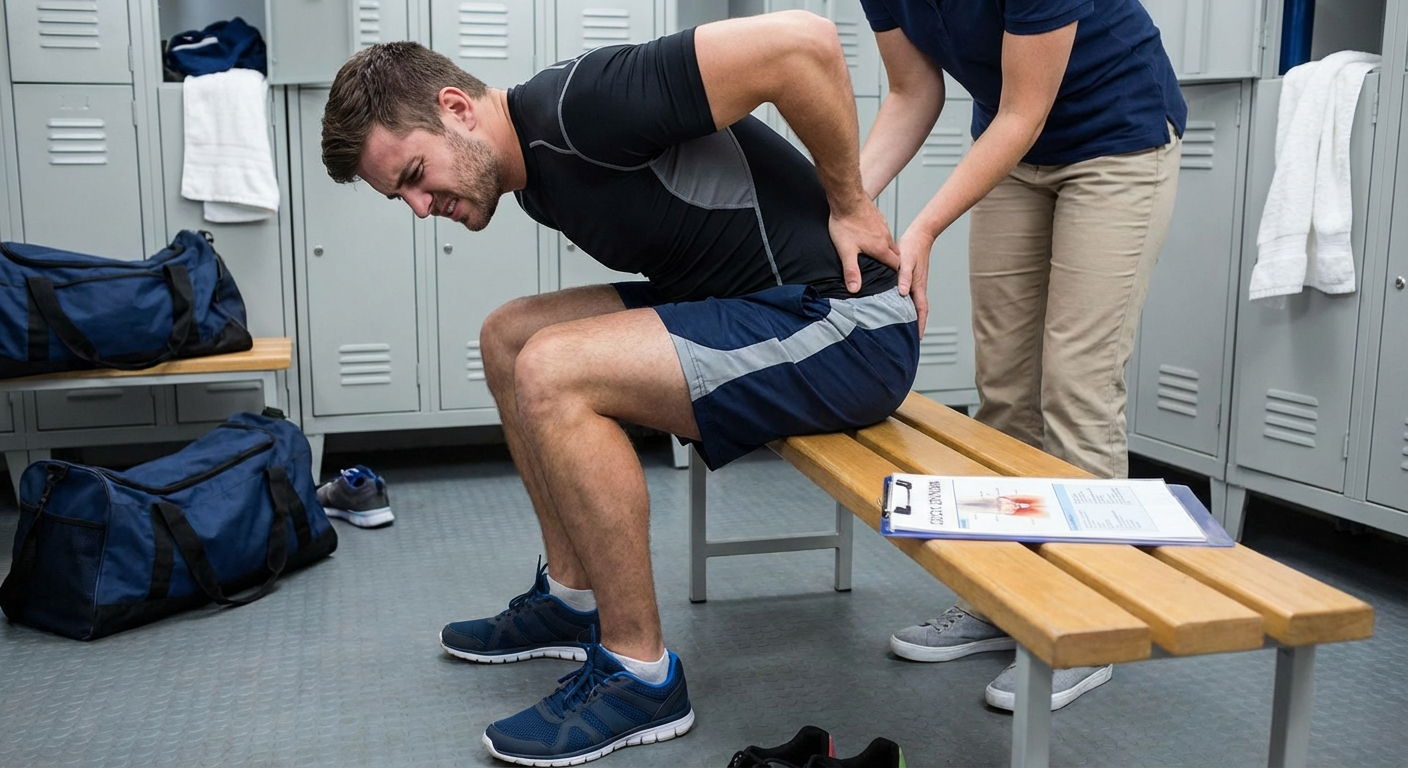
Sports-related impact injuries are the most common cause of coccydynia in men, particularly in contact and fall-risk sports.
Statistics and Prevalence
Despite being less common than in women, coccyx pain in men is not rare:
Prevalence: Approximately 20% of all coccydynia cases occur in men
Absolute numbers: Hundreds of thousands of men affected annually in the US alone
Age peak: Most common between 30-50 years old
Underreporting: Estimated 40% of cases go unreported due to male reluctance to seek care
Delayed treatment: Men average 4-6 months before seeking help vs 2-3 months for women
Why Men Delay Treatment
Several factors contribute to delayed diagnosis in men:
Stigma: Reluctance to discuss pain in the pelvic/gluteal region
Toughness culture: Societal expectation to "tough it out" or "be a man"
Work pressures: Fear of appearing weak, missing work, or losing jobs
Lack of awareness: Many men don't know coccyx pain is treatable
Misdiagnosis: Symptoms sometimes dismissed by doctors as "just back pain"
Privacy concerns: Discomfort with examinations of the area
Anatomical Differences in Men
Coccyx Pain in Men: Sports Injuries, Causes & Recovery
Why men develop tailbone pain, the most common causes, and the fastest path to recovery.
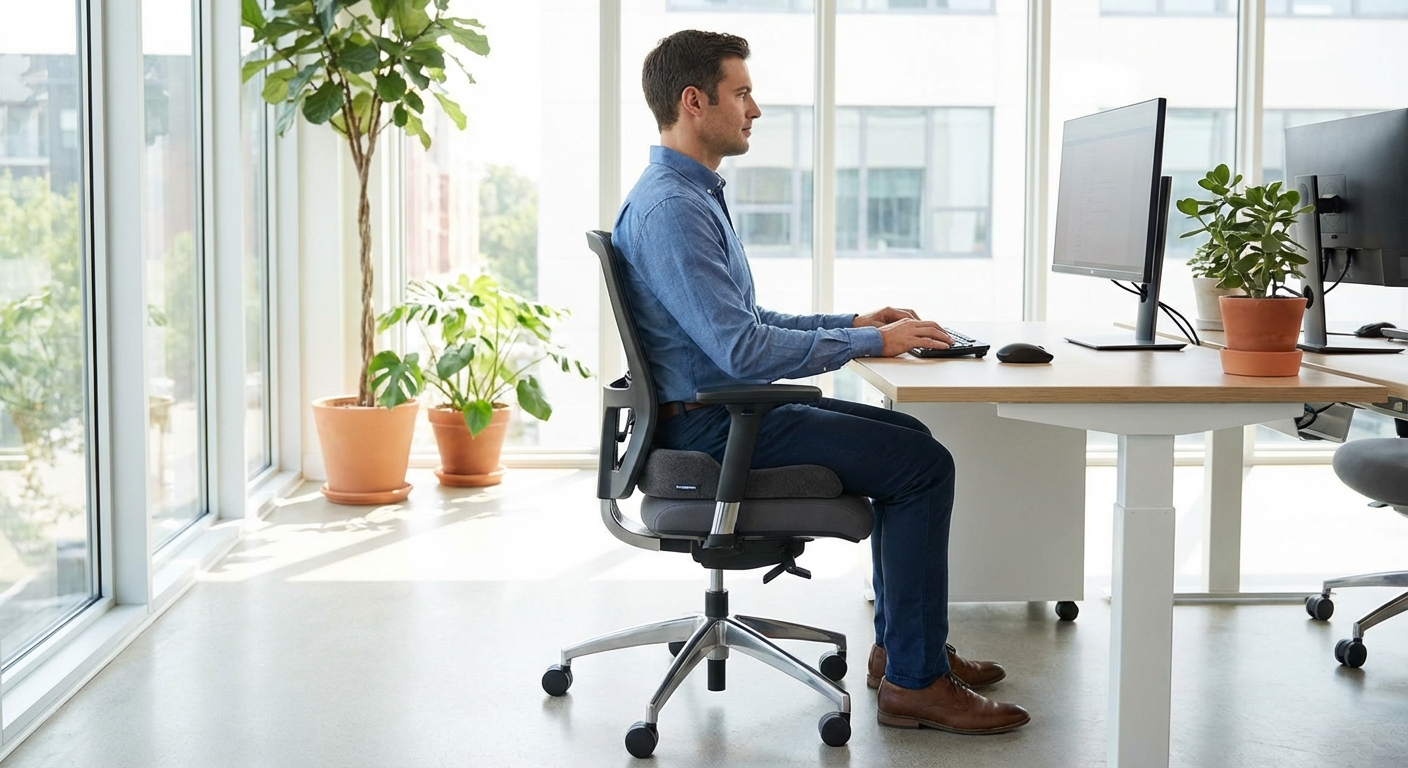
Men who sit for prolonged periods at work benefit significantly from a properly fitted coccyx cushion.
Pelvic Structure
Male anatomy differs significantly from female in ways that affect coccyx pain:
Narrower pelvis: Less space between ischial tuberosities (sit bones), concentrating pressure
Different coccyx angle: More vertical orientation in men vs angled in women
Heavier build: Often greater muscle mass and weight concentrated on smaller surface area
Muscle composition: Different gluteal and pelvic floor muscle structure and strength
Ligament strength: Generally tighter ligaments (men don't experience pregnancy-related relaxin)
Weight distribution: Different center of gravity and sitting mechanics
How These Differences Affect Pain
The male anatomy creates distinct pain patterns and challenges:
More direct coccyx pressure when sitting due to narrower pelvis
Different weight distribution on seat surface
Greater force transmission through the coccyx during trauma
Different referral patterns for associated pain
Higher pressure per square inch on the tailbone
Less natural shock absorption
Common Causes in Men
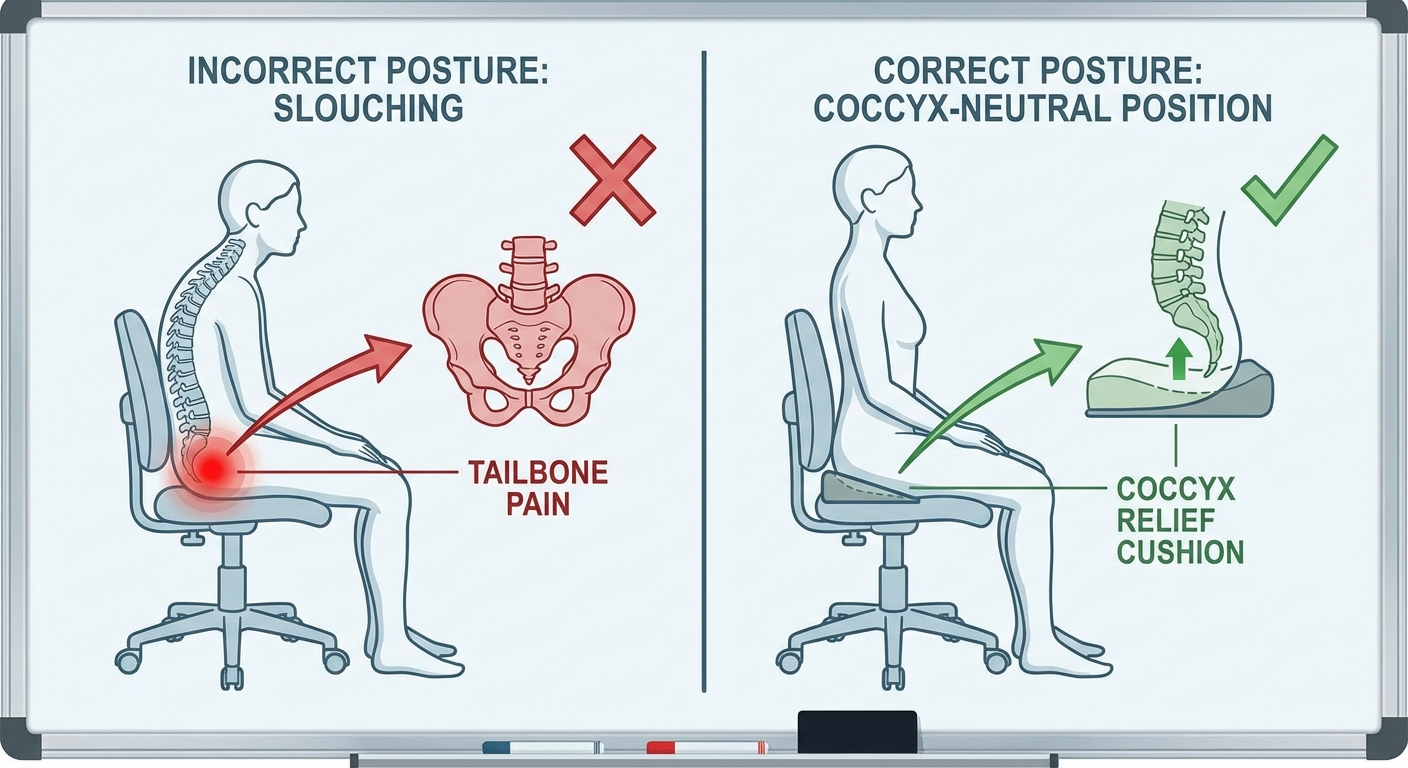
Weight distribution matters — shifting body weight forward to the thighs reduces tailbone pressure by 30–40%.
1. Traumatic Injury (60% of Male Cases)
Men are significantly more likely to experience coccyx pain from acute trauma due to occupational and recreational activities:
Sports-Related Injuries
Cycling: Repetitive pressure from bike seats, especially road cycling and long-distance riding
Contact sports: Football, rugby, hockey—direct blows to tailbone common
Skateboarding/Rollerblading: Falls landing directly on coccyx
Skiing/Snowboarding: Falls on hard-packed snow or ice
Weightlifting: Improper form during squats, deadlifts, or Olympic lifts
Martial arts: Throws and falls
Horseback riding: Falls or bouncing on hard saddles
Professional bike fit assessment (worth the investment)
Consider noseless or cutout saddles
Quality padded cycling shorts on every ride
Limit ride duration during recovery
Stand on pedals for 10-15 seconds every 10 minutes
Gradual return to cycling after pain resolves
For Manual Laborers
Proper lifting technique (legs, not back)
Safety equipment use at all times
Regular stretching breaks throughout shift
Use mechanical aids for heavy lifting when available
Strengthen core and leg muscles
Report injuries immediately—don't "tough it out"
Psychological Aspects
The Male Mental Health Connection
Chronic pain significantly affects mental health, and men often underreport these symptoms:
Depression rates 3x higher in chronic pain patients
Anxiety about work performance and job security
Relationship strain and intimacy issues
Loss of identity (especially for athletes or active men)
Social isolation and withdrawal
Frustration and anger about limitations
Breaking the Stigma
Seeking help is a sign of strength, not weakness:
Chronic pain is a medical condition, not a character flaw or lack of toughness
Early treatment leads to better outcomes and faster recovery
Mental health support improves pain management and overall outcomes
You're not alone—thousands of men deal with this condition
Getting help shows responsibility to yourself and family
When to Seek Help
Don't Delay - See a Doctor If:
Pain persists more than 2 weeks
Pain interferes with work or daily activities
You experience numbness, tingling, or weakness in legs
Pain follows an injury or trauma
Home treatments aren't helping
Pain wakes you at night
You have fever with back or tailbone pain
You're avoiding activities you enjoy
What to Expect at Your Appointment
Physical examination of coccyx (external and possibly internal)
Detailed discussion of symptoms and history
Possibly X-rays or MRI to rule out fractures or other issues
Treatment plan development
Referral to physical therapy
Discussion of work modifications if needed
Recovery Timeline
Phase
Timeline
Focus
Expected Progress
Acute
0-2 weeks
Pain management, activity modification
Pain begins to decrease
Subacute
2-6 weeks
Physical therapy, gradual return to activity
Sitting tolerance improves
Recovery
6-12 weeks
Strengthening, return to full activities
Near-normal function
Maintenance
Ongoing
Prevention, ergonomics, fitness
Pain-free with proper habits
Frequently Asked Questions
Is coccyx pain common in men?
Less common than in women (ratio approximately 1:5), but still affects hundreds of thousands of men annually. About 20% of all coccydynia cases occur in men.
Can weightlifting cause coccyx pain?
Yes, particularly squats and deadlifts with poor form. Heavy weights strain the sacrococcygeal ligaments and can directly impact the coccyx. Proper form is essential—consider working with a trainer.
Should I stop cycling if I have coccyx pain?
Temporarily reduce or stop until pain improves significantly. Then return gradually with proper bike fit, padded shorts, and a cutout saddle. Many cyclists return to full activity with these modifications.
How is treatment different for men?
Treatment principles are the same, but men may benefit more from core strengthening programs and often require more encouragement to seek help initially. Occupational factors may also differ.
Will this affect my ability to work?
With proper treatment, most men return to full work capacity. Early intervention prevents prolonged disability. Work modifications may be needed temporarily.
Can I still play sports?
Usually yes, after recovery. Some modifications may be needed (cycling position, protective gear for contact sports). Many athletes return to previous performance levels.
Should I tell my employer?
If your job involves sitting or physical labor, discussing ergonomic accommodations can help. You don't need to share medical details—focus on practical solutions that improve productivity.
Remember: Coccyx pain is treatable. Don't let stigma or stoicism prevent you from getting help. Early treatment leads to faster recovery and better long-term outcomes. Take action today.
Prevention Strategies for Men
Workplace Prevention
Whether you work in an office or in the field, prevention is always better than treatment:
Office Workers
Invest in a quality ergonomic chair with coccyx cutout or use a dedicated cushion
Use a standing desk for at least 50% of your workday
Set phone reminders to stand and stretch every 30 minutes
Position your monitor at eye level to maintain proper posture
Keep feet flat on floor or use a footrest for proper hip angle
Strengthen core muscles with planks, bridges, and dead bugs
Take walking meetings when possible
Manual Laborers
Always use proper lifting technique—bend knees, keep back straight, lift with legs
Wear appropriate safety equipment including harnesses when working at height
Take micro-breaks to stretch throughout the day
Use mechanical aids for heavy lifting when available
Maintain strong core and leg muscles through regular exercise
Report injuries immediately—don't try to "tough it out"
Use cushioned kneeling pads when working on knees
Professional Drivers
Use a high-quality coccyx cushion designed specifically for vehicle seats
Stop every 2 hours to walk, stretch, and relieve pressure
Adjust seat position to reduce vibration transmission
Consider suspension seat covers for additional cushioning
Perform pelvic tilts and stretches during stops
Maintain proper posture while driving—don't slouch
Sports and Recreation Prevention
For Cyclists
Get a professional bike fit—proper positioning significantly reduces pressure
Invest in a quality saddle with cutout or channel design
Wear padded cycling shorts on every single ride
Stand on pedals for 10-15 seconds every 10 minutes
Discuss flexible break schedules for movement and stretching
Know your rights—many accommodations are legally required
Focus on solutions and outcomes, not just problems
Provide doctor's note if required by company policy
Involving Your Partner
Chronic pain affects relationships. Open communication helps:
Be open about your pain, limitations, and needs
Explain how they can support your recovery
Don't isolate yourself—maintain intimacy and connection
Consider couples counseling if pain is straining the relationship
Celebrate small victories together
Be patient with the recovery process
Connecting with Other Men
You're not alone in this experience:
Online forums and support groups for men with chronic pain
Reddit communities (r/coccyx, r/chronicpain)
Facebook support groups
Local pain management support groups
Sharing experiences reduces isolation and provides tips
Long-Term Management
Creating Sustainable Habits
Recovery is a marathon, not a sprint. Build habits that last:
Make ergonomic adjustments permanent fixtures in your life
Continue exercises even after pain resolves (maintenance)
Schedule regular movement breaks into your daily routine
Maintain healthy weight through sustainable habits
Listen to your body—don't ignore early warning signs
Regular check-ins with healthcare providers
Monitoring Your Progress
Track these metrics to see improvement:
Pain levels (0-10 scale) throughout the day
Sitting tolerance (how long before pain increases)
Sleep quality and duration
Activity levels and exercise tolerance
Medication usage (should decrease over time)
Mood and mental health indicators
Use a simple app or journal to track trends over time.
When to Re-evaluate Treatment
Consult your doctor if:
No improvement after 6-8 weeks of conservative treatment
Pain is getting worse despite following treatment plan
New symptoms develop (numbness, weakness, etc.)
Current treatments lose effectiveness over time
You're considering surgical options
Pain significantly impacts mental health
Success Stories
Case Study: The Office Worker
John, 42, Software Engineer
"I ignored the pain for months, thinking it would go away on its own. By the time I saw a doctor, I could barely sit through meetings and was avoiding social activities. Physical therapy, a standing desk, and a quality coccyx cushion changed everything. Within 8 weeks, I was back to normal. Don't wait like I did—get help early."
Case Study: The Cyclist
Mike, 35, Amateur Cyclist
"I thought I'd have to give up cycling entirely. A bike fit specialist adjusted my position, I switched to a cutout saddle, and I started using padded shorts on every ride. I also do core work 3x/week now. Not only am I riding pain-free, but I'm actually stronger and faster than before because I can train consistently."
Case Study: The Construction Worker
David, 48, Construction Foreman
"A fall from a ladder left me with severe coccyx pain. I was worried about my job and providing for my family. My doctor worked with me on a return-to-work plan. We modified my duties initially, and I used a special cushion in my truck. After 3 months of treatment and PT, I was back to full duty. Communication with my employer and following the treatment plan was key."
Resources for Men
Professional Help
Orthopedic specialists: For diagnosis and treatment planning
Physical therapists: For targeted rehabilitation and exercise programs
Pain management specialists: For chronic or severe cases
Psychologists: For coping strategies and mental health support
Occupational therapists: For workplace modifications
Sports medicine doctors: For athletes
Educational Resources
Coccyx.org—comprehensive information and patient community
American Chronic Pain Association
NIH Pain Consortium
Mayo Clinic—coccydynia overview and treatment options
Our complete guide library at Coccyx Relief Institute
Final Thoughts
Coccyx pain in men is real, treatable, and nothing to be ashamed of. The combination of male anatomy, occupational hazards, and cultural factors creates unique challenges, but also clear pathways to recovery.
The most important steps are:
Don't delay seeking help—early treatment works better and faster
Be honest with your healthcare providers—about all symptoms, even embarrassing ones
Follow through with treatment—consistency and patience matter
Make lifestyle changes—prevention is an ongoing commitment
Address mental health—pain affects the whole person, not just the body
Build a support system—you don't have to do this alone
You don't have to "tough it out" or suffer in silence. Effective treatments exist, and most men recover fully with proper care. The strongest thing you can do is take action and get the help you need. Take the first step today.