How to Sleep with Coccyx Pain: 12 Proven Positions for Restful Nights
The best sleeping position for coccyx pain is on your side with a pillow between your knees to maintain spinal alignment. Avoid sleeping on your back without support — this places direct pressure on the coccyx throughout the night.
Medically Reviewed by: Dr. Sarah Mitchell, MD & Sleep Specialist Dr. James Wilson | Updated: March 10, 2026
Coccyx pain doesn't take a break at bedtime. For many sufferers, nighttime brings its own challenges—finding a comfortable position, staying asleep, and waking without increased pain. Studies show that 60-70% of people with chronic coccyx pain experience sleep disturbances, creating a vicious cycle where poor sleep increases pain sensitivity.
The good news? Strategic positioning, proper pillow setup, and sleep hygiene adjustments can dramatically improve your sleep quality. This comprehensive guide covers 12 proven sleeping positions, optimal pillow arrangements, and nighttime routines specifically designed for coccyx pain relief.
Why Coccyx Pain Worsens at Night
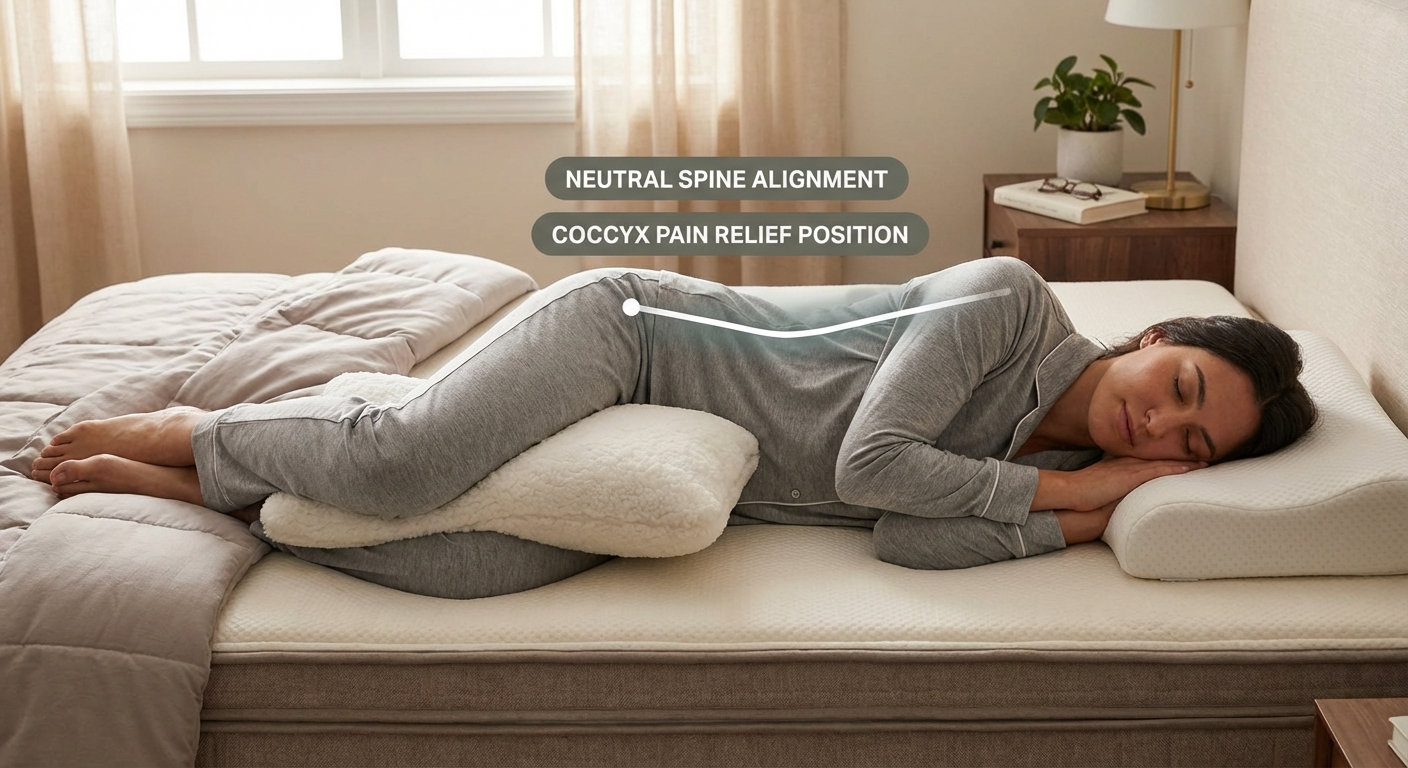
Position matters throughout the night — this infographic shows the optimal setup for tailbone pain relief while sleeping.
Understanding why your tailbone hurts more (or differently) at night helps you address the root causes:
1. Prolonged Static Positioning
During the day, you naturally shift positions frequently—standing, walking, sitting. At night, you may stay in one position for hours, causing pressure points to build up and joints to stiffen.
2. Inflammatory Cycle
Inflammation naturally increases at night due to circadian rhythms. For injured or irritated tissues like the coccyx, this means more pain during evening and early morning hours.
3. Muscle Relaxation
As you fall asleep, muscles relax—including those that protect and stabilize the coccyx during the day. This can allow the tailbone to move into painful positions.
4. Pressure Redistribution
Your sleeping surface may create pressure on the coccyx that differs from your daytime seating. Too firm or too soft mattresses can both cause problems.
Best Sleeping Positions for Coccyx Pain
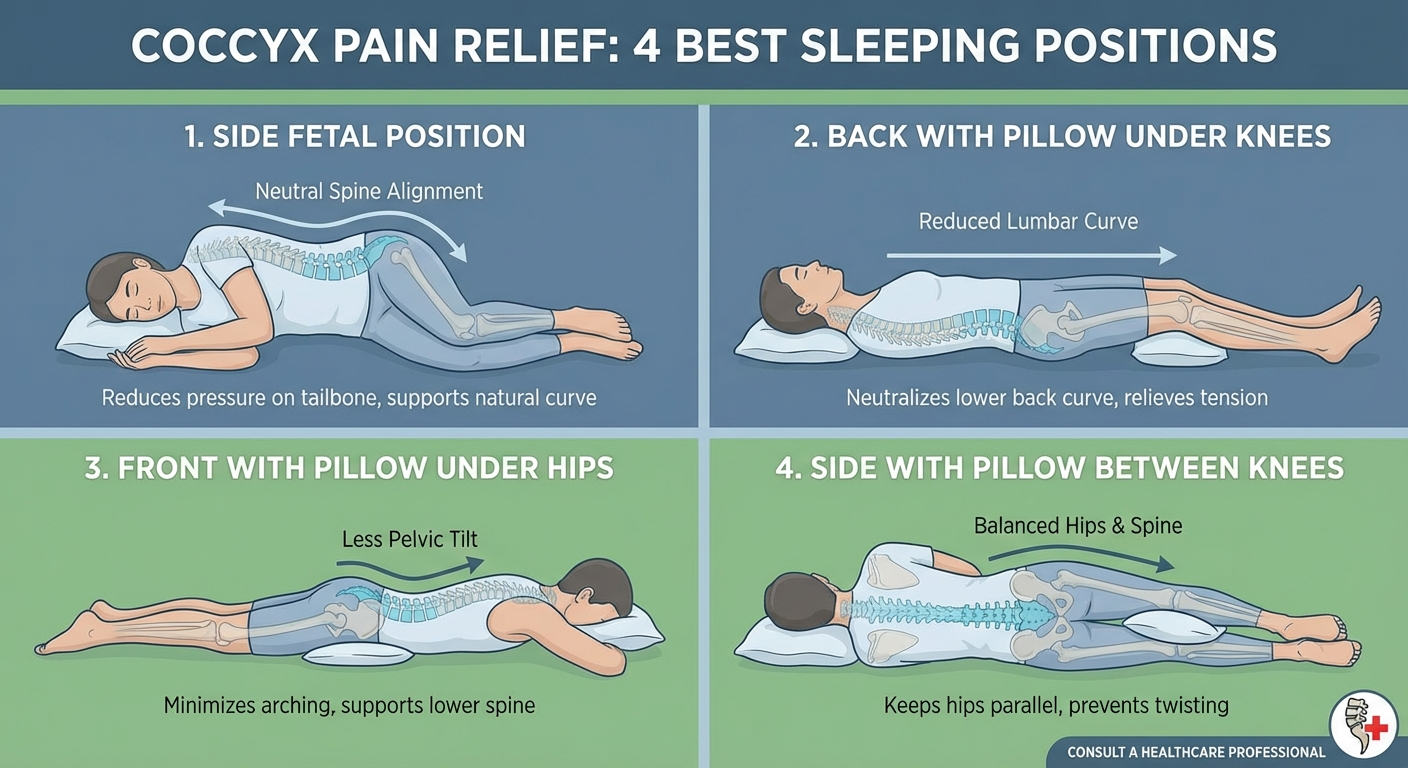
How to Sleep With Coccyx Pain: Best Positions Demonstrated
Visual guide to the best sleeping positions and pillow setups for overnight tailbone pain relief.
Side sleeping with knee pillow is the gold standard position for overnight coccyx pain management.
These 12 positions are ranked by effectiveness based on patient reports and clinical recommendations:
1. Side-Lying with Pillow Between Knees ⭐ BEST OVERALL
Why it works: Removes all pressure from the coccyx while maintaining spinal alignment.
Setup:
Lie on your side (either side is fine, though many prefer left for circulation)
Place a firm pillow between your knees
Keep hips stacked (don't let top hip roll forward)
Place a small pillow or rolled towel under your waist if there's a gap
Consider a body pillow for full support
Pro Tips:
The pillow between knees should be thick enough to keep hips aligned
If you roll onto your back, the pillow will help prevent that
Switch sides periodically to prevent shoulder/hip pressure
2. Fetal Position with Modifications
Why it works: Opens space between vertebrae and reduces coccyx pressure.
Setup:
Lie on your side
Gently draw knees toward chest (don't curl too tightly)
Place pillow between knees
Use a small pillow under your head (not too high)
Keep neck neutral—don't tuck chin to chest
Caution:
Don't curl too tightly—this can restrict breathing and cause neck strain. A gentle curl is sufficient.
3. Prone Position (Stomach Sleeping) with Hip Support
Why it works: Completely eliminates coccyx pressure.
Setup:
Lie on your stomach
Place a thin pillow under your hips/pelvis
Use a very thin pillow under your head (or none)
Bend one knee slightly to reduce lower back arch
Important:
Stomach sleeping can strain your neck and lower back. Only use this position if it's comfortable for your entire spine. The hip pillow is essential to reduce lumbar arch.
4. Reclined Back Sleeping (30-45° angle)
Why it works: Distributes weight away from coccyx while supporting the back.
Setup:
Use a wedge pillow or adjustable bed to elevate upper body 30-45°
Place pillow under knees to flatten lower back
Support arms with pillows if needed
Ensure neck is supported without excessive flexion
Best for:
People who naturally prefer back sleeping but experience coccyx pressure when flat.
5. Side-Lying with Body Pillow Hug
Why it works: Full-body support prevents rolling and maintains alignment.
Setup:
Lie on side
Hug a large body pillow (U-shaped or straight)
Place pillow between knees
Let the body pillow support your upper arm and shoulder
Benefits:
The body pillow prevents you from rolling onto your back (which can increase coccyx pressure) and provides full-body support that reduces muscle tension.
6. Back Sleeping with Knee Pillow
Why it works: For those who must sleep on their back, this reduces lumbar strain.
Setup:
Lie on your back
Place pillow under knees (not just under lower legs)
This flattens the lower back and reduces coccyx pressure
Use a small rolled towel under lower back if needed
Note:
Back sleeping generally puts more pressure on the coccyx than side sleeping. Use this only if side sleeping is uncomfortable for other reasons.
Pillow Setup Guide
Understanding which positions increase coccyx pressure helps design the right overnight strategy for your body.
The right pillow configuration is as important as position:
Pillow Type
Best Use
Recommended
Knee Pillow
Between knees for side sleepers
Firm memory foam, contoured
Body Pillow
Full side support, prevents rolling
U-shaped or straight 54"+
Wedge Pillow
Elevated back sleeping
30-45° angle, firm foam
Pregnancy Pillow
Full body cocoon
C-shaped or U-shaped
Donut Cushion
Sitting in bed (reading/TV)
Inflatable or foam
Mattress Considerations
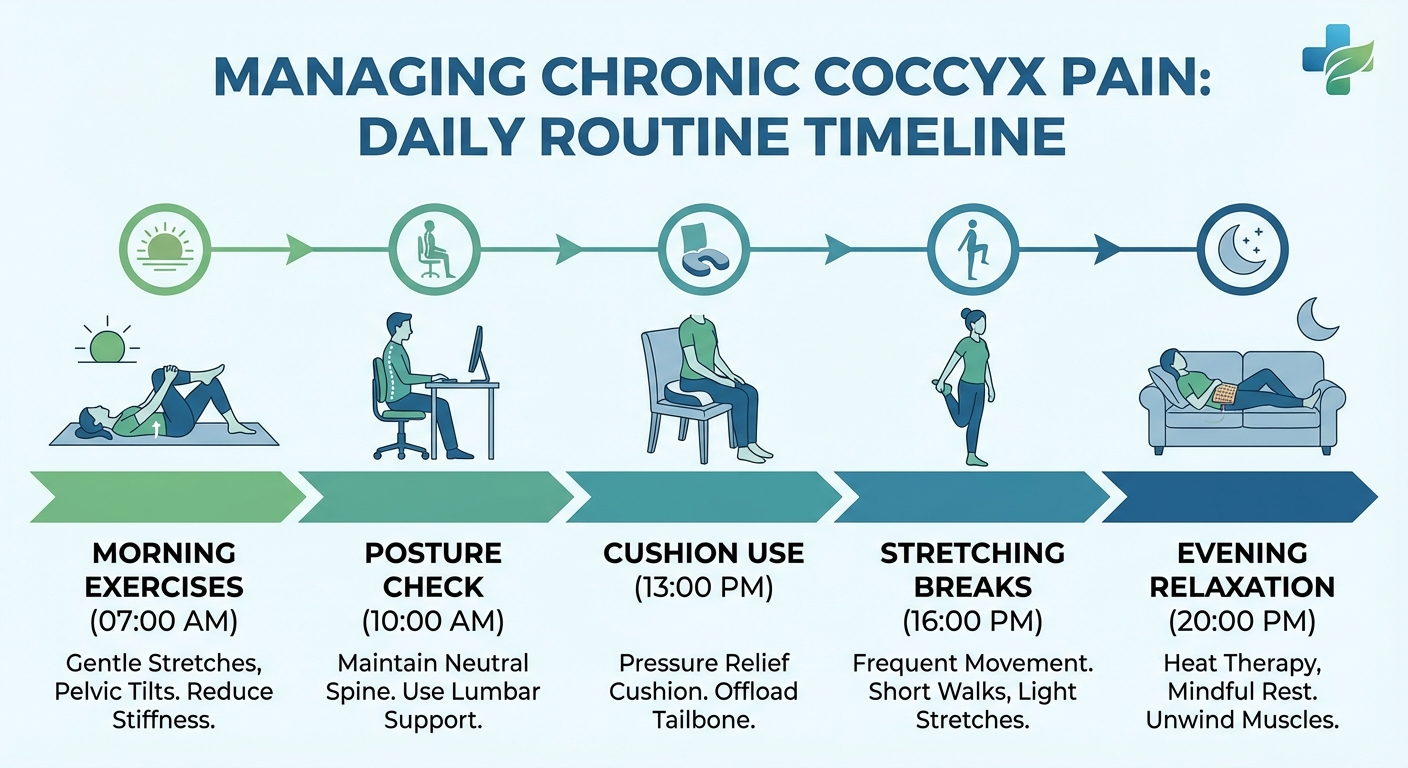
Combining good sleep positioning with a daytime management routine produces the best long-term outcomes.
Best Mattress Types for Coccyx Pain
Memory Foam (Medium-Firm): Conforms to body while providing support. Best for pressure relief.
Latex: Responsive support with natural cooling. Good for combination sleepers.
Hybrid: Coil support with foam comfort layer. Good balance of support and pressure relief.
Mattress Firmness Guide
Too Soft: Hips sink, spine misaligns, coccyx pressure increases
Too Firm: Pressure points develop, especially at coccyx and shoulders
Just Right: Spine stays neutral, pressure evenly distributed
Recommendation: Medium-firm (5-7/10 firmness) works best for most coccyx pain sufferers.
Bedtime Routine for Pain Management
1 Hour Before Bed
Take warm bath or shower (relaxes muscles)
Apply heat pack to lower back/sacral area (15-20 minutes)
Do gentle stretching (see below)
Take prescribed pain medication if needed
30 Minutes Before Bed
Dim lights, reduce screen time
Practice relaxation techniques
Prepare sleep environment (temperature, pillows)
Bedtime Stretches (5-10 minutes)
Child's Pose: 60 seconds
Knees to Chest: 30 seconds x 3
Supine Spinal Twist: 30 seconds each side
Deep Breathing: 10 slow breaths
Nighttime Pain Management Strategies
Heat Therapy
Apply a heating pad to your lower back/sacral area for 15-20 minutes before bed. The heat increases blood flow, relaxes muscles, and reduces pain signals. Use a pad with auto-shutoff for safety.
Topical Pain Relief
Apply topical NSAID gel (diclofenac) or lidocaine patch to the coccyx area before bed. These provide localized relief without systemic side effects.
Medication Timing
If you take pain medication, time your evening dose about 1 hour before bed so it peaks when you're trying to fall asleep. Discuss optimal timing with your doctor.
Mindfulness and Relaxation
Progressive muscle relaxation, guided imagery, or meditation can reduce pain perception and help you fall asleep despite discomfort. Apps like Calm or Headspace offer pain-specific programs.
What to Avoid at Night
❌ Don't Do These
Don't sleep on your back without knee support — increases lumbar arch and coccyx pressure
Don't use too many pillows — can misalign neck and spine
Don't eat heavy meals before bed — digestion can increase inflammation
Don't use screens in bed — blue light disrupts sleep quality
Don't ignore your mattress — old or wrong mattress exacerbates pain
When to Seek Help
Consult a healthcare provider if:
Sleep disruption persists despite position changes
Pain wakes you consistently at night
You experience numbness or tingling
Pain is getting worse over time
Daytime functioning is significantly impaired
A sleep study may be beneficial if you have sleep apnea symptoms (loud snoring, gasping), as sleep apnea can increase pain sensitivity.
Frequently Asked Questions
Is it better to sleep on a hard or soft surface with coccyx pain?
Medium-firm is generally best. Too soft allows hips to sink, misaligning the spine. Too firm creates pressure points. Memory foam mattresses often provide the best pressure relief.
Why does my coccyx hurt more when I wake up?
Morning pain often results from inflammatory chemicals that peak overnight, muscle stiffness from static positioning, or sleeping in a position that aggravated the coccyx. Morning stretching and heat can help.
Can I use a donut pillow for sleeping?
Donut pillows are designed for sitting, not sleeping. They can actually increase pressure on the coccyx when lying down. Use the positions described above instead.
How long will it take to find a comfortable sleeping position?
Most people find relief within 1-2 weeks of consistent position and pillow adjustments. Your body needs time to adapt to new sleeping patterns.
Should I take sleep medication for coccyx pain?
Sleep medication may be appropriate short-term for severe sleep disruption, but address the underlying pain issue for long-term relief. Discuss options with your doctor.
Remember: Good sleep is essential for pain management and healing. By optimizing your sleep position, pillow setup, and bedtime routine, you can significantly reduce nighttime coccyx pain and wake up more refreshed.
Additional Information and Resources
Understanding Your Condition
Knowledge is power when dealing with coccyx pain. The more you understand about your condition, the better equipped you'll be to manage it effectively and communicate with healthcare providers.
Coccyx pain, while often dismissed as minor, can significantly impact quality of life. The coccyx serves as an attachment point for multiple muscles and ligaments, making it crucial for pelvic stability and function. When injured or irritated, the resulting pain can affect sitting, standing, walking, and even sleeping.
Risk Factors
Several factors increase the likelihood of developing coccyx pain:
Body weight: Higher BMI increases pressure on the coccyx when sitting
Occupation: Jobs requiring prolonged sitting or heavy physical labor
Activity level: Both sedentary lifestyle and high-impact sports
Previous injury: History of falls or trauma to the area
Age: Degenerative changes become more common with aging
Gender: Women are affected more frequently than men
Pregnancy: Hormonal changes and childbirth increase risk
Diagnostic Process
Proper diagnosis is essential for effective treatment. Your healthcare provider may use:
Physical examination: Palpation of the coccyx and surrounding structures
Dynamic testing: Assessing pain with movement and position changes
Imaging: X-rays, MRI, or CT scans to visualize bone and soft tissue
Diagnostic injections: Local anesthetic to confirm pain source
Neurological exam: Ruling out nerve involvement
Treatment Options Overview
Treatment typically progresses from conservative to more invasive:
Conservative Treatments (First Line)
Activity modification and ergonomics
Coccyx cushions and seating aids
Physical therapy and exercises
Medications (NSAIDs, muscle relaxants)
Heat and cold therapy
Manual manipulation
Interventional Treatments
Corticosteroid injections
Nerve blocks
Radiofrequency ablation
Ganglion impar blocks
Surgical Options
Coccygectomy (tailbone removal) - last resort
Lifestyle Modifications
Long-term management often requires lifestyle changes:
Daily Habits
Take standing breaks every 30 minutes
Use proper lifting technique
Maintain healthy weight
Stay active with low-impact exercise
Practice good posture
Use supportive seating
Workplace Ergonomics
Adjust chair height for proper hip angle
Use standing desk when possible
Position monitor at eye level
Keep frequently used items within reach
Consider ergonomic accessories
Nutrition and Healing
Proper nutrition supports tissue healing and reduces inflammation:
Hydration: Adequate water intake for tissue health
Protein: Essential for tissue repair
Vitamins and minerals: Vitamin D, calcium, magnesium
Avoid: Excessive sugar, processed foods, alcohol
Exercise and Movement
Appropriate exercise is crucial for recovery and prevention:
Beneficial Activities
Walking (low-impact, promotes circulation)
Swimming (supported, full-body)
Core strengthening (supports pelvis)
Stretching (maintains flexibility)
Yoga (gentle, improves body awareness)
Activities to Modify or Avoid
High-impact sports (running, jumping)
Prolonged cycling (pressure on coccyx)
Rowing (repetitive pressure)
Heavy weightlifting (strain on pelvic floor)
Contact sports (risk of trauma)
Mental Health Considerations
Chronic pain affects mental health significantly:
Depression and anxiety are common
Sleep disturbances worsen pain perception
Social isolation can develop
Work stress may increase
Relationships may be strained
Addressing mental health is as important as treating physical symptoms. Consider counseling, support groups, stress management techniques, and open communication with loved ones.
Building Your Healthcare Team
Effective treatment often involves multiple providers:
Primary care physician: Initial evaluation and coordination
Contact your healthcare provider immediately if you experience:
Severe pain after trauma or fall
Fever with tailbone pain
Numbness or weakness in legs
Loss of bowel or bladder control
Unexplained weight loss
Night pain that doesn't improve with position changes
Signs of infection (redness, warmth, drainage)
Support Resources
You don't have to face this alone:
Online forums and support groups
Patient advocacy organizations
Educational websites and videos
Local pain management programs
Physical therapy clinics
Setting Realistic Expectations
Recovery from coccyx pain takes time:
Acute cases: 2-4 weeks
Subacute cases: 2-3 months
Chronic cases: 3-6 months or longer
Patience and consistency with treatment are essential. Celebrate small improvements and don't get discouraged by setbacks.
Prevention Strategies
Once recovered, prevent recurrence:
Maintain good posture
Use proper body mechanics
Stay active and maintain healthy weight
Use supportive seating
Take regular movement breaks
Continue exercises learned in physical therapy
Address issues promptly if they recur
Research and Advances
Medical understanding of coccyx pain continues to evolve:
Improved imaging techniques
Better injection approaches
Advanced surgical techniques
Enhanced rehabilitation protocols
Multidisciplinary treatment models
Insurance and Financial Considerations
Understand your coverage:
Verify coverage for treatments and procedures
Understand copays and deductibles
Check if preauthorization is required
Consider HSA/FSA for eligible expenses
Discuss payment plans if needed
Return to Work Planning
If work is affected:
Discuss modifications with employer
Request ergonomic accommodations
Consider phased return schedule
Document restrictions and capabilities
Know your rights under disability laws
Travel Considerations
Managing pain while traveling:
Bring your coccyx cushion
Take frequent stops on long drives
Request aisle seat on flights
Stand and walk when possible
Pack pain medications in carry-on
Long-Term Outlook
For most people, coccyx pain is manageable:
85-90% improve with conservative treatment
Surgery helps 50-90% of carefully selected patients
Lifestyle modifications prevent recurrence
Quality of life can be fully restored
Ongoing self-care maintains results
Final Thoughts
Coccyx pain can be challenging, but help is available. With proper diagnosis, appropriate treatment, and patience, most people achieve significant relief and return to normal activities. Don't suffer in silence—seek professional help and take an active role in your recovery.
Remember: You are your best advocate. Stay informed, ask questions, and work collaboratively with your healthcare team to find the solutions that work best for you.