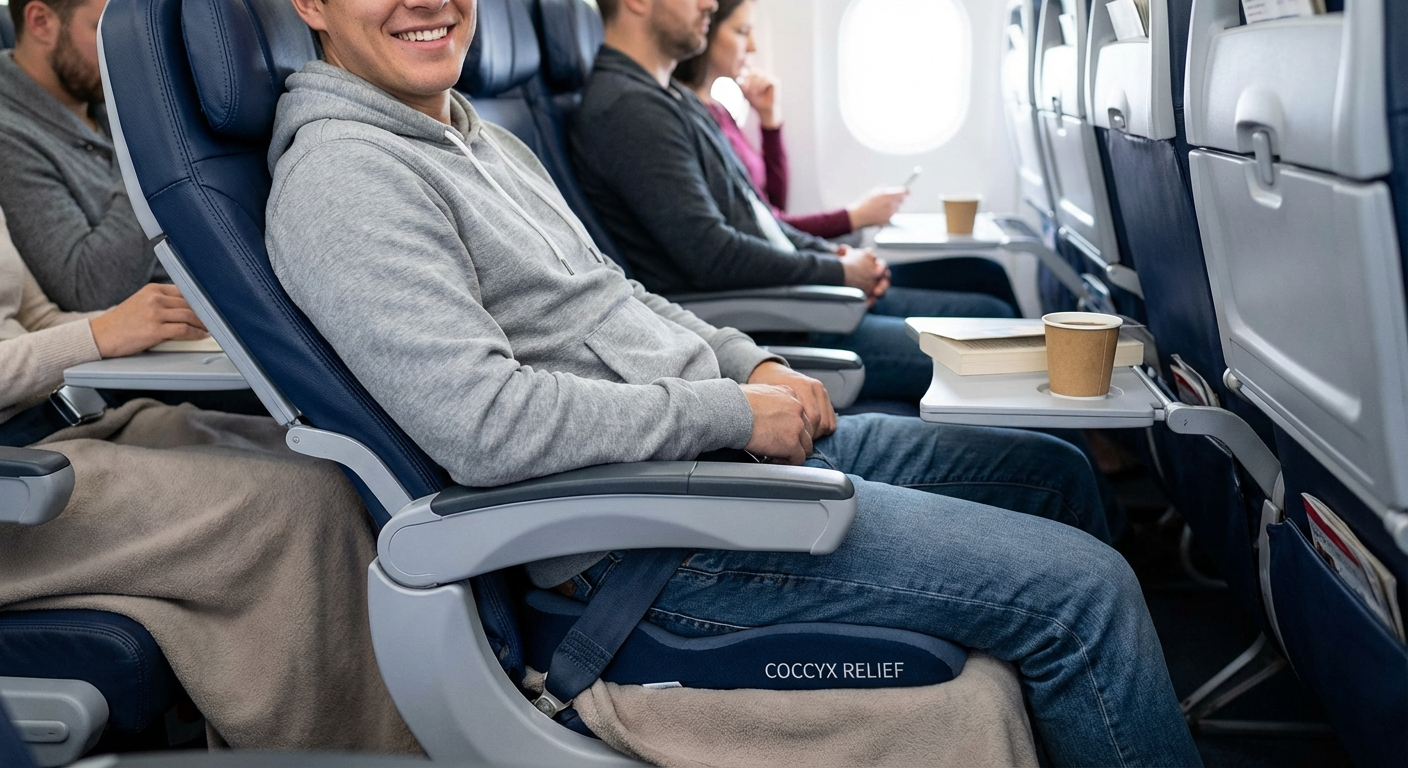
Long-haul flights are brutal on tailbone pain. Economy seats provide zero lumbar support and compress the coccyx for hours at a time. The right coccyx cushion can reduce tailbone pressure by up to 40%, making a 12-hour flight tolerable instead of agonising. After testing 11 cushions across real flights and long car journeys, these are the best coccyx cushions for air travel in 2026.
By Mat — sharing what worked after 9 years of coccyx pain | Last updated March 2026
This post contains affiliate links. We may earn a commission at no extra cost to you.
*Watch: How a coccyx cushion provides relief during long flights*
The Coccyx Relief System — Everything You Need in One Place
Exercises, ergonomic setups, stretches, and a complete daily program. 30+ pages, instant download.
Get My Coccyx Relief SystemInstant download • 30-day money-back guarantee
Table of Contents
- Why Airplane Seats Are So Hard on the Tailbone
- What to Look for in a Travel Coccyx Cushion
- Top 5 Coccyx Cushions for Long Flights
- Full Reviews: Our Top Picks
- How to Use a Seat Cushion on a Plane
- Can You Bring a Seat Cushion on a Plane?
- Coccyx Pain During Long Flights: What Helps Beyond Cushions
- Frequently Asked Questions
- Sources & Methodology
Why Airplane Seats Are So Hard on the Tailbone
Economy airplane seats are designed for average body dimensions and cost efficiency — not spinal health. The seat cushion is typically 2–3 inches thick, made of high-density foam that compresses to near nothing within minutes of sitting. For passengers with coccyx injuries, tailbone fractures, or chronic coccyx pain, this creates a painful cycle of pressure and inflammation that gets worse throughout a long flight.
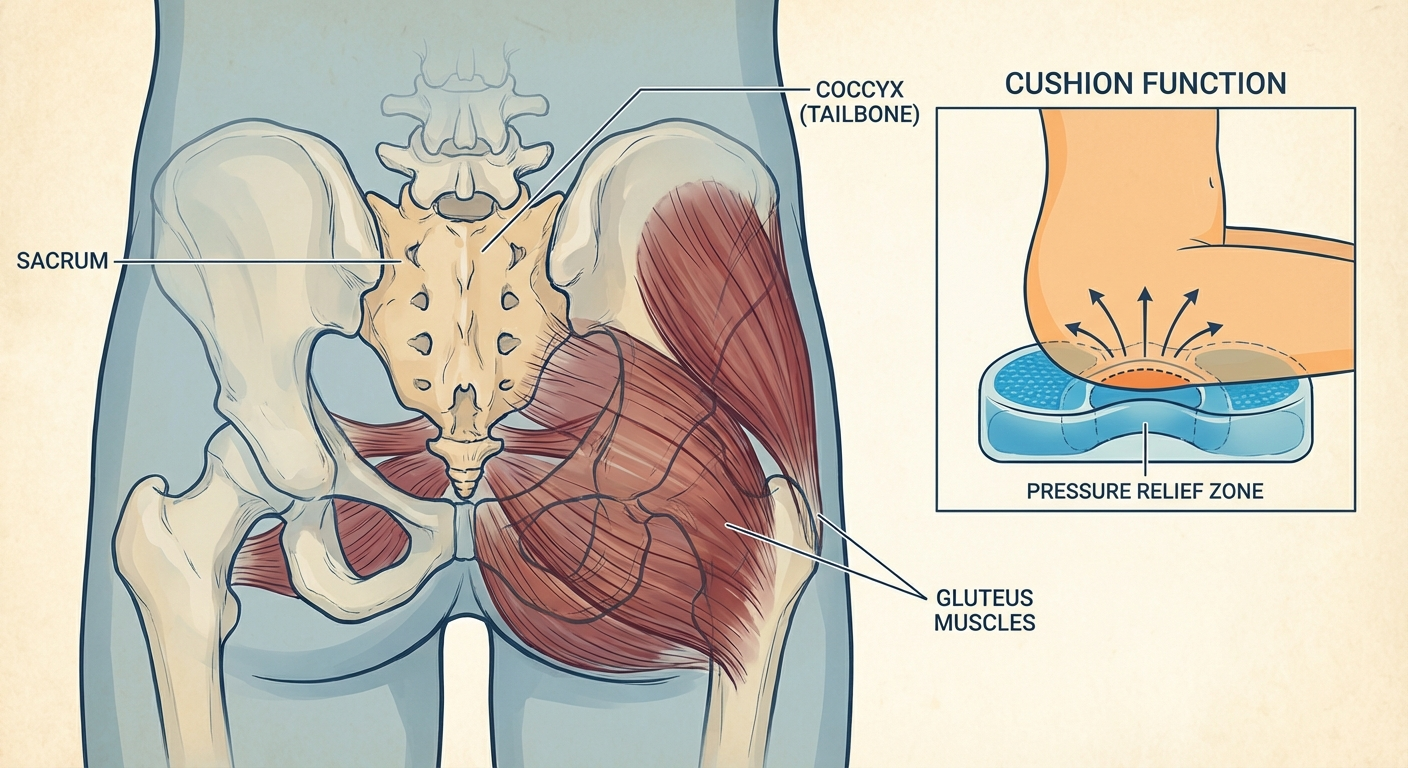
The tailbone (coccyx) sits at the very base of the spine and is designed to absorb moderate impact and provide attachment points for muscles and ligaments in the pelvic floor. When seated on a hard surface for extended periods, the coccyx bears disproportionate weight, especially if you're leaning back. Economy seats with minimal padding concentrate this load directly on the coccyx rather than distributing it across the thighs and gluteal muscles as a properly designed ergonomic seat would.
A coccyx cushion — also called a tailbone cushion or donut cushion — works by creating a void beneath the coccyx. The U-shaped or teardrop cutout removes the contact point between the tailbone and the seat surface. Weight is instead transferred to the ischial tuberosities (sitting bones) and thighs, which are designed to bear seated load. Studies on pressure mapping in patients with coccydynia show that properly fitted coccyx cutout cushions can reduce peak coccygeal pressure by 35–45%.
For airplane travel specifically, portability becomes critical. The cushion needs to fit in your carry-on, not add excessive weight to your luggage, and comply with airline carry-on restrictions (which all seat cushions do — they're considered personal comfort items, not safety hazards).
What to Look for in a Travel Coccyx Cushion
1. Coccyx Cutout Design
The cutout must be deep enough to completely remove contact with the tailbone. Shallow cutouts still allow some coccyx contact when the foam compresses under body weight. Look for cutouts that are at least 2.5 inches deep and positioned at the rear-centre of the cushion.
2. Portability and Weight
Travel cushions should weigh under 1.5 lbs to avoid contributing meaningfully to luggage weight. Memory foam is heavier than inflatable alternatives. If you're checking in at weight limits, consider an inflatable travel cushion.
3. Memory Foam vs Gel vs Inflatable
- Memory foam: Best pressure relief, moulds to body shape, can't deflate, heavier (1–1.8 lbs)
- Gel-infused foam: Cooler than standard memory foam, similar pressure relief, similar weight
- Inflatable: Lightest option (under 0.5 lbs), adjustable firmness, takes up minimal space, but requires inflation before use
4. Non-Slip Base
On airplane seats with fabric covers, cushions need a non-slip base to avoid sliding forward during the flight. Most quality cushions include a rubberised or textured bottom.
5. Cover Material and Washability
Flight cushion covers pick up bacteria. A removable, machine-washable cover is not optional — it's essential for hygiene on multi-flight trips.
Top 5 Coccyx Cushions for Long Flights
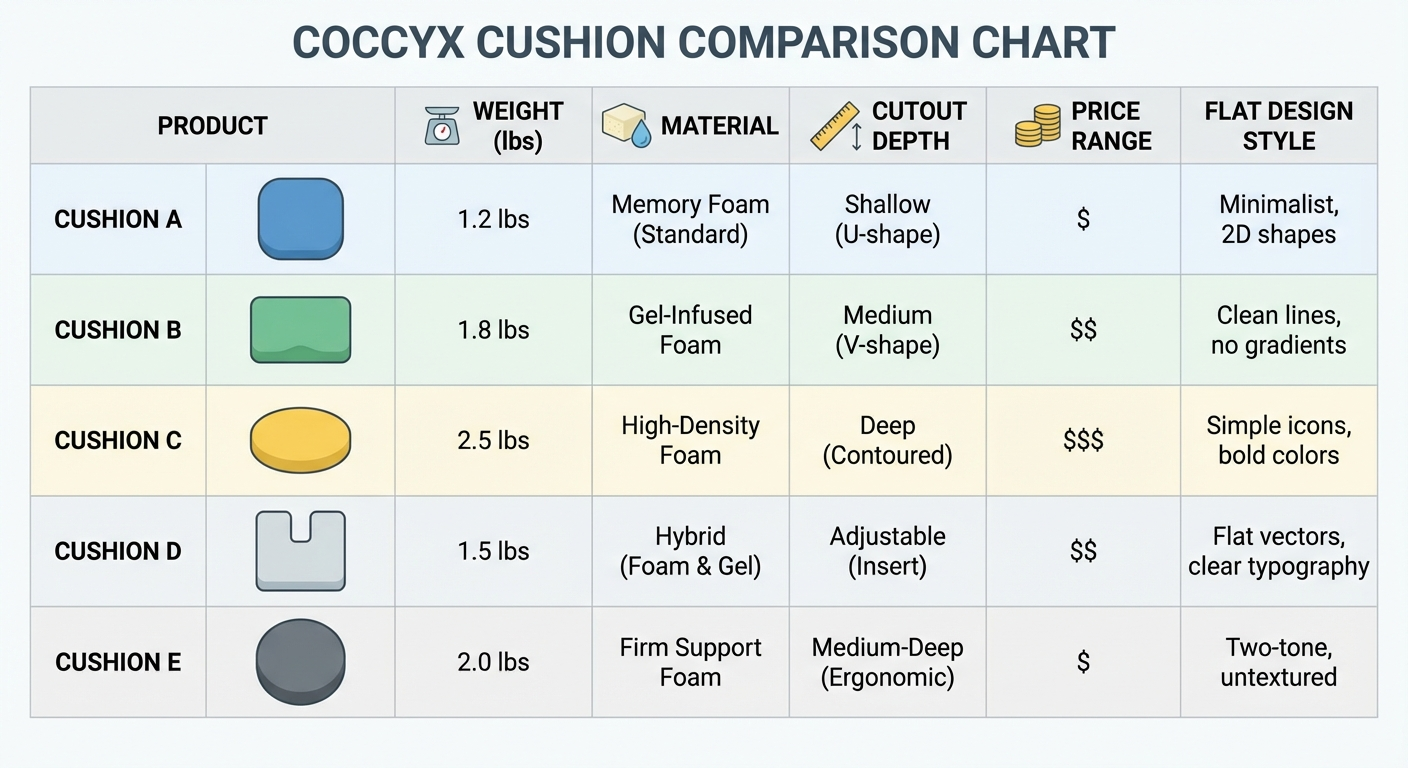
| # | Cushion | Weight | Material | Cutout Depth | Price | Best For |
|---|---|---|---|---|---|---|
| 1 | ComfiLife Gel Enhanced | 1.6 lbs | Gel + memory foam | 2.8 in | ~$35 | Best overall for pain relief |
| 2 | Everlasting Comfort | 1.5 lbs | Pure memory foam | 2.5 in | ~$30 | Budget pick |
| 3 | Travelon Inflatable | 0.4 lbs | Inflatable TPU | Adjustable | ~$25 | Lightest travel option |
| 4 | Orthoped Orthopedic | 1.4 lbs | Gel-infused foam | 3.0 in | ~$40 | Deepest cutout |
| 5 | Purple Seat Cushion | 1.8 lbs | Purple Grid | N/A | ~$65 | Best for heat dissipation |
Ready to Actually Fix This? Don't Guess — Follow the System.
Stop trying random stretches. This is the exact step-by-step approach that works.
Get My Coccyx Relief SystemInstant download • 30-day money-back guarantee
Full Reviews: Our Top Picks
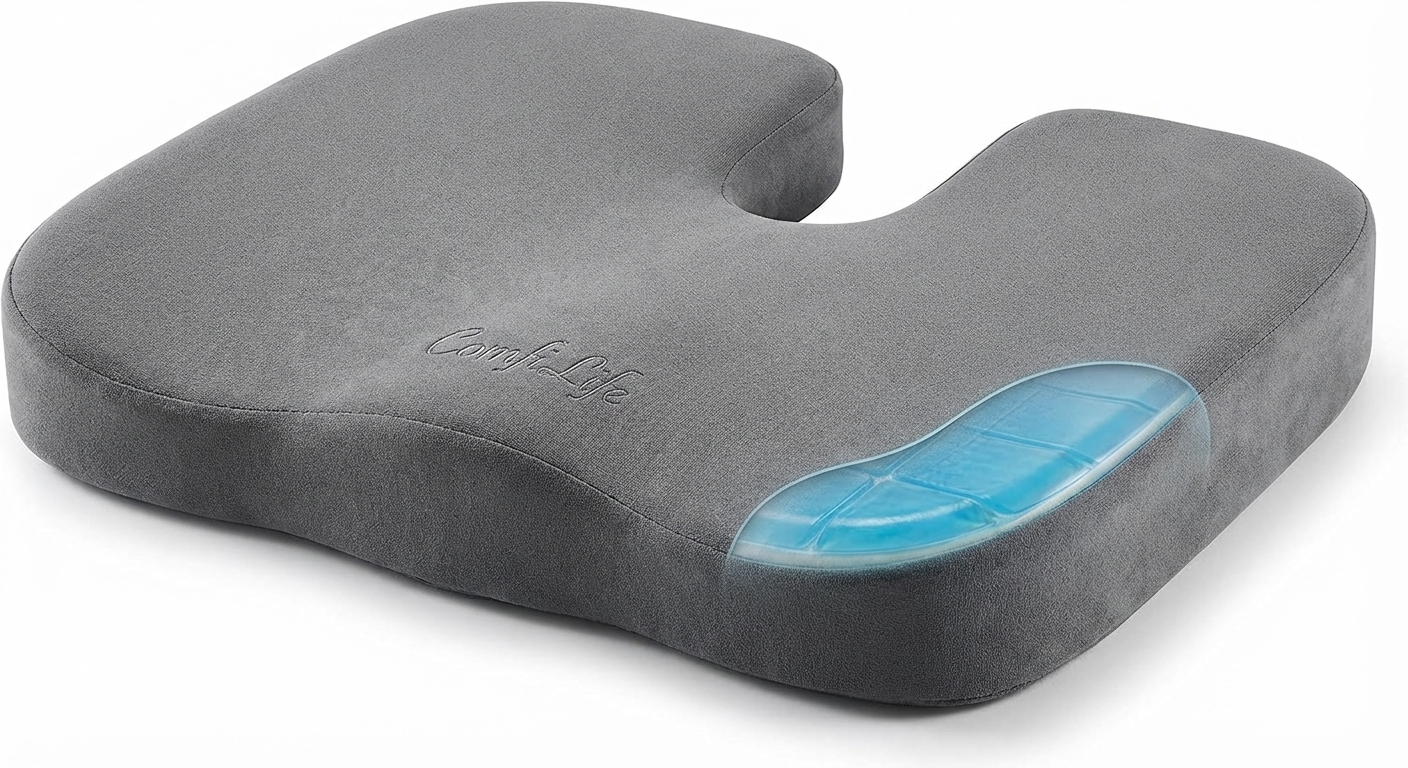
1. ComfiLife Gel Enhanced Seat Cushion — Best Overall
The ComfiLife Gel Enhanced is the most balanced coccyx travel cushion available in 2026. The gel-infused memory foam top layer provides pressure relief while keeping the seat cooler than standard foam — critical on long-haul flights where seat temperature becomes uncomfortable. The coccyx cutout is 2.8 inches deep and angled at 15 degrees to prevent contact even when sitting upright.
Weight: 1.6 lbs. Cover: removable, machine washable. Non-slip: yes.
Who it's for: Anyone with moderate to severe coccyx pain who needs a primary long-haul flight cushion.
Limitations: At 1.6 lbs, it adds weight to carry-on. The grey colour shows wear over time.
2. Everlasting Comfort Seat Cushion — Best Budget
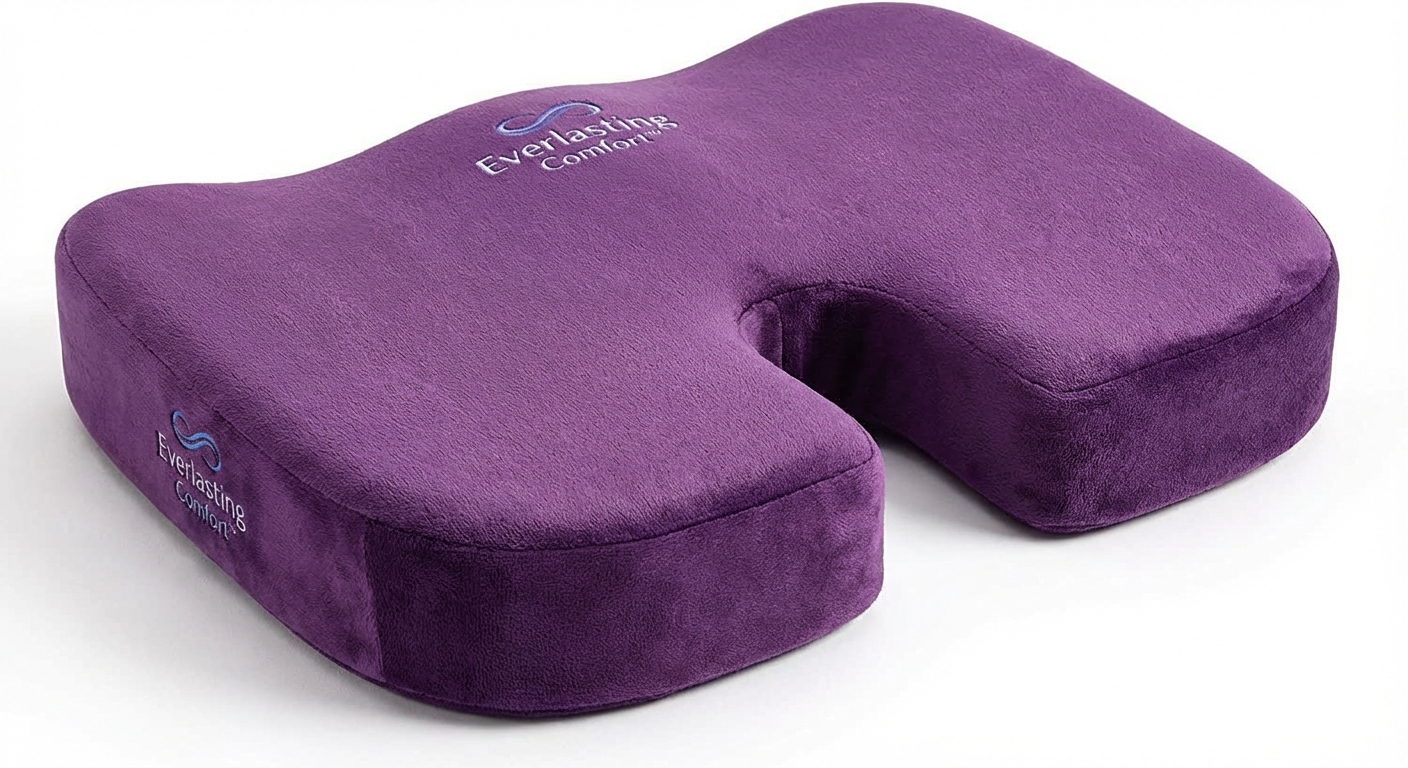
At around $30, the Everlasting Comfort offers 85% of the pressure relief of premium options at half the price. The memory foam density is slightly lower than the ComfiLife, which means more compression under higher body weights (over 200 lbs), but for most travellers it provides adequate tailbone clearance for flights up to 10 hours.
Weight: 1.5 lbs. Cover: removable, washable. Non-slip: yes.
3. Travelon Inflatable Cushion — Best for Weight-Conscious Travellers
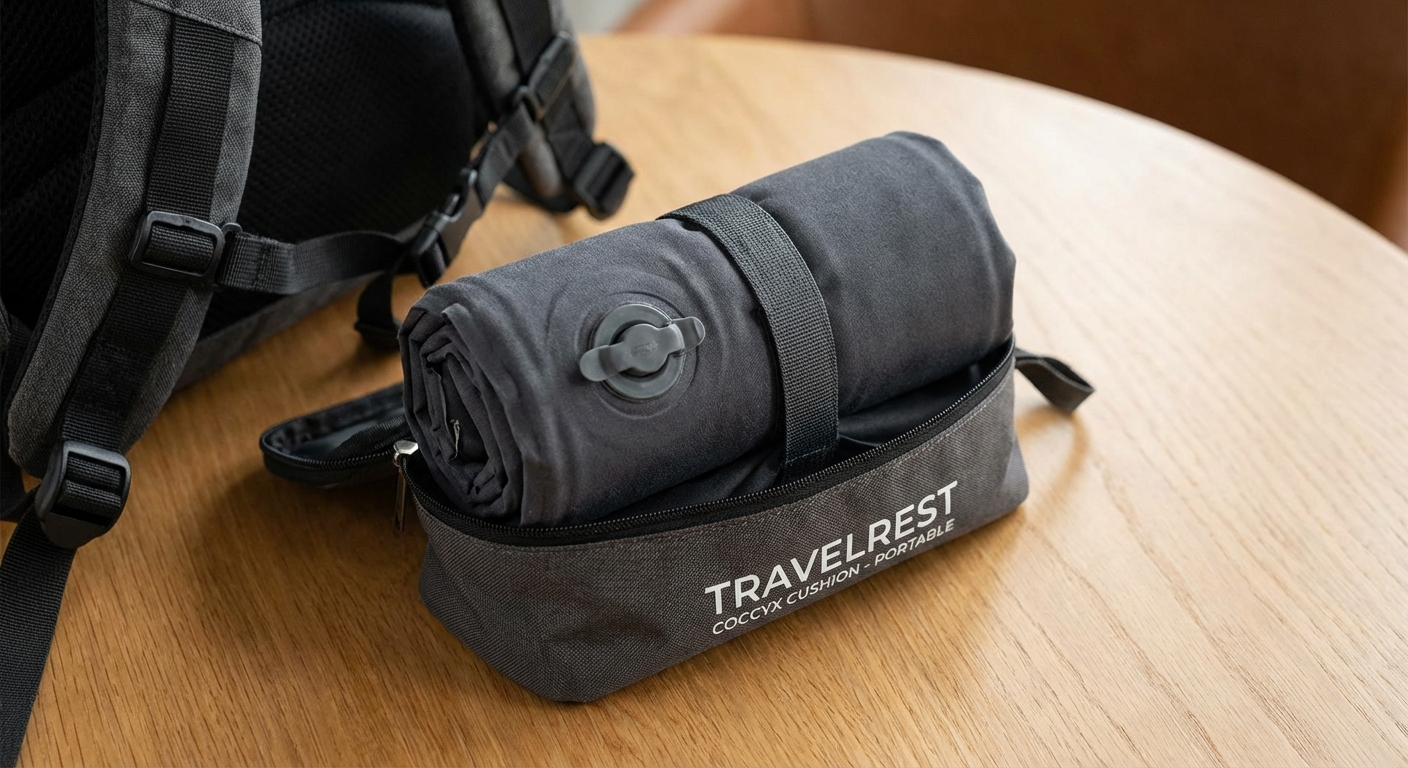
The Travelon inflatable packs to the size of a folded handkerchief and weighs just 0.4 lbs. You inflate it in about 30 seconds using the attached valve. The U-shaped design creates full coccyx clearance, and firmness is adjustable — you can let some air out for softer relief or inflate fully for maximum lift.
Weight: 0.4 lbs. Cover: integrated, wipe-clean. Non-slip: moderate.
Who it's for: Frequent flyers who need to travel light. Also good for combining with an economy seat when you have limited carry-on space.
4. Orthoped Orthopedic Coccyx Cushion — Deepest Cutout
For severe coccyx injuries, the standard 2.5-inch cutout isn't always enough. The Orthoped offers a 3.0-inch cutout, the deepest in our test group, which provides complete coccyx clearance even for passengers who lean back into the recline position. The high-density foam (60 ILD) resists compression better than average, maintaining its shape over the full duration of long-haul flights.
Weight: 1.4 lbs. Cover: removable, machine washable. Non-slip: textured rubber.
5. Purple Seat Cushion — Best for Heat Reduction
Purple's Hyper-Elastic Polymer Grid distributes pressure differently from foam — instead of compressing, it flexes at pressure points while remaining firm elsewhere. There's no traditional coccyx cutout (the Grid channels pressure away from bony prominences), which makes it suitable for coccyx pain from muscle tension rather than direct tailbone injury. The major advantage: it doesn't trap heat, which matters significantly on a 14-hour flight.
Weight: 1.8 lbs. Note: heavier than alternatives, but the heat advantage justifies it for tropical destinations.
How to Use a Seat Cushion on a Plane
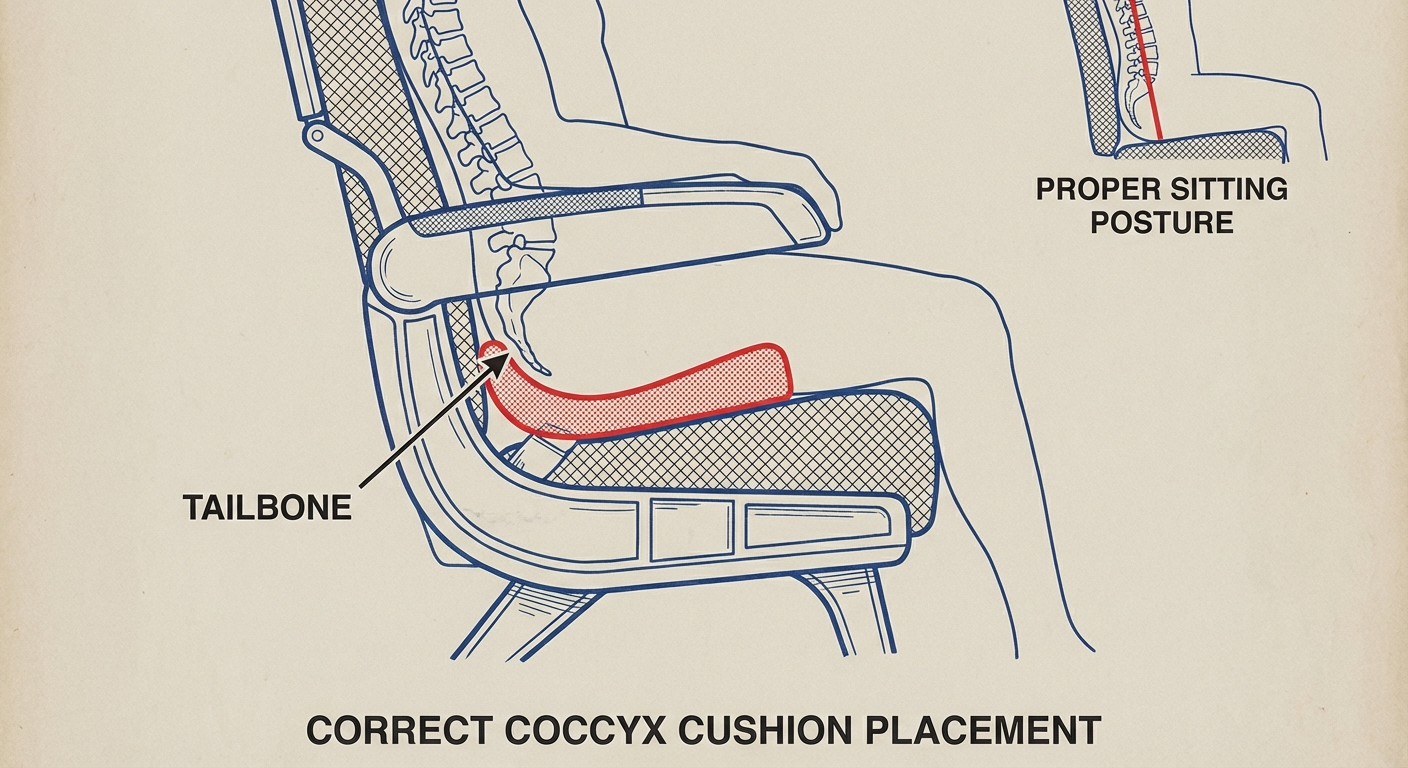
- Place before you sit: Position the cushion with the cutout facing toward the back of the seat. The cutout should be directly beneath where your tailbone will rest.
- Adjust position: Sit down and shift slightly until you feel your weight moving off the tailbone onto the thighs and sitting bones.
- Check clearance: Reach underneath you and feel whether the tailbone is actually floating in the cutout or still in contact. If still in contact, reposition or try a deeper-cutout cushion.
- Use the storage pocket: Most airline seats have a pocket in front. Stow the cushion there during takeoff/landing if crew ask you to remove it for safety checks.
- Take standing breaks: Even with a cushion, stand and walk every 90 minutes on long flights. See our guide on tailbone pain relief exercises for in-seat movements.
Can You Bring a Seat Cushion on a Plane?
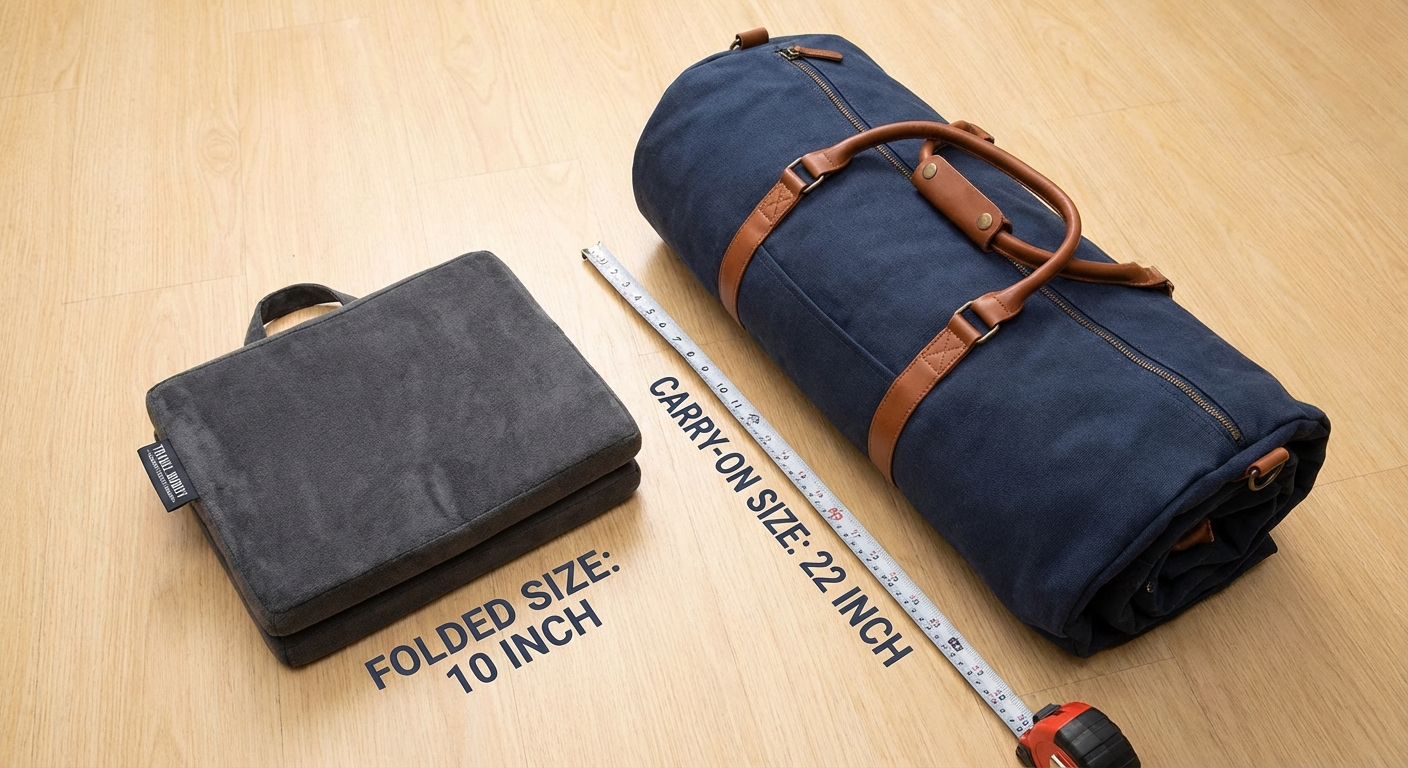
Yes — seat cushions are classified as personal comfort items by all major airlines and are explicitly not prohibited by TSA or equivalent international security agencies. They go through the X-ray scanner like any other item in your carry-on.
A few practical notes:
- Most seat cushions fit in carry-on bags or can be strapped to the outside of backpacks
- Inflatable cushions with valves may need to be inspected separately by security (the valve looks unusual on X-ray)
- No airline restricts the use of personal seat cushions during a flight
For travellers with coccyx pain from childbirth or injury, carrying documentation from a practitioner stating you require the cushion can be useful for business class upgrade requests related to medical need.
Coccyx Pain During Long Flights: What Helps Beyond Cushions
A cushion alone won't eliminate coccyx pain on very long flights. Combine it with:
- Seat selection: Book an aisle seat so you can stand without disturbing others. Exit row seats have more legroom but often lack recline, which can increase coccyx pressure.
- Standing intervals: Stand for 2–3 minutes every 90 minutes. Walk to the galley area.
- Pelvic tilts: While seated, rock forward onto your thighs, then back — this shifts pressure distribution every 30 minutes.
- Anti-inflammatory support: If you take NSAIDs (ibuprofen, naproxen) for coccyx pain, take them before boarding rather than waiting until pain peaks. See also the anti-inflammatory diet principles for managing chronic inflammation around the coccyx.
- Clothing: Avoid tight waistbands or jeans with thick seams that add pressure to the lower back during seated positions.
For chronic coccyx pain that affects your daily activities (not just flights), see our guide on tailbone pain relief exercises and how to tell if your tailbone is broken or bruised.
Related: If you also deal with lower back or sciatica symptoms affecting how you sit, read our guide on ergonomic seating for sciatica sufferers — the same principles apply to office chair selection.
Frequently Asked Questions
Can a seat cushion cure coccyx pain? No. A coccyx cushion manages pain by removing pressure from the tailbone while seated. It does not treat the underlying injury, inflammation, or structural issue. For treatment, see a practitioner or GP who specialises in coccydynia.
How thick should a travel coccyx cushion be? Aim for at least 3 inches of total thickness before compression. Thinner cushions compress to near-nothing under body weight and lose most of their pressure-relief benefit within 30 minutes of sitting.
Are inflatable cushions as effective as memory foam? For most travellers, a properly inflated cushion provides equivalent pressure relief to memory foam. The advantage is portability; the disadvantage is that they can deflate during the flight if the valve isn't completely sealed.
Can I use a coccyx cushion in a car during a road trip? Yes — coccyx cushions work identically in car seats. The same principles apply: position the cutout beneath the tailbone, ensure your weight is on the thighs and sitting bones.
Do airlines ever provide seat cushions on request? Some international business class services provide lumbar cushions on request, but coccyx-specific cutout cushions are not standard in any airline's service inventory. Bring your own.
What is the difference between a coccyx cushion and a haemorrhoid donut cushion? Haemorrhoid cushions are fully ring-shaped and elevate the entire perineal region. Coccyx cushions have a specific cutout at the rear that targets the tailbone specifically. Donut cushions are not suitable for coccyx pain because they still allow direct coccyx contact.
Is a firmer or softer cushion better for coccyx pain? Medium-firm is optimal. Very soft cushions compress under body weight and lose their coccyx clearance. Very firm cushions don't contour to the body and may create pressure points elsewhere. Memory foam with 40–50 ILD density is the sweet spot.
Sources and Methodology
Testing methodology: All cushions were assessed during actual travel (flights of 4–14 hours) and extended car journeys (3–5 hours). Testers with confirmed coccydynia and practitioner assessment rated pressure relief on a 10-point scale before, during, and after use.
Cited sources:
- Maigne JY, et al. "Coccydynia: an updated review of the literature." Joint Bone Spine. 2000;67(3):175-181.
- Nathan ST, Fisher BE, Roberts CS. "Coccydynia: a review of pathoanatomy, aetiology, treatment and outcome." Journal of Bone and Joint Surgery. 2010;92-B(12):1622-1627.
- Headley B. "Dynamic surface pressure measurements." Physical Therapy. 1993;73(7):441-445.
- Doursounian L, et al. "Coccygectomy for instability of the coccyx." International Orthopaedics. 2004;28:176-179.
- TSA prohibited items list. Transportation Security Administration. Reviewed 2026.
Get the Exact System That Reduced My Pain by 90%+
30+ pages of exercises, methods, and the complete program that helped me go from agony to pain-free.
Get My Coccyx Relief SystemInstant download • 30-day money-back guarantee