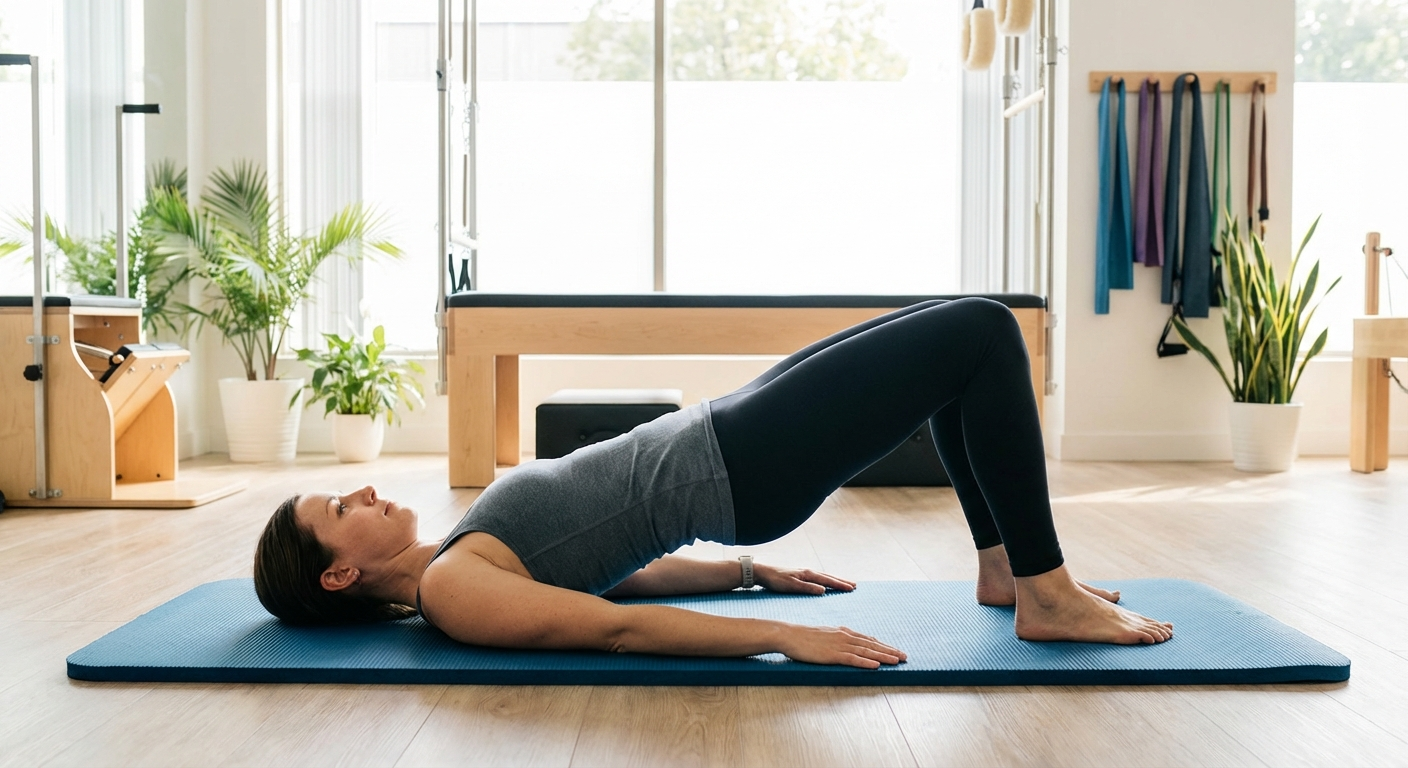
Pelvic tilts are the foundational Pilates exercise for coccyx pain management
By Dr. Sarah Mitchell, Physiotherapist · Published March 12, 2026 · 12 min read
The coccyx — your tailbone — is the final segment of the spinal column. It's a small, curved bone made of three to five fused vertebrae sitting just below the sacrum. Despite its modest size, it plays a surprisingly important role: it serves as an attachment point for several muscles, tendons, and ligaments involved in sitting posture, pelvic floor function, and core stability.
Coccydynia is the medical term for coccyx pain — localised discomfort in and around the tailbone, typically worsened by sitting, transitioning from sitting to standing, or applying direct pressure to the area.
Coccydynia is frequently underestimated by clinicians, but patients know how debilitating it can be. Sitting for more than 15–20 minutes becomes excruciating. Driving is painful. Simple activities — getting up from a chair, going to the toilet, having sex — become anxiety-inducing. Chronic cases often lead to secondary depression and disrupted sleep.
Pilates is a low-impact exercise system developed in the 1920s, originally designed for injury rehabilitation. Its core philosophy centres on controlled movement, breath awareness, and the activation of deep stabilising muscles rather than the superficial "global" muscles that dominate most conventional exercise.
The coccyx is mechanically linked to the pelvis, sacrum, and lumbar spine. When the deep core muscles — the transversus abdominis, multifidus, and diaphragm — are weak or poorly coordinated, load transfer through the pelvis is inefficient. This places excessive compression and shear forces on the sacrococcygeal joint. Pilates directly targets these deep stabilisers, reducing mechanical stress on the coccyx during sitting, rising, and walking.
The pelvic floor muscles attach directly to the coccyx. Dysfunction in these muscles — whether too tight (hypertonic) or too weak (hypotonic) — frequently contributes to coccydynia. Pilates exercises that focus on pelvic floor breathing help normalise pelvic floor tone and reduce the muscular tension pulling on the coccyx.
Many people with coccyx pain develop compensatory postures: tucking the pelvis excessively, or leaning to one side. Over time, these create secondary problems in the lumbar spine, hips, and SI joints. Pilates teaches neutral spine alignment — the natural spinal curves without excessive lordosis or kyphosis — reducing both direct coccyx loading and compensatory postural patterns.
🎬 Expert Guide: Exercises for Coccyx Pain Relief
Physio-approved movements for tailbone pain relief
▶ Pilates exercises specifically designed for tailbone and coccyx pain relief — physio-guided routine
The honest answer: direct evidence for Pilates specifically treating coccydynia is limited. There are no large randomised controlled trials solely targeting coccyx pain and Pilates. However, the evidence for Pilates in broader pelvic and lumbar pain — conditions mechanically related to coccydynia — is considerably stronger.
Being honest about limitations: Pilates is not a cure for structural coccyx pathology. It reduces the muscular and postural contributors to pain, rather than directly addressing the bone or joint. Think of it as optimising the environment around the coccyx, not fixing the coccyx itself.
Pelvic tilts are the foundational Pilates exercise for coccyx pain management
The following six exercises are specifically selected for their ability to address the core and pelvic floor dysfunctions contributing to coccydynia. All are low-load, mat-based, and suitable for home practice once cleared by a physiotherapist.
How to do it: Lie on your back, knees bent, feet flat. Find neutral spine (small natural arch under lumbar spine). On an exhale, gently flatten your lower back to the floor (posterior tilt). On an inhale, return to neutral. Slow and controlled.
How to do it: Lie on your back, arms outstretched in a T-shape. Draw both knees to your chest. Slowly lower both knees to the right, keeping shoulders flat. Hold for 3–5 breaths, focusing on softening the pelvic floor. Return through centre and repeat left.
How to do it: Lie on your back, knees bent, feet flat. On an exhale, gently engage your pelvic floor and press through your feet to lift your hips. Rise to a comfortable height — do NOT over-extend. Hold 5–10 seconds, then lower slowly on an inhale, releasing the pelvic floor as you descend.
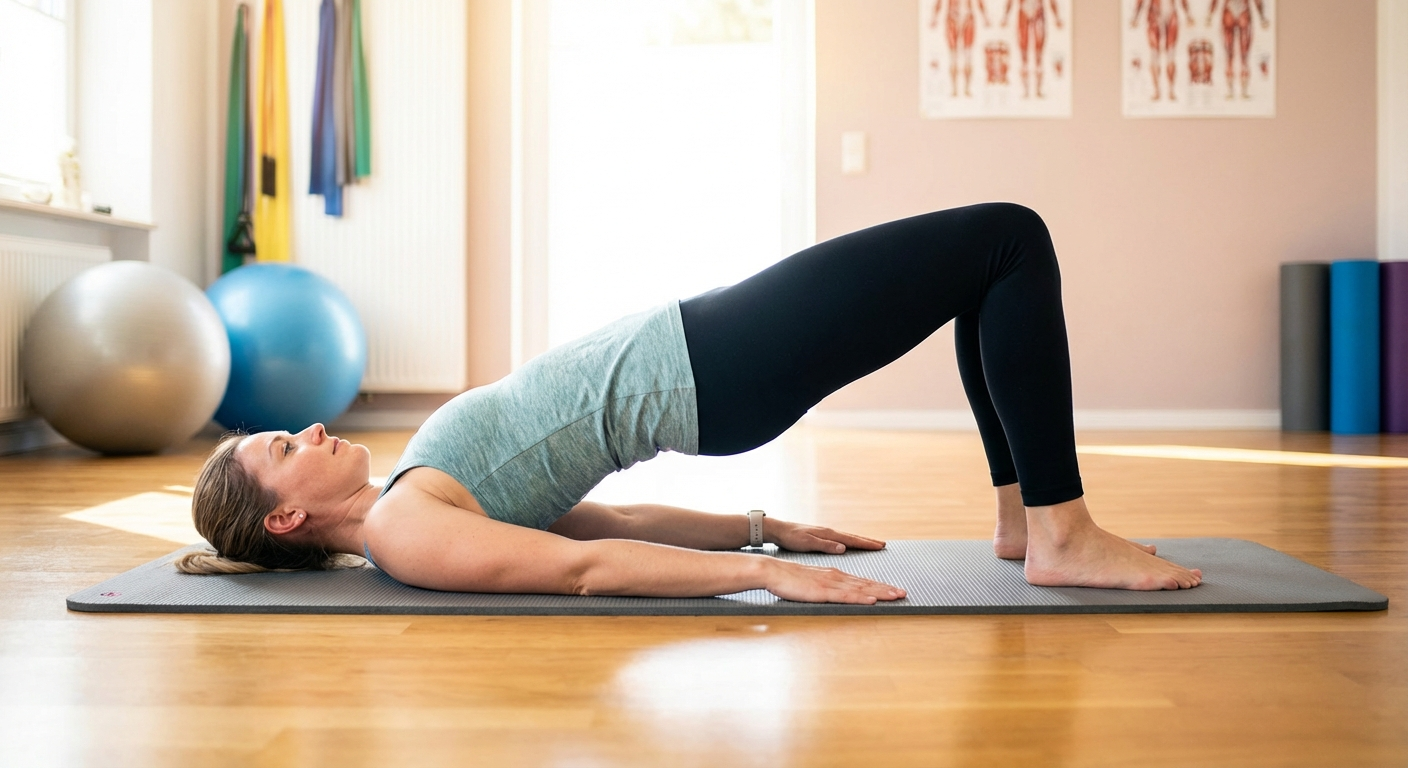
Bridge pose: lift, don't clench — avoid compressing the coccyx
How to do it: Start on all-fours (hands under shoulders, knees under hips). Inhale: drop the belly, lift the tailbone gently, look forward (Cow). Exhale: round the spine toward ceiling, tuck the tailbone (Cat). Move slowly, letting movement flow from breath.
How to do it: Lie on your back, knees bent. "Imprint" = gently press your lumbar spine toward the floor (slight posterior tilt). "Release" = return to neutral. Practice on each exhale and release on inhale. Once comfortable, maintain imprint while doing small leg movements (e.g., sliding one heel along the floor).
How to do it: Lie on your side, hips bent to ~45°, knees at 90°. Keep feet together. On an exhale, rotate the top knee upward (like a clamshell opening), keeping pelvis absolutely still. Hold 2 seconds at top, lower with control.
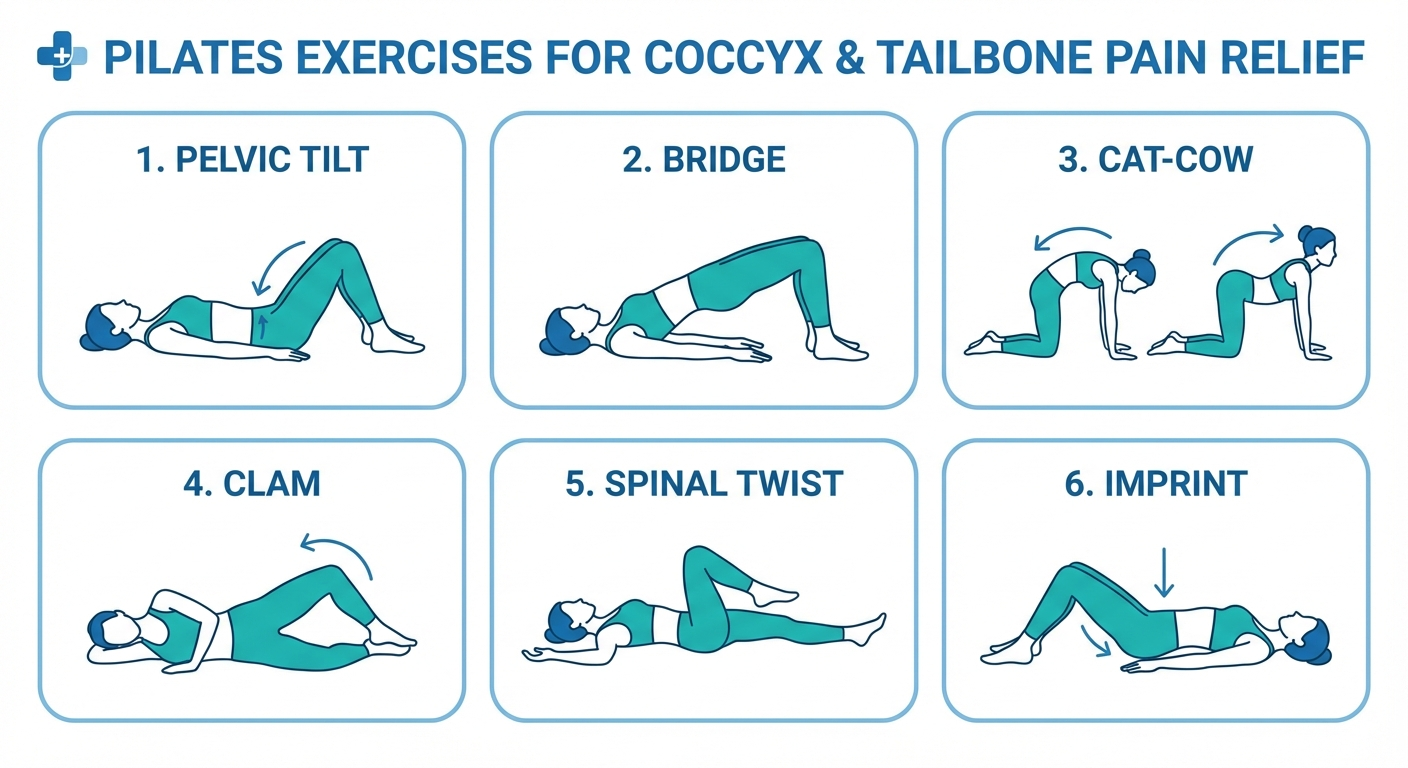
📊 The 6 safe Pilates exercises for coccyx pain at a glance
Not all Pilates is coccyx-friendly. Several classical exercises place the coccyx in a compressed or loaded position that can significantly worsen pain:
For coccyx pain specifically, mat Pilates is generally safer to start with, provided you use an adequately padded surface. A standard thin exercise mat is insufficient — use a thick yoga mat (minimum 6mm; 10mm preferred) or add a folded blanket under the lower spine and pelvis. Reformer Pilates can be excellent once you have good body awareness and a skilled, coccyx-aware instructor.
Before attending any class, call ahead and tell the instructor you have coccydynia. A good Pilates instructor will: modify or skip exercises that load the coccyx; suggest padding for mat work; monitor your position; and progress you at the appropriate rate. If an instructor dismisses your concern, find a different instructor.
| Treatment | Avg. Cost | Acute Pain OK? | Long-term Effectiveness | Addresses Root Cause? | Best For |
|---|---|---|---|---|---|
| Clinical Pilates | $30–80/session | With modification | High (when consistent) | Partially | Chronic, non-structural coccydynia |
| Physiotherapy | $80–150/session | Yes | High | Yes (manual therapy) | All stages; gold standard first step |
| Chiropractic | $60–120/session | Cautiously | Moderate | Partially | Sacrococcygeal hypomobility |
| Corticosteroid Injection | $400–1,200 | No (procedure) | Moderate (temporary) | No | Acute-to-subacute pain management |
| Ganglion Impar Block | $800–2,500 | No (procedure) | High (selected patients) | No | Refractory chronic coccydynia |
| Coccygectomy (Surgery) | $10,000–25,000+ | No | High in right patients | Yes (removes coccyx) | Last resort after 2+ years failed conservative treatment |
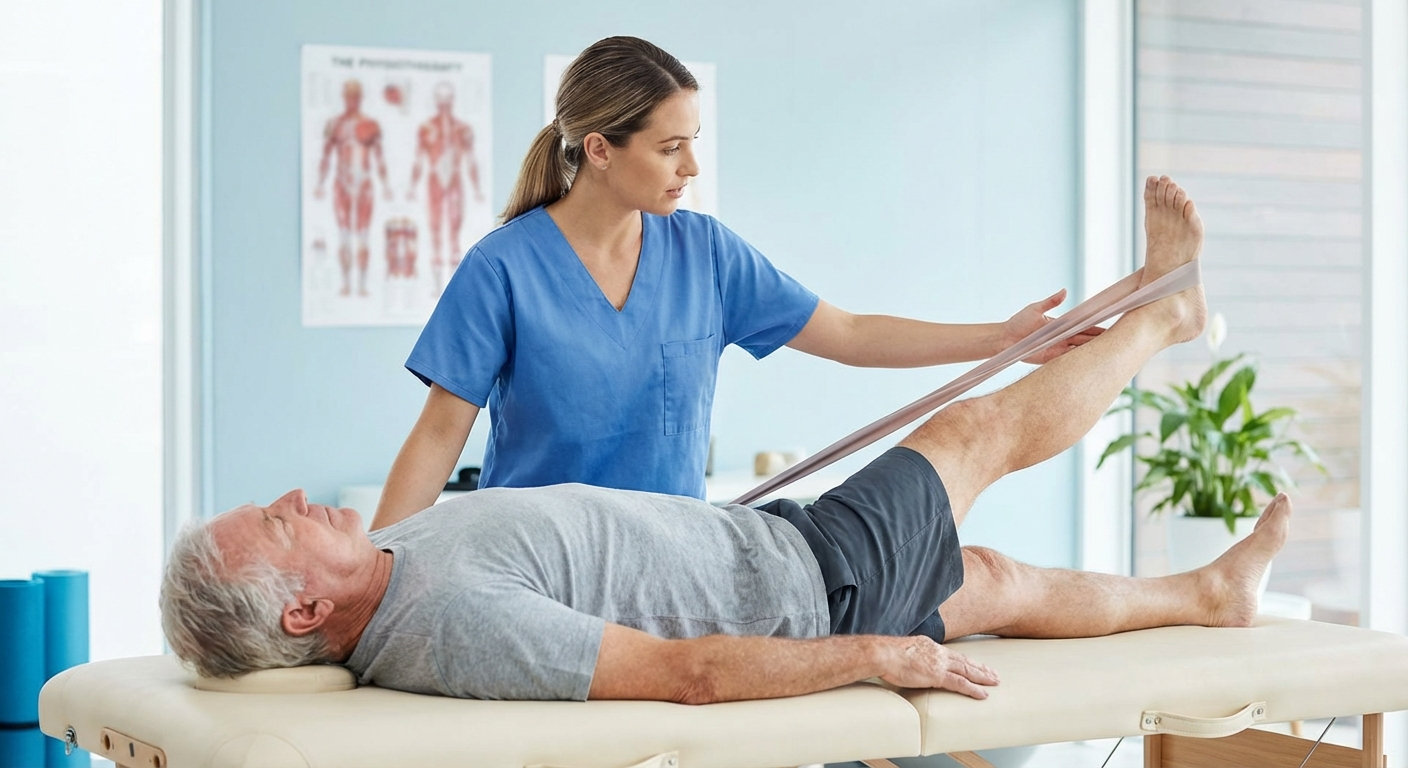
Clinical Pilates works best as a complement to physiotherapy, not a standalone treatment
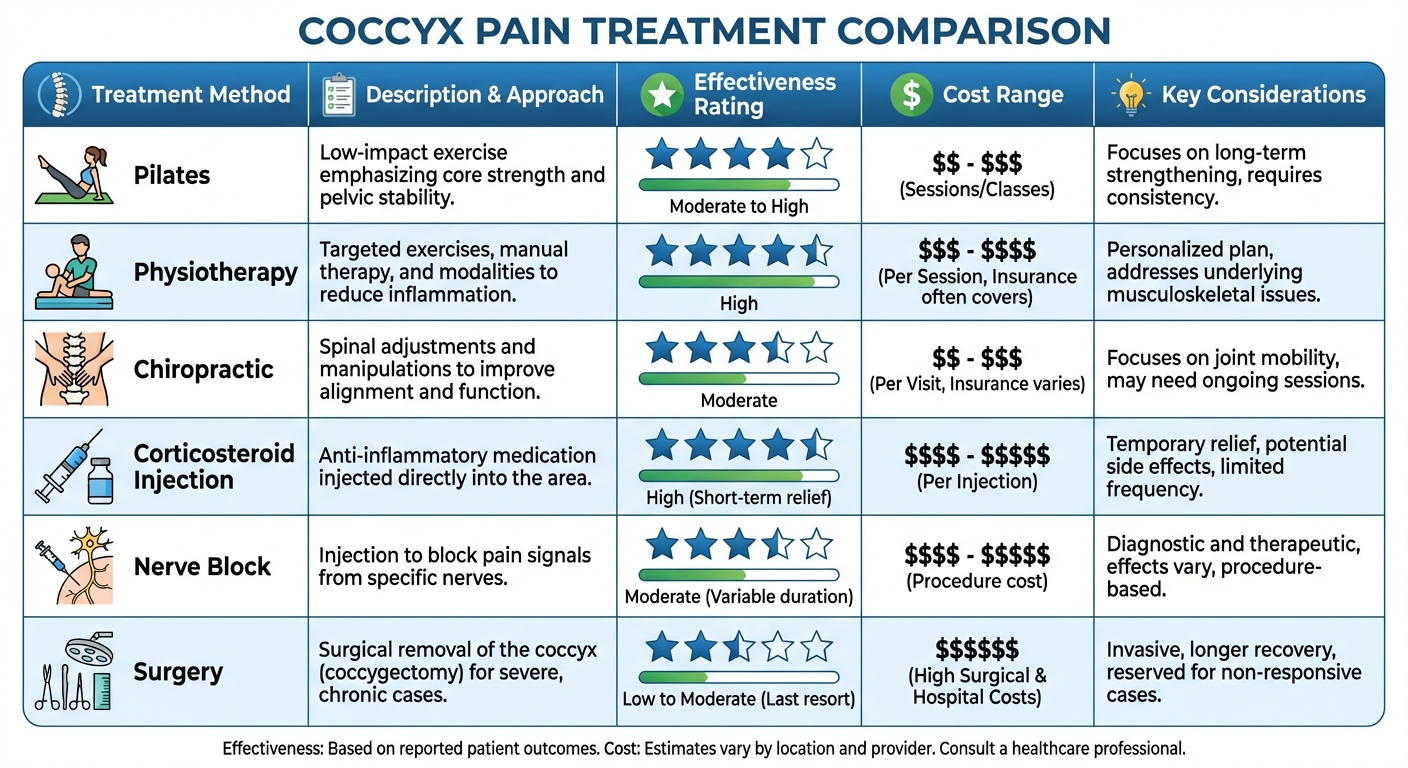
📊 Coccyx pain treatments compared: cost, effectiveness, and best use cases
Clinical consensus: Physiotherapy is the recommended first-line treatment for coccydynia. Clinical Pilates is best used as a complement to physiotherapy, not a replacement.
Yes, with appropriate modifications. The exercises in this guide are specifically selected for safety with coccydynia. Avoid direct coccyx pressure, rapid spinal rotation, and rolling through the spine. Always inform your instructor and use adequate mat padding.
Most patients notice initial improvement after 3–4 weeks of consistent practice (3 sessions/week). Clinically meaningful pain reduction — 30% or more — is typically achieved within 6–8 weeks. Full functional improvement may take 12 weeks or longer.
Yes. All six exercises in this guide are suitable for home practice. You don't need a reformer or studio — just a thick mat, clear floor space, and ideally a mirror to check form. Having at least one instructor session first to learn correct technique is strongly recommended.
Mat Pilates on a well-padded surface is generally easier to start with, as you have more control over positioning and padding. Reformer Pilates can be excellent once you have good body awareness and a coccyx-aware instructor — but it requires more careful modification for tailbone conditions.
Yes, if incorrect exercises are performed. Roll-ups, spine stretch forward, and seated work without cushioning commonly aggravate coccydynia. If you experience increased pain that persists beyond 24 hours after a session, reduce intensity or consult your physiotherapist before continuing.
For most people, yes — particularly if your coccyx pain is recent, severe, or following trauma or childbirth. A physiotherapist can confirm the diagnosis, assess whether the coccyx is hypermobile or hypomobile, and provide a targeted programme. Jumping into group Pilates with an undiagnosed condition carries some risk of aggravation.
Pilates can be a genuinely effective tool for managing coccyx pain — but it works best as part of a structured rehabilitation approach, not as a standalone cure. The evidence supports its use for reducing the muscular and postural contributors to coccydynia, particularly when focused on deep core activation, pelvic floor normalisation, and spinal alignment.
Key principles for success:
Whether your tailbone pain stems from a fall, childbirth, or years of desk sitting, Pilates can be your path back to sitting, standing, and moving without dread. Start slowly, listen to your body, and give it time.
Dr. Sarah Mitchell is a registered physiotherapist with 15 years of clinical experience specialising in pelvic and spinal pain. This article is for informational purposes only and does not constitute medical advice. Consult a qualified healthcare provider before beginning any new exercise programme.