Last Updated: March 9, 2026 | Reviewed by: Dr. Sarah Mitchell, MD & Mark Johnson, DPT
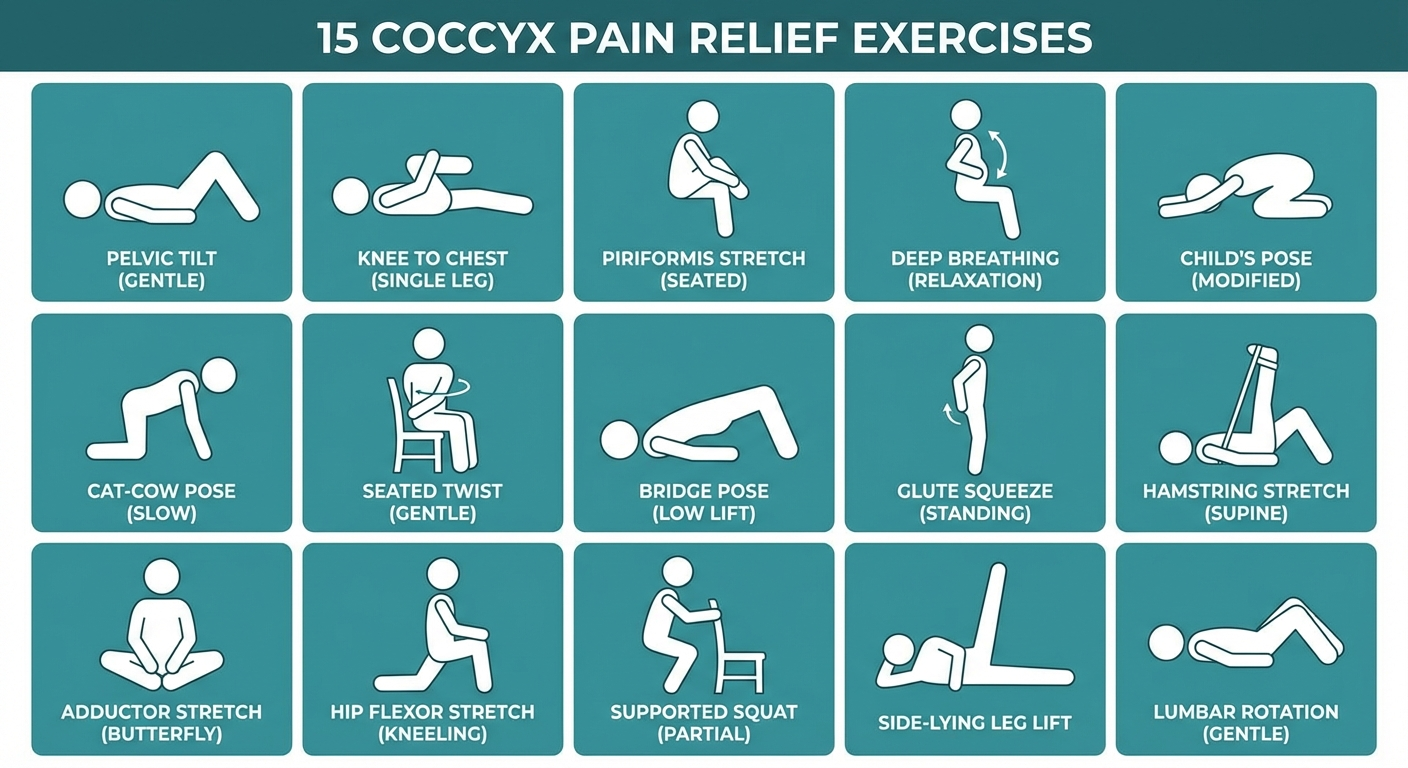
These 15 exercises target the root causes of coccyx pain—tight pelvic floor muscles, weak core stabilizers, and poor posture. Perform this routine daily for 4-6 weeks for best results.
💡 Before You Start: If pain increases during any exercise, stop immediately. Consult a physical therapist for personalized guidance.
📋 PHASE 1: Gentle Stretching (Week 1-2)
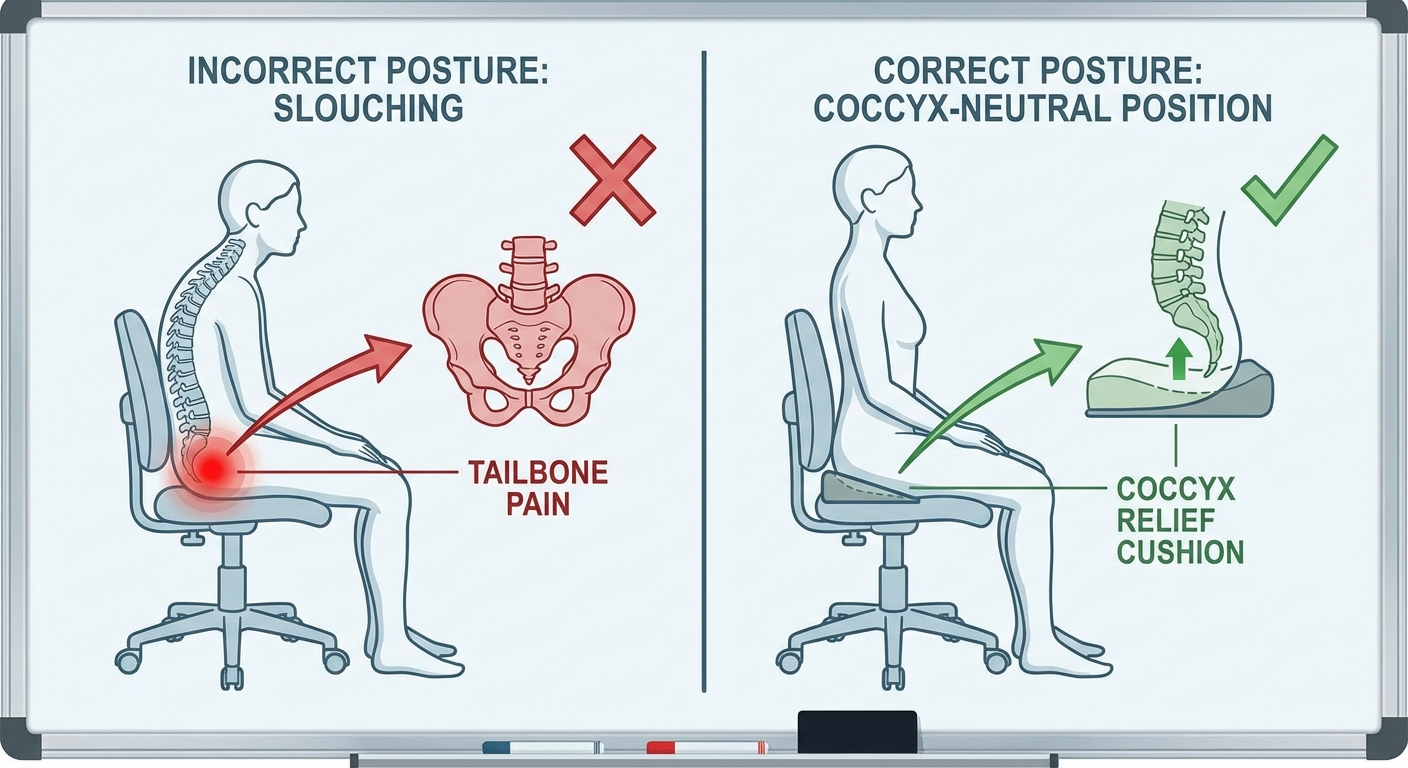
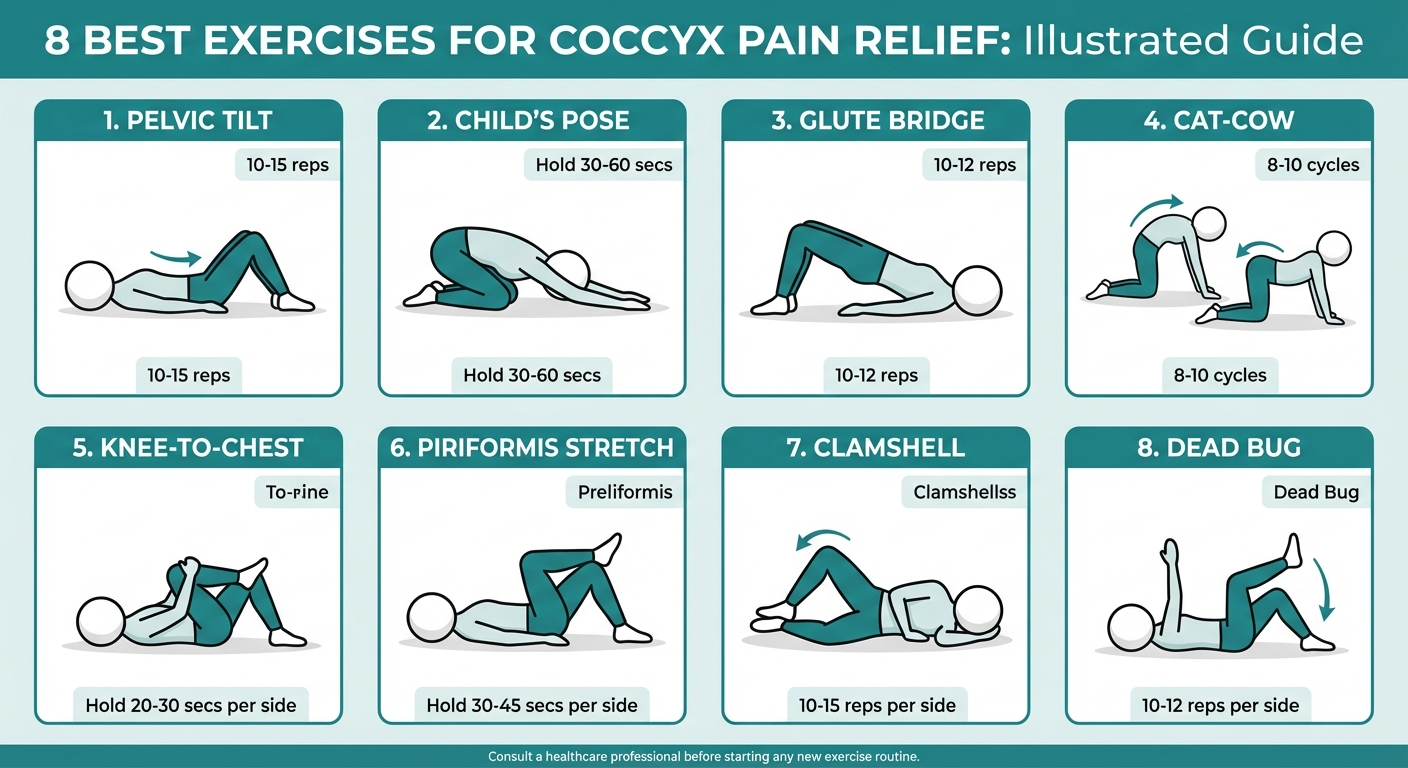
Proper posture reduces coccyx pressure by up to 40%.Complete exercise guide: 15 PT-approved movements for tailbone pain relief.Gentle knee-to-chest stretch: one of the most effective exercises for coccyx pain relief.
Daily for best results. The routine takes 30-40 minutes total when split throughout the day.
What if an exercise hurts?
Stop immediately. Some discomfort is normal, but sharp pain means you need to modify or skip that exercise.
Can I do these if I had coccygectomy surgery?
Wait 6-8 weeks post-surgery, then start with Phase 1 only. Consult your surgeon before beginning.
How long until I see results?
Most people notice improved sitting tolerance within 1-2 weeks. Significant pain reduction typically occurs by week 4-6.
Additional Information and Resources
Understanding Your Condition
Knowledge is power when dealing with coccyx pain. The more you understand about your condition, the better equipped you'll be to manage it effectively and communicate with healthcare providers.
Coccyx pain, while often dismissed as minor, can significantly impact quality of life. The coccyx serves as an attachment point for multiple muscles and ligaments, making it crucial for pelvic stability and function. When injured or irritated, the resulting pain can affect sitting, standing, walking, and even sleeping.
Risk Factors
Several factors increase the likelihood of developing coccyx pain:
Body weight: Higher BMI increases pressure on the coccyx when sitting
Occupation: Jobs requiring prolonged sitting or heavy physical labor
Activity level: Both sedentary lifestyle and high-impact sports
Previous injury: History of falls or trauma to the area
Age: Degenerative changes become more common with aging
Gender: Women are affected more frequently than men
Pregnancy: Hormonal changes and childbirth increase risk
Diagnostic Process
Proper diagnosis is essential for effective treatment. Your healthcare provider may use:
Physical examination: Palpation of the coccyx and surrounding structures
Dynamic testing: Assessing pain with movement and position changes
Imaging: X-rays, MRI, or CT scans to visualize bone and soft tissue
Diagnostic injections: Local anesthetic to confirm pain source
Neurological exam: Ruling out nerve involvement
Treatment Options Overview
Treatment typically progresses from conservative to more invasive:
Conservative Treatments (First Line)
Activity modification and ergonomics
Coccyx cushions and seating aids
Physical therapy and exercises
Medications (NSAIDs, muscle relaxants)
Heat and cold therapy
Manual manipulation
Interventional Treatments
Corticosteroid injections
Nerve blocks
Radiofrequency ablation
Ganglion impar blocks
Surgical Options
Coccygectomy (tailbone removal) - last resort
Lifestyle Modifications
Long-term management often requires lifestyle changes:
Daily Habits
Take standing breaks every 30 minutes
Use proper lifting technique
Maintain healthy weight
Stay active with low-impact exercise
Practice good posture
Use supportive seating
Workplace Ergonomics
Adjust chair height for proper hip angle
Use standing desk when possible
Position monitor at eye level
Keep frequently used items within reach
Consider ergonomic accessories
Nutrition and Healing
Proper nutrition supports tissue healing and reduces inflammation:
Hydration: Adequate water intake for tissue health
Protein: Essential for tissue repair
Vitamins and minerals: Vitamin D, calcium, magnesium
Avoid: Excessive sugar, processed foods, alcohol
Exercise and Movement
Appropriate exercise is crucial for recovery and prevention:
Beneficial Activities
Walking (low-impact, promotes circulation)
Swimming (supported, full-body)
Core strengthening (supports pelvis)
Stretching (maintains flexibility)
Yoga (gentle, improves body awareness)
Activities to Modify or Avoid
High-impact sports (running, jumping)
Prolonged cycling (pressure on coccyx)
Rowing (repetitive pressure)
Heavy weightlifting (strain on pelvic floor)
Contact sports (risk of trauma)
Mental Health Considerations
Chronic pain affects mental health significantly:
Depression and anxiety are common
Sleep disturbances worsen pain perception
Social isolation can develop
Work stress may increase
Relationships may be strained
Addressing mental health is as important as treating physical symptoms. Consider counseling, support groups, stress management techniques, and open communication with loved ones.
Building Your Healthcare Team
Effective treatment often involves multiple providers:
Primary care physician: Initial evaluation and coordination
Contact your healthcare provider immediately if you experience:
Severe pain after trauma or fall
Fever with tailbone pain
Numbness or weakness in legs
Loss of bowel or bladder control
Unexplained weight loss
Night pain that doesn't improve with position changes
Signs of infection (redness, warmth, drainage)
Support Resources
You don't have to face this alone:
Online forums and support groups
Patient advocacy organizations
Educational websites and videos
Local pain management programs
Physical therapy clinics
Setting Realistic Expectations
Recovery from coccyx pain takes time:
Acute cases: 2-4 weeks
Subacute cases: 2-3 months
Chronic cases: 3-6 months or longer
Patience and consistency with treatment are essential. Celebrate small improvements and don't get discouraged by setbacks.
Prevention Strategies
Once recovered, prevent recurrence:
Maintain good posture
Use proper body mechanics
Stay active and maintain healthy weight
Use supportive seating
Take regular movement breaks
Continue exercises learned in physical therapy
Address issues promptly if they recur
Research and Advances
Medical understanding of coccyx pain continues to evolve:
Improved imaging techniques
Better injection approaches
Advanced surgical techniques
Enhanced rehabilitation protocols
Multidisciplinary treatment models
Insurance and Financial Considerations
Understand your coverage:
Verify coverage for treatments and procedures
Understand copays and deductibles
Check if preauthorization is required
Consider HSA/FSA for eligible expenses
Discuss payment plans if needed
Return to Work Planning
If work is affected:
Discuss modifications with employer
Request ergonomic accommodations
Consider phased return schedule
Document restrictions and capabilities
Know your rights under disability laws
Travel Considerations
Managing pain while traveling:
Bring your coccyx cushion
Take frequent stops on long drives
Request aisle seat on flights
Stand and walk when possible
Pack pain medications in carry-on
Long-Term Outlook
For most people, coccyx pain is manageable:
85-90% improve with conservative treatment
Surgery helps 50-90% of carefully selected patients
Lifestyle modifications prevent recurrence
Quality of life can be fully restored
Ongoing self-care maintains results
Final Thoughts
Coccyx pain can be challenging, but help is available. With proper diagnosis, appropriate treatment, and patience, most people achieve significant relief and return to normal activities. Don't suffer in silence—seek professional help and take an active role in your recovery.
Remember: You are your best advocate. Stay informed, ask questions, and work collaboratively with your healthcare team to find the solutions that work best for you.
Additional Resources and Support
Finding Professional Help
When dealing with coccyx pain, having the right healthcare team makes all the difference. Consider consulting:
Primary care physician: Your first point of contact for evaluation and referrals
Orthopedic specialist: For bone, joint, and structural issues
Physical therapist: Essential for rehabilitation and prevention
Pain management specialist: For chronic or complex cases
Chiropractor: Some patients find relief with spinal adjustments
Acupuncturist: Alternative therapy that helps many
Questions to Ask Healthcare Providers
Make the most of your appointments:
What is causing my specific pain?
What are all my treatment options?
How long should I try conservative treatments?
What are the risks and benefits of each option?
What is my expected recovery timeline?
Are there activities I should avoid?
What can I do to prevent recurrence?
When should I follow up?
Support Groups and Communities
Connecting with others who understand can be invaluable:
Online forums dedicated to coccyx pain
Social media support groups
Local chronic pain support meetings
Patient advocacy organizations
Educational webinars and workshops
Staying Informed
Medical knowledge evolves. Stay current through:
Reputable medical websites (Mayo Clinic, Cleveland Clinic)
Peer-reviewed research articles
Patient education materials
Healthcare provider newsletters
Professional medical organizations
Self-Advocacy
You are the expert on your own body:
Keep detailed symptom records
Track what helps and what doesn't
Don't hesitate to seek second opinions
Ask for clarification when needed
Bring a list of questions to appointments
Follow up if symptoms change
Financial Considerations
Understand the costs involved:
Verify insurance coverage for treatments
Understand copays and deductibles
Ask about cash discounts
Consider HSA/FSA for eligible expenses
Discuss payment plans if needed
Get preauthorization when required
Workplace Accommodations
If pain affects your work:
Request ergonomic assessments
Ask for standing desk or adjustable workstation
Discuss flexible break schedules
Consider modified duties temporarily
Know your rights under disability laws
Document requests and accommodations
Travel Tips
Managing pain while traveling:
Always bring your coccyx cushion
Take frequent stops on road trips
Request aisle seats on flights
Stand and walk when possible
Pack medications in carry-on
Allow extra time for comfort breaks
Long-Term Management
For chronic or recurrent cases:
Develop sustainable daily routines
Maintain regular exercise habits
Continue ergonomic practices
Schedule periodic check-ups
Stay alert to early warning signs
Adjust activities as needed
Research and Innovation
The field continues to advance:
New imaging techniques improve diagnosis
Minimally invasive procedures evolve
Better injection methods develop
Enhanced rehabilitation protocols emerge
Multidisciplinary approaches improve outcomes
Hope and Recovery
Remember that most people find relief:
85-90% improve with proper treatment
Many achieve complete resolution
Quality of life can be fully restored
New treatments offer additional options
Support is available throughout the journey
Final Encouragement
Dealing with coccyx pain is challenging, but you don't have to face it alone. With persistence, proper care, and support, relief is possible. Take it one day at a time, celebrate small victories, and don't give up hope. Your journey to recovery starts with the next step you take.