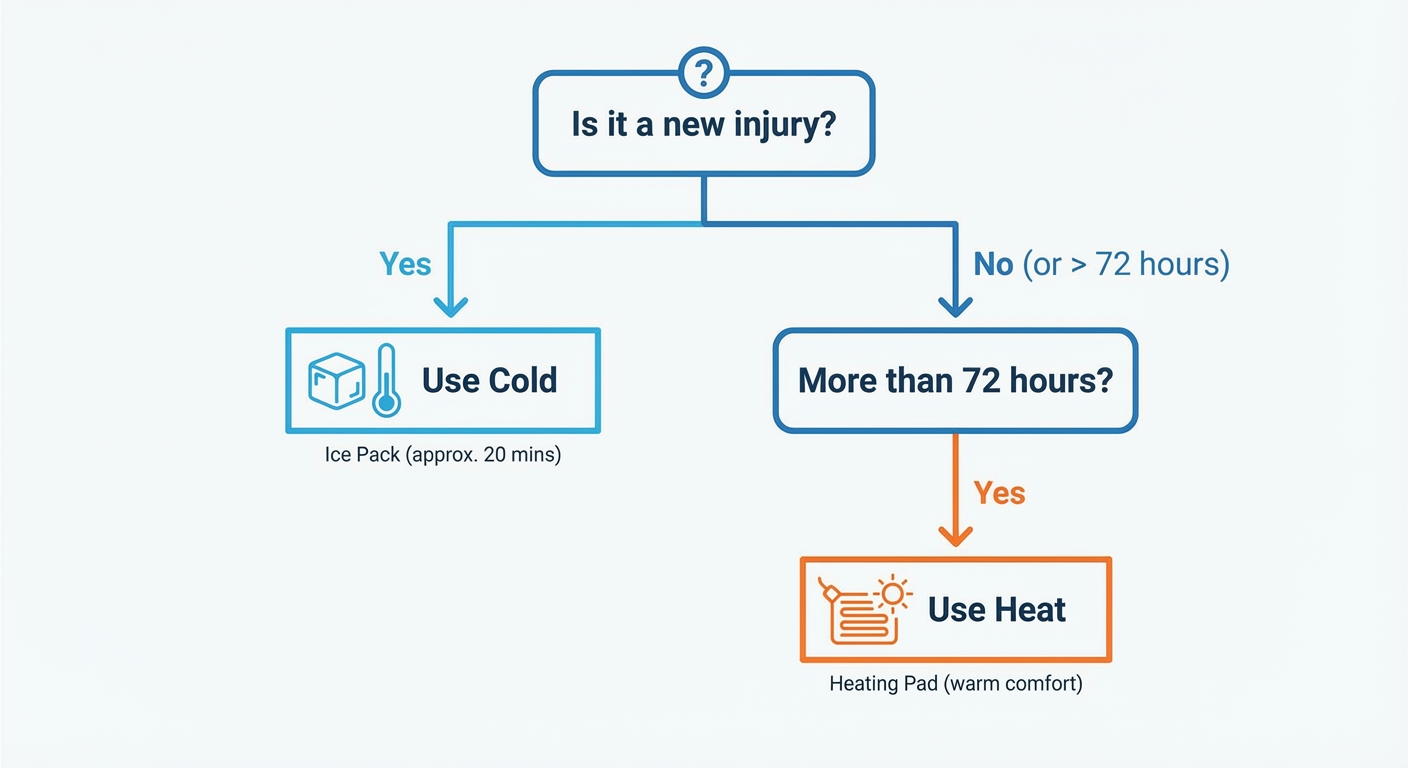
Cold therapy (ice) is best for the first 48-72 hours after a coccyx injury — it reduces swelling and numbs sharp pain. Heat therapy is more effective for chronic coccyx pain and muscle stiffness lasting more than three days. Using the wrong one at the wrong time can worsen your tailbone pain, so understanding the timing is critical.
By Dr. Emma Clarke | Physiotherapist & Pain Management Specialist | Last updated March 17, 2026
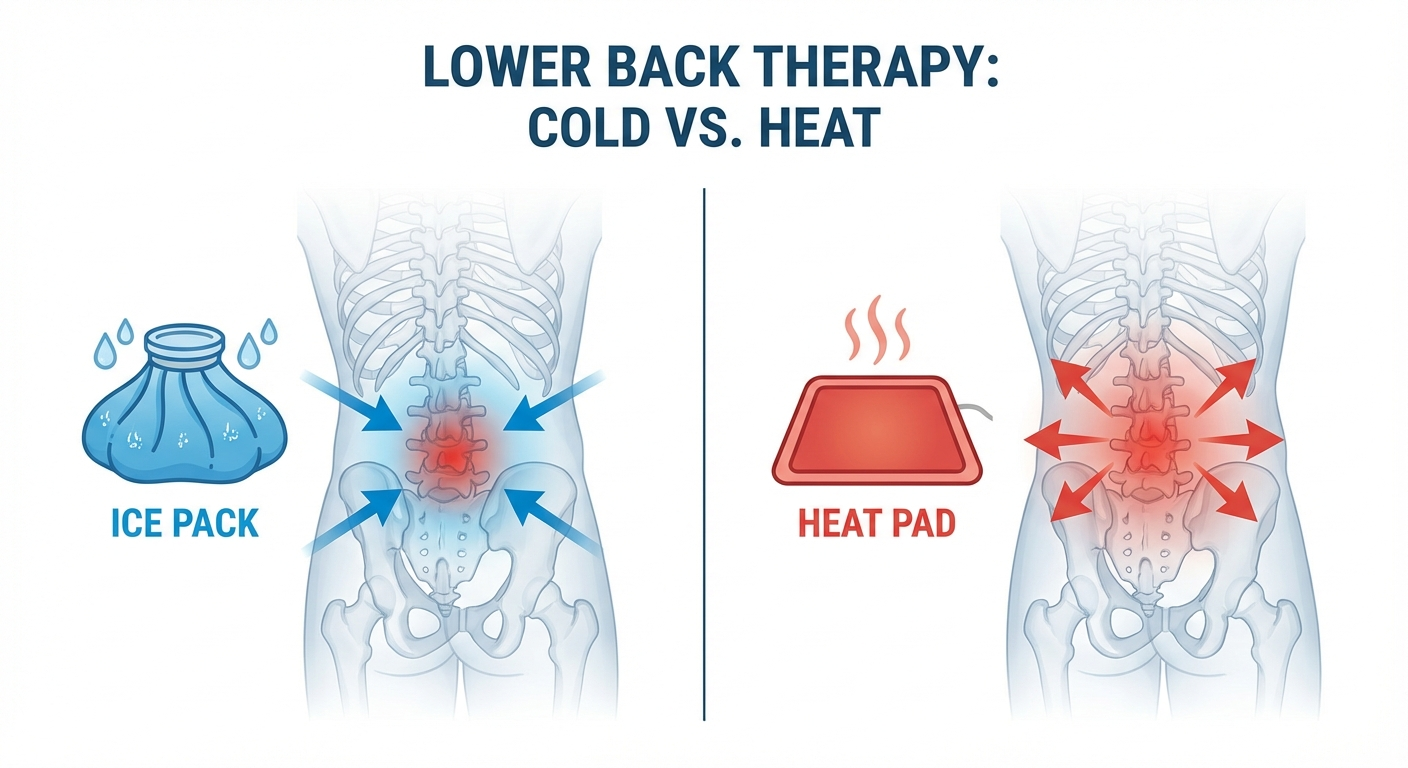
Cold and heat therapy are two of the oldest, most accessible pain management tools available — and they remain effective because they work through fundamentally different physiological mechanisms. Understanding how each affects your body helps explain why timing matters so much for coccyx pain.
Cold therapy (cryotherapy) constricts blood vessels, reduces blood flow to the area, and slows the inflammatory cascade. When you injure your coccyx — whether from a fall, prolonged sitting, or childbirth — your body responds with inflammation: swelling, heat, redness, and pain. Ice interrupts this process by:
Cold therapy is most effective when applied early — ideally within the first 15-30 minutes of injury. The sooner you apply ice, the more effectively you limit the inflammatory response. After 72 hours, the acute phase of inflammation typically subsides, and cold therapy becomes less beneficial.
Heat therapy (thermotherapy) has the opposite effect: it dilates blood vessels, increases blood flow, and promotes healing by delivering more oxygen and nutrients to the area. Heat is particularly effective for:
Heat is contraindicated during acute inflammation because it increases blood flow and can amplify swelling. This is why applying heat to a fresh coccyx injury often makes the pain worse rather than better. Once the acute phase passes (typically after 72 hours), heat becomes the preferred therapy for most people.
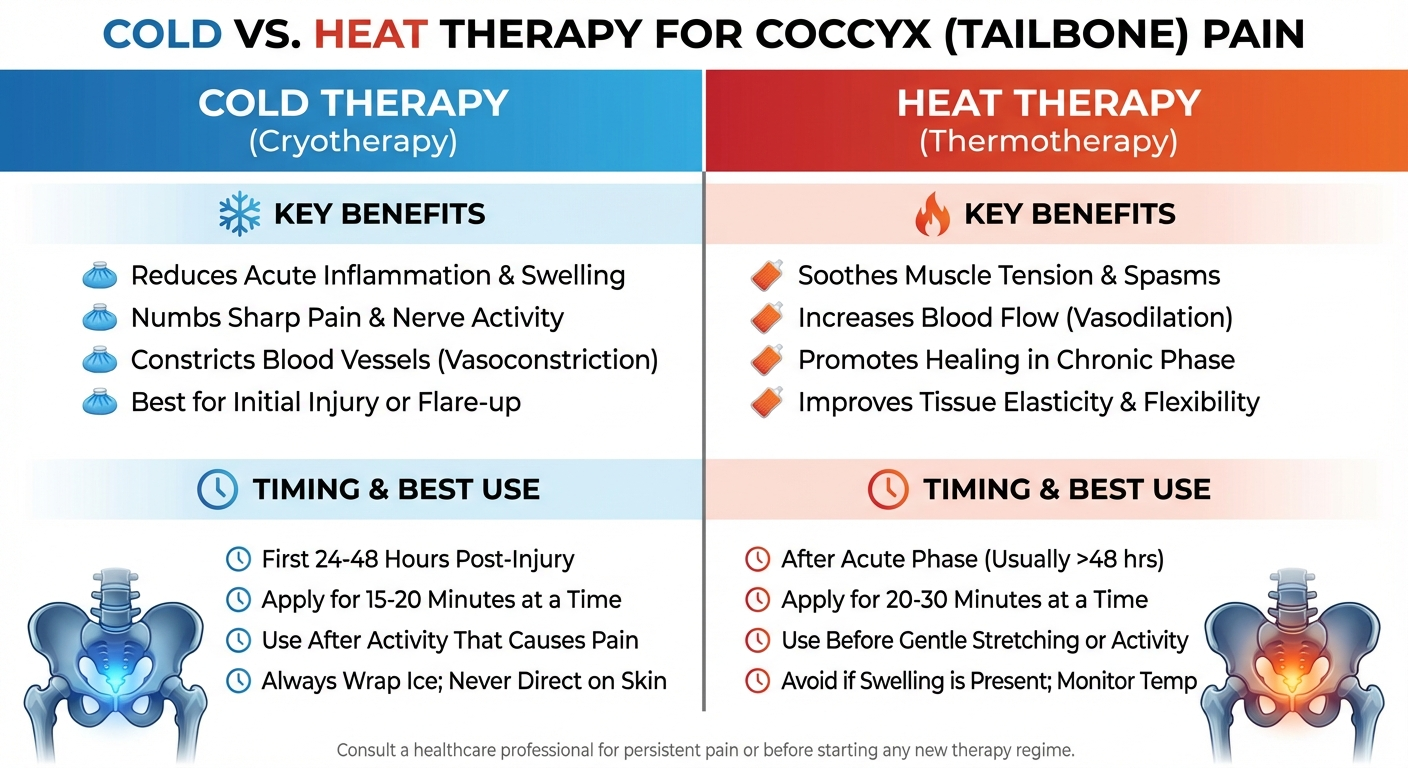
Cold therapy is your first line of defence for acute coccyx injuries. Here are the specific situations where ice is the right choice:
For optimal results, follow this evidence-based cold therapy protocol:
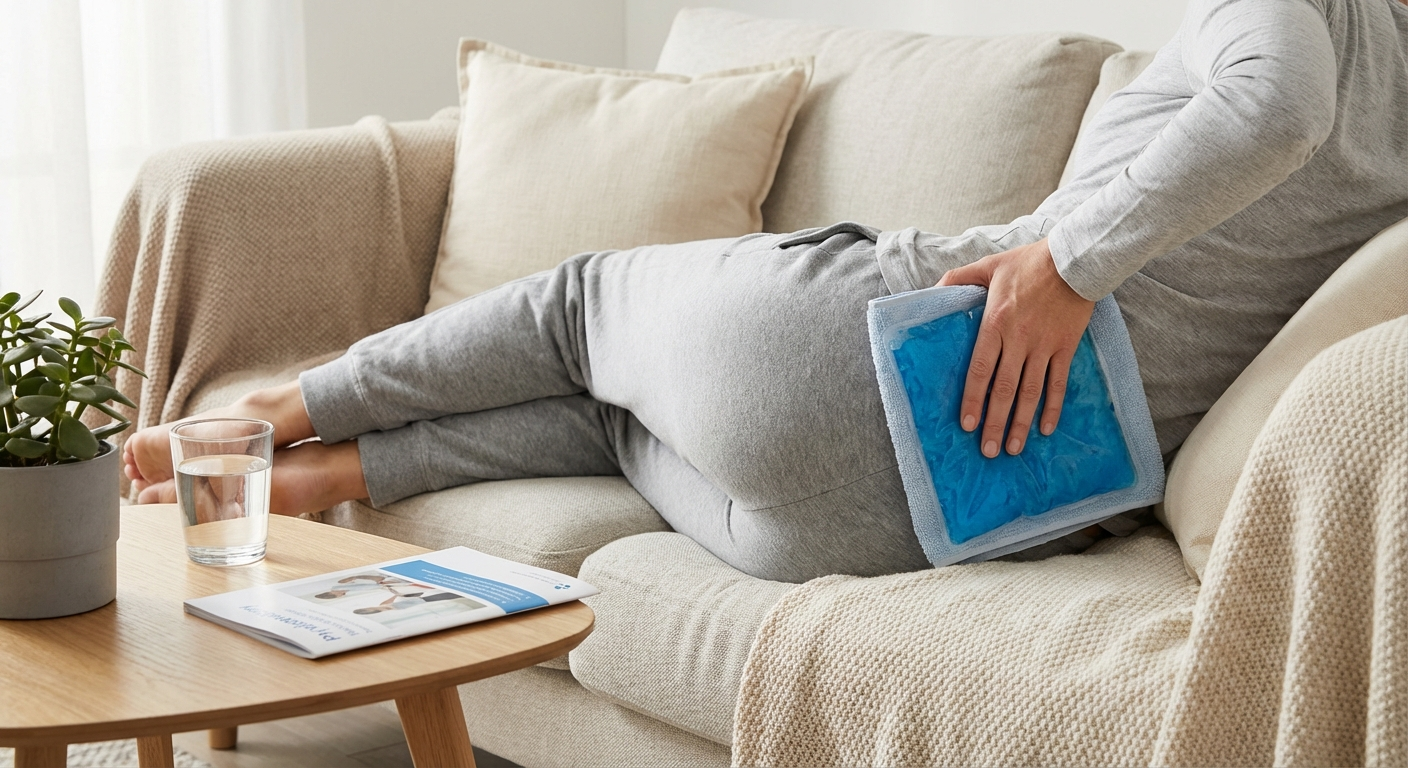
Heat therapy is the preferred treatment for chronic coccyx pain, muscle-related tailbone discomfort, and stiffness. If your coccyx pain has been present for more than 72 hours without a new injury, heat is almost always the better choice.

| Therapy Type | Best For | When to Apply | Duration | Frequency | Risks |
|---|---|---|---|---|---|
| Cold (Ice) | Acute injury, swelling, inflammation, sharp pain | First 48-72 hours after injury | 15-20 min | Every 2-3 hours | Frostbite if applied too long or directly to skin |
| Heat | Chronic pain, muscle tension, stiffness, dull ache | After 72 hours, or chronic conditions | 15-30 min | 2-4 times daily | Burns if too hot; worsens acute inflammation |
The coccyx is a challenging area to treat with thermal therapy because of its location. Here are practical application techniques that actually work:
Lying on your stomach is the most effective position for cold therapy on the coccyx. Place a pillow under your hips to reduce lumbar strain, then position the ice pack directly over the tailbone area. This allows the cold to penetrate without body weight compressing the ice pack.
Lying on your side with knees slightly bent is a comfortable alternative. Place the ice pack between your body and the bed, positioned over the coccyx. A rolled towel can help keep the pack in place.
Standing and leaning forward against a counter or wall works if lying down is not practical. Hold the ice pack in position with your hand or tuck it into the waistband of loose-fitting clothing.
Lying on your stomach with a heating pad under your pelvis works well, but be cautious about falling asleep — use a heating pad with automatic shut-off.
Sitting on a heated cushion can provide relief, but this should be done carefully. Do not sit directly on an electric heating pad at high temperature. Purpose-built heated seat cushions with temperature controls are safer.
Warm baths are excellent for heat therapy to the coccyx area. Soak in water at 37-40°C for 15-20 minutes. This provides gentle, even heat distribution and the buoyancy reduces pressure on the tailbone. Adding Epsom salts may enhance muscle relaxation.
Contrast therapy — alternating between cold and heat — can be highly effective for coccyx pain once you are past the acute inflammatory phase. The alternation creates a "pumping" action that promotes circulation while controlling inflammation.
Contrast therapy is particularly useful for patients with chronic coccydynia who have not responded well to either cold or heat alone. The alternating temperatures stimulate blood flow while the cold phases prevent excessive inflammation.
Not all ice packs and heating pads are created equal. Here are the products I recommend most frequently to patients with coccyx pain:
~$25 USD
The Chattanooga ColPac is the gold standard ice pack used in physiotherapy clinics. Its blue vinyl construction stays flexible when frozen, conforming to the curved contours of the lower back and coccyx area. Unlike cheap gel packs that become rigid bricks in the freezer, the ColPac remains pliable and provides consistent cold therapy.
~$15 USD
TheraPearl packs contain small gel beads that provide both hot and cold therapy. Freeze them for cold therapy or microwave for 30-60 seconds for heat. The pearl design conforms well to body contours and the pack stays at therapeutic temperature longer than traditional gel packs. Ideal for patients who want one versatile product.
~$35 USD
For electric heat therapy, the Sunbeam XL heating pad offers the best combination of size, heat consistency, and safety features. The XL size (12" x 24") covers the entire sacrococcygeal region comfortably. Multiple heat settings allow precise temperature control, and the 2-hour auto shut-off prevents burns if you fall asleep.
~$20 USD
For those who prefer natural heat without electricity, the Bed Buddy is a rice-filled cloth pad that heats in the microwave. It provides gentle, moist heat that many patients find more soothing than dry electric heat. The natural filling also releases a subtle aromatherapy scent when heated.
In the meantime, our full written guide below covers everything in detail — with illustrations and step-by-step instructions.
Get the Full 30-Day Program →Cold and heat therapy are safe home treatments for most coccyx pain, but some symptoms require professional medical evaluation. Do not rely on thermal therapy alone if you experience any of the following:
Most coccyx pain responds well to conservative treatment including thermal therapy, coccyx cushions, posture modification, and time. However, persistent pain that does not improve after 6-8 weeks warrants investigation to rule out fracture, dislocation, or other pathology.
After 15 years of treating patients with coccydynia, here are the practical insights I share most often:
While 72 hours is the typical transition point from cold to heat, listen to your body. If ice still feels better after 4-5 days, continue using it. If heat feels soothing after 48 hours, it is likely safe to switch. Your body's response is the best guide.
Heat before gentle stretching enhances tissue elasticity and makes movement more comfortable. Apply heat for 15 minutes, then perform pelvic tilts, piriformis stretches, or other physiotherapist-prescribed exercises while tissues are warm.
If you must sit for extended periods (work, travel), apply heat before sitting to relax muscles, and ice afterward if inflammation develops. This "bookend" approach manages both muscle tension and inflammatory response.
Sitz baths (shallow warm baths) provide excellent heat therapy for coccyx pain. The warm water relaxes pelvic floor muscles that often contribute to coccydynia, and the buoyancy reduces pressure on the tailbone. Add Epsom salts (magnesium sulfate) for additional muscle-relaxing benefit.
Cold and heat therapy alone rarely resolve chronic coccyx pain. Combine with a proper coccyx cutout cushion, ergonomic seating, posture correction, and targeted exercises for best results. Thermal therapy is one tool in the toolkit — not the entire solution.
Use ice (cold therapy) for the first 48-72 hours after an injury or during acute inflammation — it reduces swelling and numbs pain. Use heat for chronic coccyx pain, muscle tension, or stiffness that has lasted more than 72 hours. If you are unsure, ice is the safer starting choice for new or worsening pain.
Apply ice to your coccyx for 15-20 minutes at a time, with at least 1 hour between applications. Never apply ice directly to skin — always use a thin cloth or towel as a barrier. You can ice 3-4 times daily during the acute phase (first 48-72 hours after injury).
Yes. Heat can worsen coccyx pain if applied during the acute inflammatory phase (first 48-72 hours after injury). Heat increases blood flow and can amplify swelling and inflammation. Wait until acute inflammation subsides — typically when the area is no longer warm to touch and swelling has reduced — before using heat therapy.
Apply ice as soon as possible after a coccyx injury — ideally within the first 15-30 minutes. Early ice application is most effective at controlling swelling and limiting tissue damage. Continue ice therapy for the first 48-72 hours, applying 15-20 minutes every 2-3 hours while awake.
Yes, contrast therapy is safe and can be highly effective for coccyx pain once you are past the acute phase (after 72 hours). Alternate between 3-4 minutes of heat and 1 minute of cold for 3-4 cycles, always ending on cold. Contrast therapy promotes circulation while controlling inflammation and is particularly useful for chronic coccydynia.
Heat therapy should feel comfortably warm, not hot — typically 40-45°C (104-113°F). Never use scalding heat. Always test microwavable packs on your wrist before applying to the coccyx. Electric heating pads should be used on low to medium settings, and always choose pads with automatic shut-off features to prevent burns.
This guide is based on current evidence-based practice guidelines for thermal therapy in musculoskeletal pain management, combined with clinical experience treating patients with coccydynia at a physiotherapy practice. Recommendations align with protocols from the American Physical Therapy Association and the Chartered Society of Physiotherapy (UK).
Key references consulted:
Product recommendations are based on clinical use, patient feedback, and independent testing. Prices are approximate USD retail at time of publication (March 2026) and may vary. We recommend verifying current pricing before purchase.
Related reading: Coccyx Pain & Sitting: How Long Is Too Long? | Best Coccyx Cushions 2026 | Best Office Chairs for Coccyx Pain | Can Pilates Help Coccyx Pain?