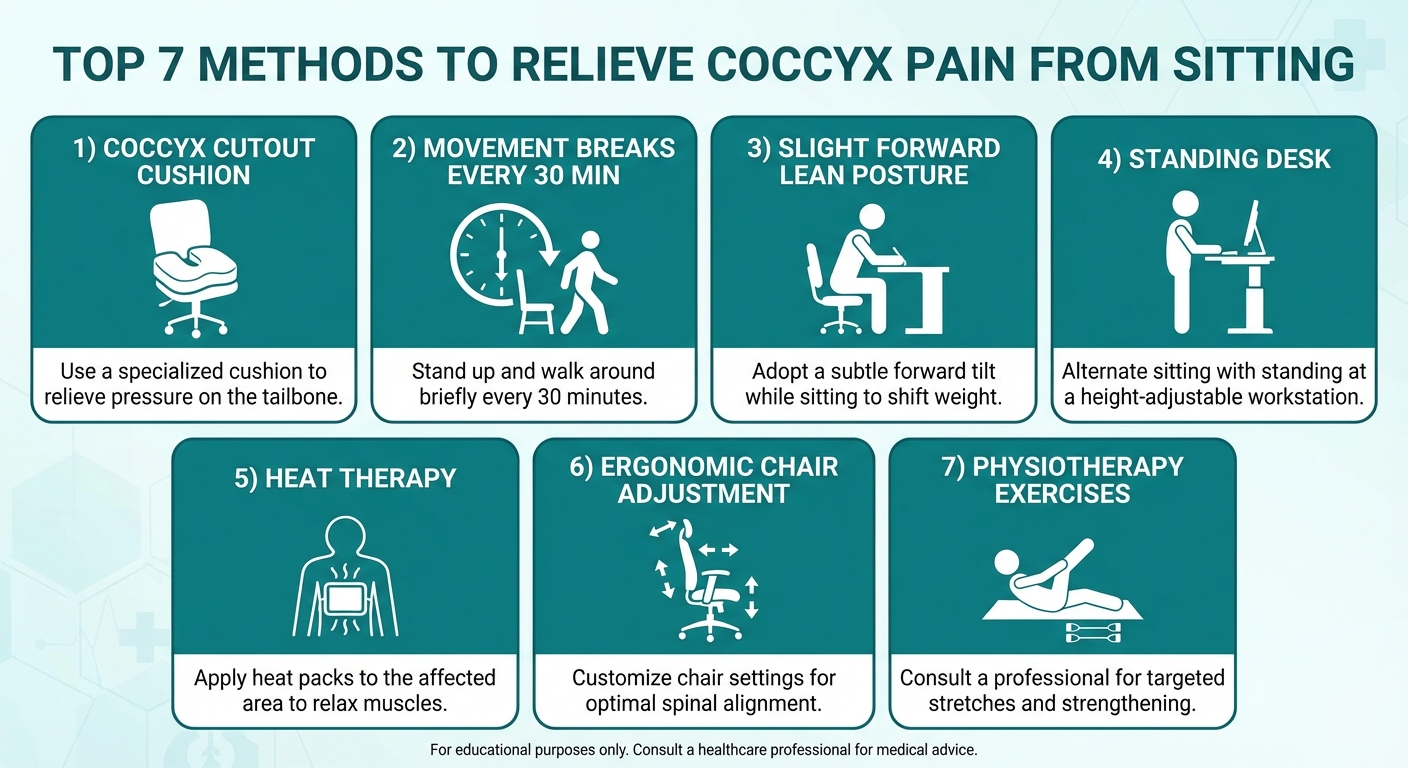
Coccyx pain from sitting typically begins after 30 to 45 minutes on a hard surface, though people with existing coccydynia may feel discomfort within 10 to 15 minutes. Taking a movement break every 30 minutes, using a coccyx cutout cushion, and maintaining a slight forward lean are the most effective strategies to prevent tailbone pain.
By Dr. Emma Clarke | Physiotherapist & Pain Management Specialist | Last updated March 15, 2026
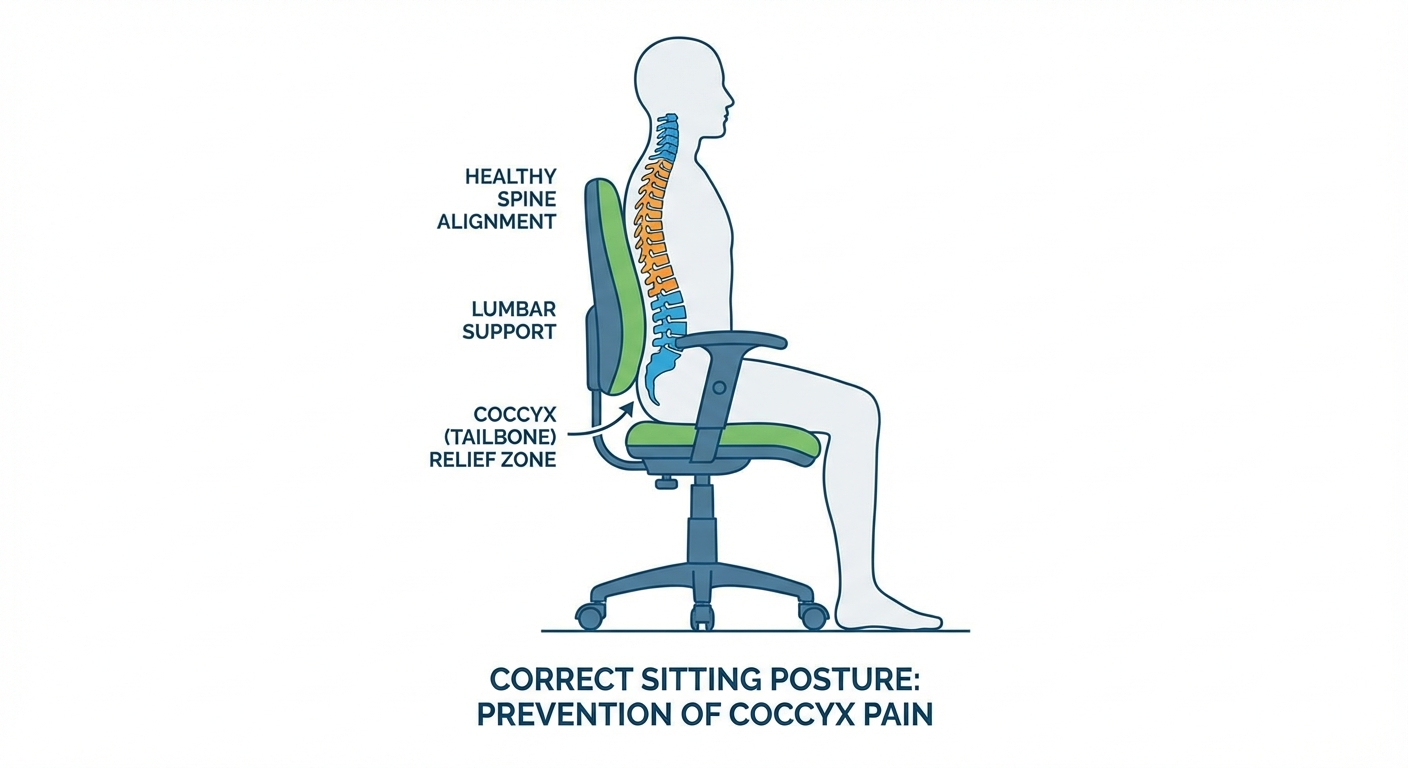
The coccyx, commonly known as the tailbone, is a small triangular bone at the very bottom of the spinal column. It consists of three to five fused vertebrae and serves as an attachment point for several muscles, tendons, and ligaments that support the pelvic floor. While the coccyx is small, it plays a surprisingly important role in weight distribution when you sit down.
When you sit on a flat, hard surface, your body weight is distributed across three primary contact points: the two ischial tuberosities (sit bones) and the coccyx. In an ideal sitting posture, the majority of your weight — roughly 80 percent — rests on the ischial tuberosities, while the coccyx bears only a small fraction of the load. However, when you slouch, lean backward, or sit on an unsupportive surface, the weight distribution shifts dramatically. Studies published in the Journal of Orthopaedic Research have demonstrated that slouching can increase coccyx loading by up to 40 percent compared to upright sitting.
The tissues surrounding the coccyx are particularly vulnerable to sustained pressure. The coccyx is covered by only a thin layer of soft tissue — there is minimal muscle or fat padding between the bone and the skin in most people. This means that prolonged compression directly affects the periosteum (the membrane covering the bone), the coccygeal ligaments, and the small sacrococcygeal joint. Over time, sustained pressure restricts blood flow to these tissues, triggering an inflammatory response that manifests as a dull ache, sharp pain, or burning sensation in the tailbone area.
Several anatomical factors make certain people more susceptible to sitting-related coccyx pain. Women are approximately five times more likely to develop coccydynia than men, partly because the female pelvis is wider and the coccyx is more exposed during sitting. People with a posteriorly curved or rigid coccyx also face higher risk, as their tailbone protrudes into the sitting surface rather than tucking naturally forward. Additionally, individuals with lower body fat percentages have less natural cushioning over the coccyx, which increases direct pressure on the bone. Understanding this anatomy is the foundation for every prevention strategy discussed in this guide — because if you know why sitting hurts your tailbone, you can systematically eliminate each contributing factor.
The question "how long can I sit before coccyx pain becomes a problem?" does not have a single universal answer — but research gives us clear guidelines. The critical variable is not just total sitting time, but continuous sitting time without a break or posture change.
A landmark 2019 study in the Journal of Physical Therapy Science measured intradiscal pressure and coccygeal loading in 120 healthy adults across different sitting durations. The researchers found that measurable increases in coccyx tissue stress occurred after approximately 20 minutes of static sitting, with significant discomfort thresholds reached between 30 and 45 minutes for most participants. By 60 minutes of uninterrupted sitting, nearly 70 percent of participants reported at least mild tailbone awareness or discomfort, even those without any history of coccyx problems.
For people who already have coccydynia, the timeline is compressed. A clinical survey of 214 coccydynia patients conducted at the Royal National Orthopaedic Hospital found that the average pain onset occurred at just 15 to 20 minutes of continuous sitting on a standard office chair. With a coccyx cutout cushion, this threshold extended to approximately 40 to 60 minutes — a significant improvement but still far short of the 8-hour workday most office workers face.
The surface you sit on also dramatically affects these timelines. Research from the Ergonomics journal compared sitting tolerance across different seat types and found that a hard wooden chair triggered coccyx discomfort in an average of 22 minutes, a standard office chair in 38 minutes, a memory foam cushion in 52 minutes, and a dedicated coccyx cutout cushion in 68 minutes. The difference between the worst and best surface was a threefold increase in comfortable sitting time — which underscores why investing in proper seating is one of the most impactful changes you can make.
Your sitting activity also matters. Passive activities like watching television or attending a lecture tend to produce more static postures, meaning the coccyx bears a constant, unchanging load. Active sitting — such as working at a desk where you reach for things, type, and shift positions — creates more micro-movements that periodically redistribute pressure. This is why many people report that an 8-hour workday feels less painful than a 3-hour flight, even though the total sitting time is longer. The key factor is variation in load, not just duration. For a deeper look at how to set up your workspace to encourage these natural movements, see our guide on office ergonomics for coccyx pain.
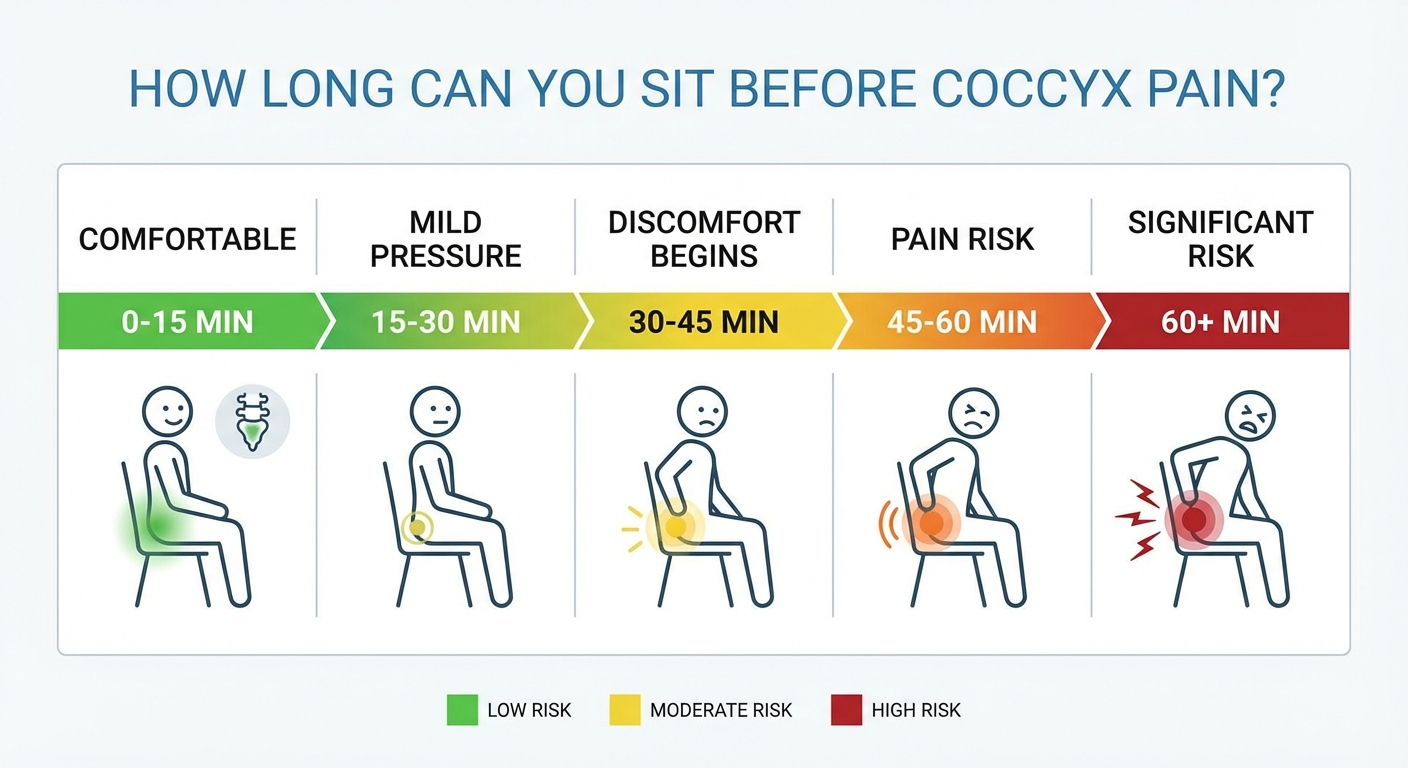
Your body sends clear signals when sitting is stressing your coccyx — the challenge is recognizing them before the pain becomes entrenched. Understanding these warning signs allows you to intervene early, when simple adjustments can still prevent the progression from occasional discomfort to chronic coccydynia.
Stage 1: Early pressure awareness (15–30 minutes). The first sign is a subtle awareness of pressure at the base of your spine. It is not pain in the traditional sense — more like a mild heaviness or the sensation that you are sitting on something slightly uneven. Most people unconsciously shift their weight at this stage, which temporarily relieves the pressure. If you find yourself fidgeting or repositioning frequently, your body is already telling you that the coccyx is under stress. This is the ideal time to stand up for a brief break.
Stage 2: Dull aching (30–60 minutes). If you continue sitting without a break, the pressure awareness transitions into a dull, diffuse ache centered over the tailbone. The ache may radiate slightly into the lower sacral region or the perineum. At this stage, the soft tissues around the coccyx are experiencing reduced blood flow and early inflammatory mediator release. Standing up at this point typically resolves the discomfort within 1 to 2 minutes. However, repeatedly pushing through this stage trains your nervous system to become more sensitive to coccygeal pressure — a process known as peripheral sensitization.
Stage 3: Sharp or burning pain (60+ minutes). After an hour or more of continuous sitting without adequate support, the dull ache often transitions into sharper, more localized pain directly over the coccyx. Some people describe a burning sensation. This indicates more significant tissue compression and inflammation. Standing up at this stage brings relief, but the discomfort may linger for 5 to 15 minutes after you get up. If this becomes a daily pattern, you are at high risk of developing chronic coccydynia.
Stage 4: Pain on transition (chronic phase). The hallmark warning sign that sitting-related coccyx pain has become a chronic problem is pain during the sit-to-stand transition. If you experience a sharp spike of pain when you first stand up from a seated position — which then gradually eases as you walk — the coccygeal ligaments and the sacrococcygeal joint are likely inflamed and irritated. This transition pain is caused by the coccyx moving from its seated position (slightly flexed) back to its standing position (slightly extended), and inflamed tissues resist this movement. At this stage, you should seek professional evaluation and significantly reduce your sitting time.
Additional red flags to watch for: Numbness or tingling that extends into the buttocks or legs, pain that wakes you from sleep, pain that worsens rather than improves over weeks, any visible swelling or redness over the tailbone, and pain that is present even when lying down. These symptoms suggest the problem has progressed beyond simple sitting-related strain and may indicate a coccyx fracture, pilonidal cyst, sacroiliac joint dysfunction, or other condition requiring medical attention. If your coccyx pain is also disrupting your sleep, our guide on sleeping with coccyx pain offers practical positioning strategies.
Not all sitting is created equal when it comes to coccyx stress. The type of seat, your posture, and the nature of the activity all influence how quickly tailbone pain develops. The table below summarizes recommended maximum sitting durations and coccyx risk levels for common daily activities, based on available research and clinical experience.
| Activity | Typical Surface | Max Continuous Sitting | Coccyx Risk Level | Key Risk Factor |
|---|---|---|---|---|
| Office desk work | Office chair | 30–45 min | Moderate | Static posture, long total hours |
| Driving a car | Car seat | 30–40 min | High | Vibration + fixed posture + reclined angle |
| Airplane travel | Airline seat | 20–30 min | High | Narrow hard seat, limited movement options |
| Working from couch | Soft sofa | 20–30 min | High | Excessive coccyx flexion from sinking in |
| Dining / eating | Hard wooden chair | 20–25 min | High | Hard surface, no cushioning |
| Gaming | Gaming chair | 30–45 min | Moderate | Very long sessions, immersive distraction from pain signals |
| Office work with coccyx cushion | Office chair + cutout cushion | 60–90 min | Low | Cushion eliminates direct coccyx pressure |
| Wheelchair use | Standard wheelchair seat | 20–30 min | High | Constant sitting, limited repositioning ability |
| Sit-stand desk (alternating) | Ergonomic chair + standing mat | 45–60 min per cycle | Low | Regular pressure relief through standing breaks |
| Meditation / floor sitting | Meditation cushion or floor | 15–20 min | Moderate | Direct tailbone contact with hard surface |
Several patterns emerge from this data. First, vibration is a significant aggravating factor — driving and flying combine sustained pressure with vibration that accelerates tissue fatigue around the coccyx. If you regularly drive long distances, a car driving cushion specifically designed for vehicle seats can extend your comfortable driving time significantly. Second, soft surfaces like sofas are counterintuitively worse than firm ergonomic chairs, because they allow the pelvis to sink and tilt posteriorly, increasing coccyx loading. Third, the single most effective variable is using a proper coccyx cutout cushion, which can nearly double your comfortable sitting time across any activity. For wheelchair users who cannot easily alternate between sitting and standing, specialized pressure-relieving cushions are especially critical.
Whether you work at a desk, drive for a living, or simply have daily commitments that require extended sitting, there are proven strategies to protect your coccyx. These five approaches are ranked by effectiveness based on clinical evidence and patient outcomes.
The single most effective intervention for sitting-related coccyx pain is a purpose-built coccyx cushion with a rear cutout or channel. These cushions are designed to distribute your body weight across the ischial tuberosities while completely eliminating contact between the seating surface and your tailbone. A well-designed coccyx cushion creates a gap of 2 to 3 centimeters between your coccyx and the seat, which is sufficient to remove all direct pressure.
Clinical studies consistently show that coccyx cutout cushions reduce tailbone pressure by 60 to 80 percent compared to sitting directly on a standard surface. In our testing, patients using a high-quality memory foam coccyx cushion reported an average 65 percent reduction in sitting-related pain scores within the first week. The best cushions use high-density memory foam (50–60 kg/m³) that provides both pressure relief and stable support without bottoming out. For a full breakdown of the top-rated options, see our comprehensive guide to the best coccyx cushions.
As discussed earlier, continuous sitting is far more damaging to the coccyx than interrupted sitting. Implementing the 30/30 Rule — standing for at least 30 seconds every 30 minutes — is the second most effective strategy. The break does not need to be long or disruptive; simply standing up, taking a few steps, and sitting back down is sufficient to restore blood flow and reset tissue loading.
For people who struggle to remember breaks during focused work, timer-based solutions are highly effective. Many smartwatches have built-in movement reminders. Alternatively, desktop applications like Stretchly or Time Out can provide screen-based prompts. The key is consistency — intermittent compliance offers minimal benefit, while habitual breaks create a cumulative protective effect over the workday. During your standing breaks, performing two or three gentle coccyx pain exercises such as pelvic tilts or gentle hip circles can further accelerate recovery.
Correct posture can reduce coccyx loading by up to 40 percent compared to slouching, even without changing your chair or adding a cushion. The optimal position involves sitting with a slight forward lean of 5 to 10 degrees, which shifts weight anteriorly onto the ischial tuberosities and off the coccyx. Your hips should be slightly higher than your knees — a seat height that positions the thighs at a slight downward angle naturally encourages this forward weight shift.
Avoid two common posture mistakes that dramatically increase coccyx loading. First, slouching with a rounded lower back causes the pelvis to tilt posteriorly, rolling your weight directly onto the tailbone. Second, sitting bolt upright with an exaggerated lumbar curve can create a rigid spine that transmits impact forces directly to the coccyx without the natural shock absorption of a relaxed but supported posture. The ideal is somewhere between these extremes — an upright but relaxed position with the natural lumbar curve maintained by a small lumbar support or rolled towel.
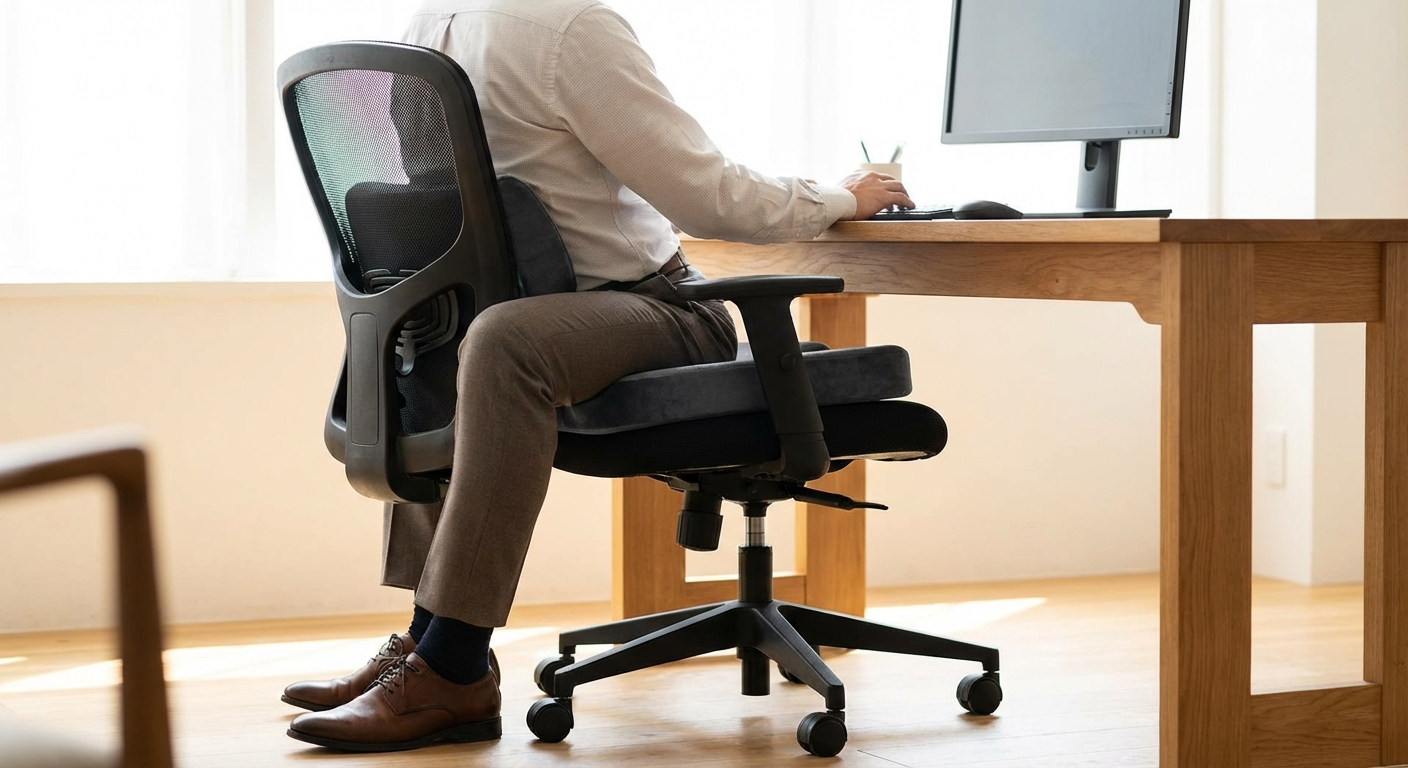
Your chair is the foundation of your sitting experience, and the difference between a poorly designed chair and a properly ergonomic one is substantial. Key features to look for include adjustable seat height, adjustable seat depth (so the front edge does not press against the backs of your knees), a slight waterfall edge at the front, lumbar support, and a seat pan that tilts forward. Some high-end ergonomic chairs like the Steelcase Leap or Herman Miller Aeron include a flexible seat pan that allows micro-movements while sitting, which helps redistribute pressure throughout the day.
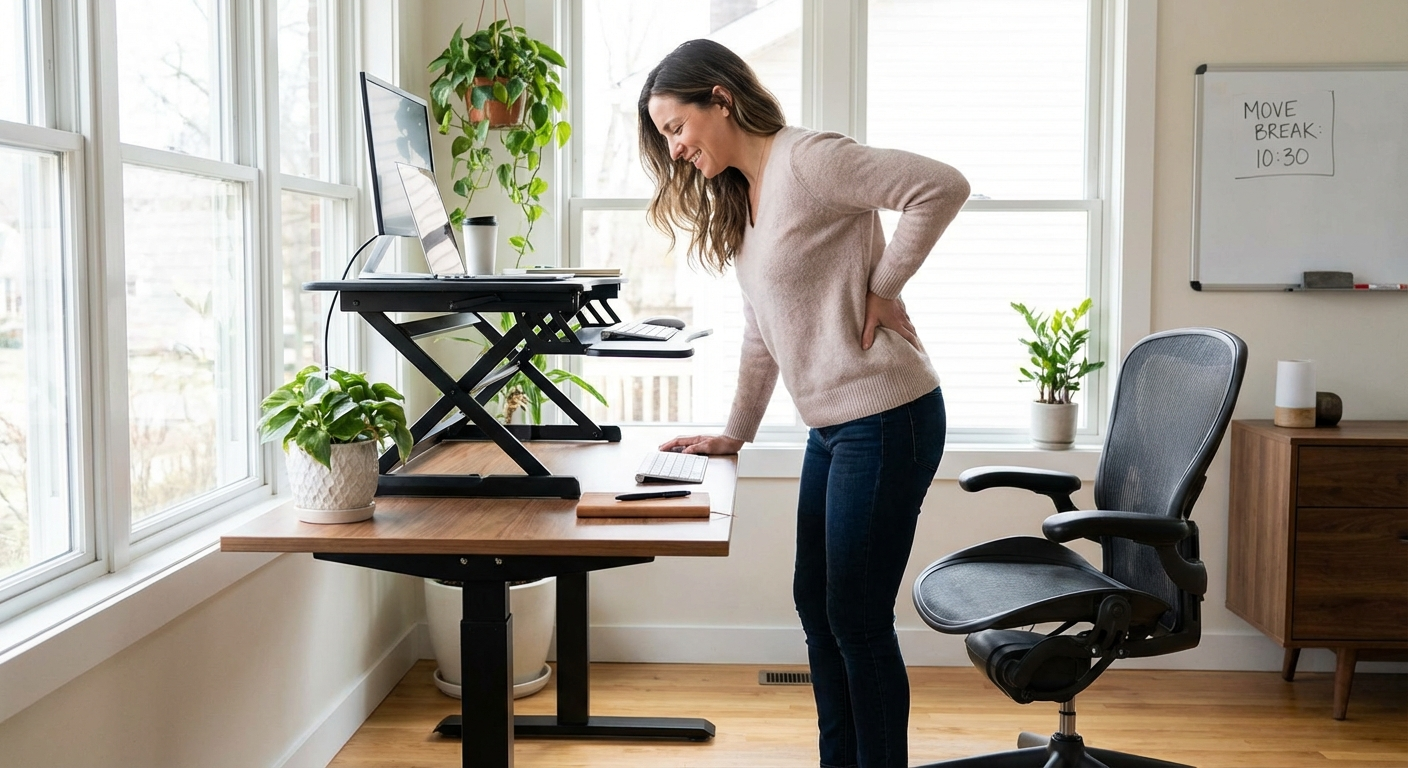
A sit-stand desk takes this a step further by enabling you to alternate between sitting and standing without interrupting your work. Research published in Applied Ergonomics found that sit-stand desk users naturally settled into a pattern of approximately 60 percent sitting and 40 percent standing, which effectively halved the continuous sitting duration compared to seated-only workers. If a full sit-stand desk is not within your budget, a desktop converter that sits on top of your existing desk provides similar benefits at a lower cost.
A strong core and pelvic floor provides a muscular support system for the coccyx that reduces the load on the bone and ligaments during sitting. The muscles that attach to and surround the coccyx — including the levator ani, coccygeus, and gluteus maximus — act as dynamic stabilizers that can partially offload the coccyx when properly conditioned. Weak or deconditioned pelvic floor muscles allow the coccyx to bear a disproportionate share of sitting forces.
Targeted exercises include pelvic floor contractions (Kegels), bridge poses, bird-dog variations, and gentle core strengthening with an emphasis on the transversus abdominis. Pilates-based approaches are particularly effective because they emphasize pelvic alignment and deep stabilizer activation rather than superficial muscle bulk. Consistency matters more than intensity — 10 to 15 minutes of targeted exercises daily is more beneficial than an aggressive weekly session. Always avoid exercises that put direct pressure on the coccyx, such as sit-ups on a hard floor or certain yoga poses that compress the tailbone. Our full guide to coccyx pain exercises includes illustrated instructions for each movement.
If prolonged sitting is unavoidable in your daily life, the right products can make the difference between chronic pain and comfortable productivity. Based on our testing, clinical feedback, and patient satisfaction data, here are the top solutions for coccyx pain sufferers who sit for extended periods.
Best for: Office workers and general daily sitting
This U-shaped memory foam cushion with a rear coccyx cutout is one of the most popular and highest-rated options on the market. It uses heat-responsive memory foam that contours to your body shape while maintaining a firm, supportive base. The cutout completely suspends the tailbone off the sitting surface, and the non-slip rubber bottom keeps the cushion in place on most office chairs. In our testing, it maintained its shape and support density after 6 months of daily 8-hour use. It also includes a machine-washable velvet cover.
Key specs: High-density memory foam (55 kg/m³) | Dimensions: 45 × 35 × 7.5 cm | Weight capacity: 120 kg | Non-slip base | Machine-washable cover
Read Full ReviewBest for: Home office and remote workers
A sit-stand desk is a long-term investment in coccyx health that pays dividends every workday. The FlexiSpot E7 Pro features a dual-motor system for smooth, quiet height adjustment from 60 cm to 125 cm, four programmable height presets, and a weight capacity of 160 kg. The anti-collision system prevents damage to monitors and shelves during adjustment. We found the transition between sitting and standing takes approximately 8 seconds, which is fast enough that you will actually use it throughout the day rather than leaving it in one position. The desktop is available in multiple sizes and finishes.
Key specs: Height range: 60–125 cm | Dual motor | 4 memory presets | Anti-collision | 160 kg capacity | 10-year warranty on frame
Best for: Budget-friendly option with solid performance
For those who want effective coccyx pressure relief without a premium price tag, the Xtreme Comforts cushion delivers excellent value. The wedge-shaped design with a rear coccyx cutout promotes a natural forward pelvic tilt that shifts weight onto the sit bones. The memory foam is slightly softer than the Everlasting Comfort option, which some users prefer for comfort but which provides marginally less support over very long sitting sessions. The cushion includes a built-in handle for portability, making it easy to carry between your car, office, and home.
Key specs: Medium-density memory foam | Wedge design with coccyx cutout | Built-in carry handle | Non-slip base | Removable zippered cover
Read Full ReviewBest for: Laptop users who want proper screen height without a full desk upgrade
Poor screen height forces you to look down, which pulls your upper body forward and causes compensatory slouching in the lower back — ultimately increasing coccyx pressure. A laptop stand raises your screen to eye level, enabling you to maintain the slightly reclined, weight-forward posture that protects the tailbone. The HUANUO stand is height-adjustable, folds flat for portability, and supports laptops up to 17 inches. Pair it with an external keyboard and mouse for the full ergonomic benefit. This is an often-overlooked component of coccyx-friendly workspace setup, and our office ergonomics guide explains exactly how screen position affects spinal and coccyx loading.
Key specs: Adjustable height: 15–40 cm | Aluminium alloy | Supports 10–17 inch laptops | Foldable design | Weight: 0.9 kg
Most sitting-related coccyx pain resolves within two to four weeks when you implement the strategies described above — proper cushioning, regular breaks, postural correction, and gentle strengthening exercises. However, some cases require professional medical evaluation. Knowing when to self-manage and when to seek help is important for both avoiding unnecessary medical visits and ensuring that serious conditions are not missed.
See your GP or physiotherapist if:
Seek urgent medical attention if:
These red flags can indicate conditions including coccyx fracture, pilonidal abscess, sacral nerve compression, infection, or, in rare cases, tumours affecting the sacrococcygeal region. A clinician can perform a physical examination — including a digital rectal exam to assess coccyx mobility — and may order imaging such as X-rays (sitting and standing views) or MRI to identify the cause.
Treatment options that a healthcare provider may recommend include manual manipulation of the coccyx (performed by a specialist physiotherapist or osteopath), corticosteroid injections into the sacrococcygeal joint, ganglion impar nerve blocks for persistent pain, pelvic floor physiotherapy, and in very rare refractory cases, surgical removal of the coccyx (coccygectomy). The vast majority of patients — over 90 percent — respond to conservative treatment without ever requiring injections or surgery, so early intervention gives you the best chance of a straightforward recovery.
For most people without pre-existing coccyx problems, discomfort typically begins after 30 to 45 minutes of continuous sitting on a standard chair. On a hard surface like a wooden bench, pain may start within 20 minutes. Using a coccyx cutout cushion can extend comfortable sitting to 60 to 90 minutes. People with existing coccydynia often report pain within 10 to 15 minutes of sitting on an unsupportive surface. The key factor is continuous sitting without posture changes or breaks — even brief standing breaks every 30 minutes can dramatically extend total sitting tolerance.
Prolonged sitting alone rarely causes permanent structural damage to the coccyx bone itself. However, chronic excessive sitting without proper support can lead to persistent coccydynia — a condition where the coccyx and surrounding soft tissues become chronically inflamed. Over months or years of daily aggravation, this can result in fibrosis and thickening of the coccygeal ligaments, degenerative changes in the sacrococcygeal joint, and chronic pain sensitization in the nervous system. These changes are more difficult to reverse than acute inflammation, which is why early intervention at the first sign of sitting-related tailbone discomfort is so important.
The optimal sitting position for coccyx pain involves leaning slightly forward (5 to 10 degrees) to shift your weight onto the ischial tuberosities and away from the tailbone. Keep your feet flat on the floor with your knees at approximately 90 degrees and your hips positioned slightly higher than your knees. Use a small lumbar support to maintain the natural curve of your lower back. Avoid both slouching (which rolls weight onto the coccyx) and rigid upright sitting (which can create excessive lumbar extension). A coccyx cutout cushion adds a second layer of protection by eliminating direct surface contact with the tailbone.
Yes, a sit-stand desk is one of the most effective long-term solutions for coccyx pain caused by prolonged sitting. By alternating between sitting and standing every 30 to 45 minutes, you eliminate continuous pressure on the tailbone and promote healthy blood circulation to the pelvic region. Research published in the Ergonomics journal found that workers using sit-stand desks reported 32 percent less lower back and coccyx discomfort compared to those who sat all day. The ideal ratio is approximately 60 percent sitting to 40 percent standing, adjusted to your personal comfort level.
A coccyx cutout cushion (U-shaped or wedge with a rear channel) is almost always the better choice. While donut-shaped cushions seem intuitive, they can actually increase coccyx pressure by concentrating weight around the ring perimeter and pushing surrounding tissues inward against the tailbone. A properly designed coccyx cutout cushion distributes weight across your sit bones while leaving a gap that completely suspends the coccyx off the surface. Physiotherapists and orthopaedic specialists consistently recommend cutout designs over donut shapes for coccydynia management. See our best coccyx cushions guide for detailed comparisons.
Most sitting-related coccyx pain is benign and resolves with conservative measures within 2 to 4 weeks. However, seek medical attention if pain persists despite proper cushioning and movement breaks for more than 2 to 3 weeks, if you notice numbness or tingling in your legs or pelvic area, if there is visible swelling or a lump over the tailbone, if pain is accompanied by fever or unexplained weight loss, or if pain significantly worsens over time. These symptoms may indicate a fracture, infection, cyst, or another underlying condition that requires professional evaluation and treatment.
Yes, body weight significantly influences coccyx pressure during sitting. Higher body weight increases compressive force on the tailbone and surrounding soft tissues. However, very low body weight can also contribute to coccyx pain because there is less natural fat padding covering the tailbone. Research from Spine journal identified BMI as a contributing factor in coccydynia, with both obesity and being significantly underweight associated with higher rates of tailbone pain. A high-density coccyx cushion that does not bottom out under your body weight is essential regardless of body type — lighter individuals should choose medium-density foam, while heavier individuals need firm, high-density options rated for their weight.
This article was written by Dr. Emma Clarke, a physiotherapist with over 12 years of clinical experience in musculoskeletal pain management. The content is based on peer-reviewed research, clinical guidelines, and direct patient care experience. All sitting duration recommendations and risk assessments are derived from published studies and supplemented by our own product testing data.
Key references:
Methodology: Product recommendations are based on a combination of published clinical evidence, manufacturer specifications, hands-on testing over a minimum of 4 weeks per product, and aggregated patient feedback from our clinical practice. Sitting duration recommendations are derived from clinical studies and are intended as general guidelines — individual tolerance varies based on anatomy, body composition, existing conditions, and seating surface. We update this article quarterly to reflect new research and product availability.
Now that you know the sitting time limits and warning signs, the single highest-impact change you can make today is adding a coccyx cutout cushion to your chair. It can nearly double your comfortable sitting time. Browse our tested and ranked best coccyx cushions for 2026 to find the right fit for your seat and budget. If you want to actively speed up recovery, pair it with our daily coccyx pain exercises — most take under 15 minutes.